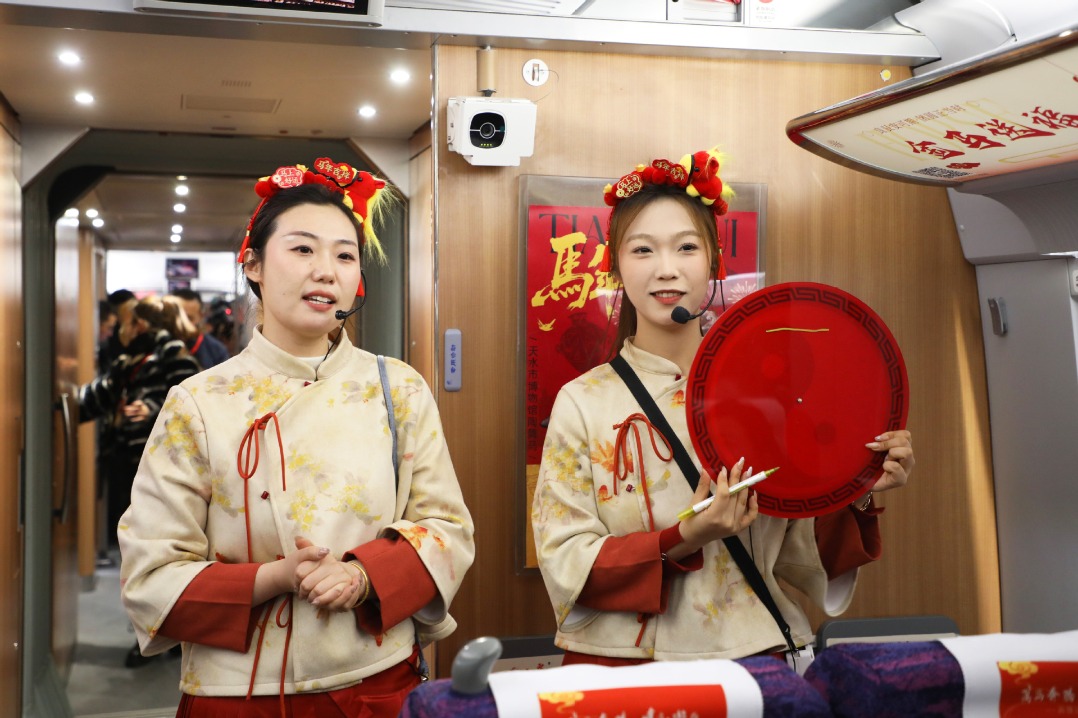
In an innovative fusion of cultural preservation and modern transportation, Northwest China’s Gansu province has launched a groundbreaking ‘mobile museum’ initiative aboard high-speed rail services during the 2026 Spring Festival travel period. The program, which commenced on February 9th, transforms ordinary train carriages into dynamic cultural spaces where passengers encounter genuine artifacts and expert interpretations from nine of China’s most prestigious national first-grade museums.
The specially designated train G848, traveling the extensive route from Lanzhou West Railway Station to Guangzhou South Railway Station, carries not just passengers but a carefully curated selection of Gansu’s cultural treasures. Representatives from renowned institutions including the Dunhuang Academy and Gansu Provincial Museum serve as onboard cultural interpreters, providing passengers with direct access to historical knowledge and traditional customs typically confined to museum walls.
This initiative represents a significant advancement in cultural dissemination, effectively breaking down the physical barriers between heritage institutions and the public. During one of China’s busiest travel periods, when millions journey home for family reunions, passengers now experience an unexpected cultural enrichment opportunity. The mobile exhibition allows travelers to physically engage with replicas of artifacts while learning about the Silk Road’s historical significance, Buddhist cave art from Dunhuang, and various traditional practices indigenous to the Gansu region.
The program’s timing during the Spring Festival travel rush—known as ‘chunyun’—is particularly strategic, capitalizing on captive audiences during long journeys while simultaneously addressing the cultural education needs of modern society. This approach demonstrates how traditional cultural promotion can adapt to contemporary lifestyles, making heritage appreciation accessible outside conventional museum settings. The initiative has been widely praised for its creative approach to public education and its success in transforming travel time into culturally productive experiences.