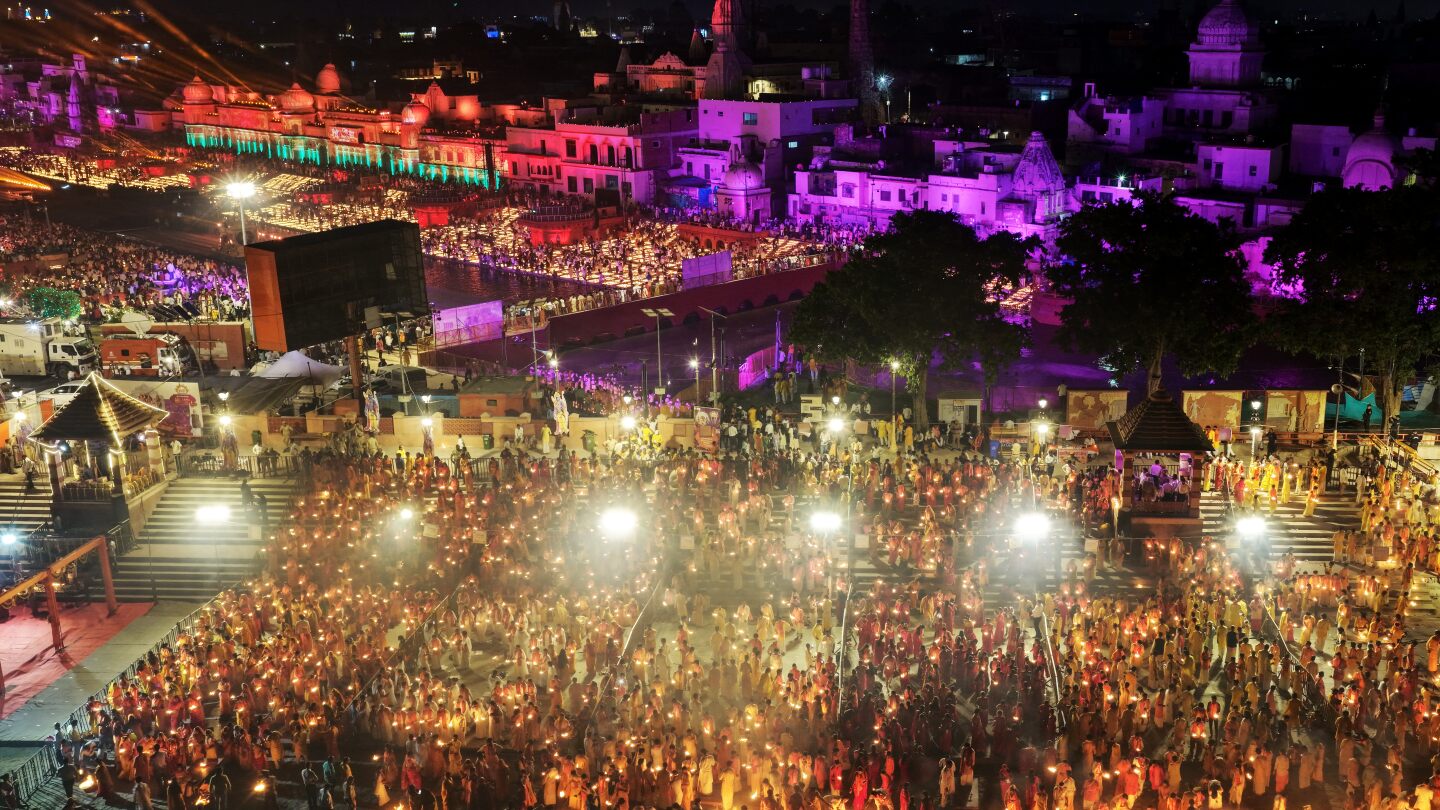
Millions of Indians across the country joyously celebrated Diwali on Monday, marking the Hindu festival of lights that symbolizes the triumph of light over darkness. Known as ‘Deepavali,’ meaning ‘a row of lights,’ the festival is traditionally observed with social gatherings, gift exchanges, and the illumination of homes and streets with lamps, lanterns, and candles. This year, the celebrations were particularly vibrant in Ayodhya, Uttar Pradesh, a city deeply significant to Hindus as the birthplace of Lord Ram, who returned after 14 years in exile. To commemorate his homecoming, over 2.6 million earthen lamps were lit along the banks of the Saryu River, setting a Guinness World Record for the second consecutive year. The event was further enhanced by the synchronized prayers of 2,100 Hindu priests, whose chants resonated across the shimmering riverfront. The city was adorned with fairy lights, and a spectacular laser and fireworks show illuminated its lanes and riverbanks. Thousands of residents participated by lighting lamps at their homes and temples. The massive effort involved more than 33,000 volunteers and the production of 1.6 million lamps by 40 families from nearby villages, using 73,000 liters of oil and 5.5 million cotton wicks. Despite the challenges, the collective effort created a breathtaking spectacle. However, Diwali celebrations in New Delhi were marred by concerns over air pollution, as firecrackers contributed to toxic smog. The air quality index in parts of the city surged to 347, far exceeding the World Health Organization’s recommended maximum. In response, India’s top court allowed the limited use of ‘green firecrackers,’ designed to reduce emissions by 30%, during specific hours from Saturday to Tuesday.