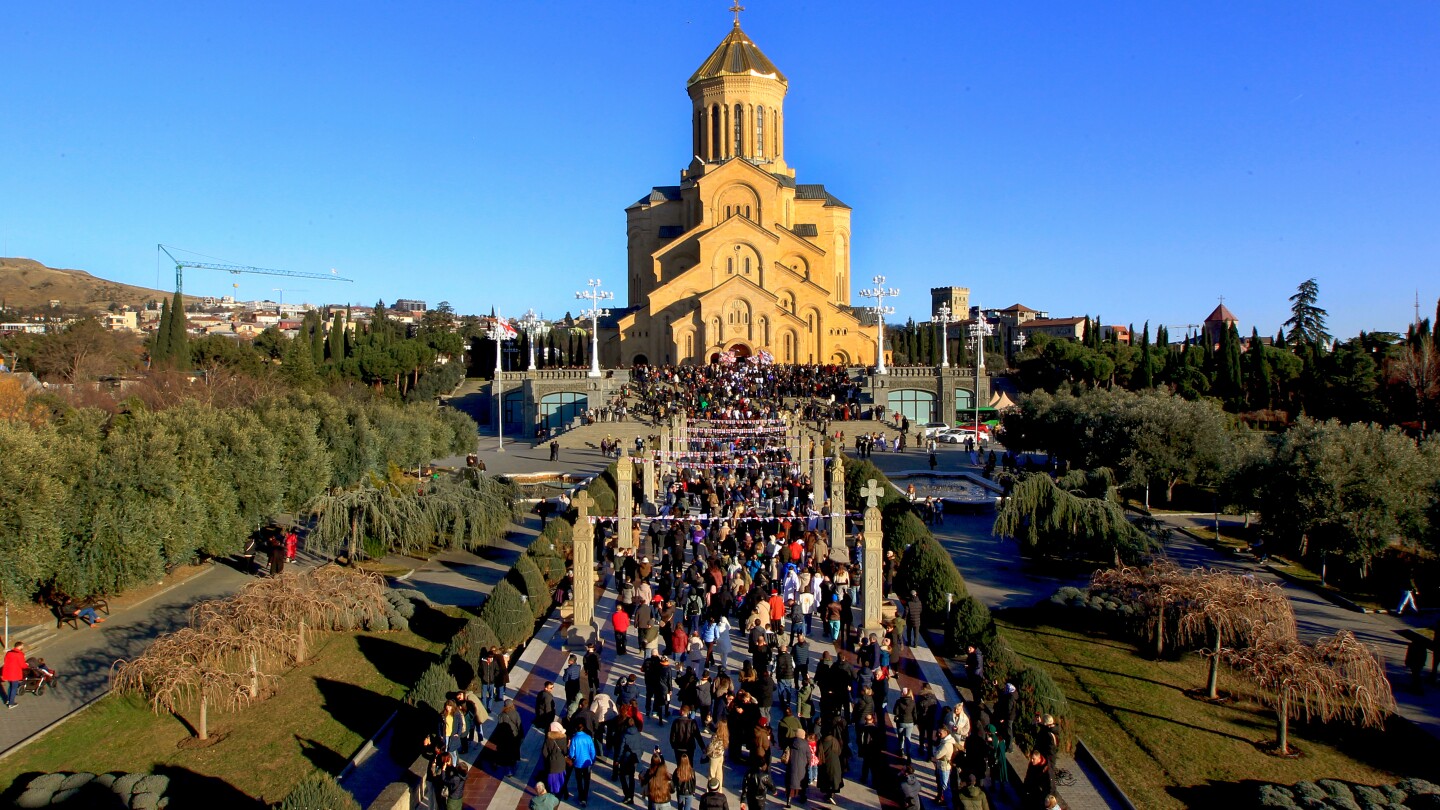
Across the globe, millions of Orthodox Christians commemorated Christmas on January 7th, creating a distinctive celebration pattern that occurs nearly two weeks after Western Christian observances. This temporal divergence stems from deep historical roots in calendar systems that continue to shape religious practices worldwide.
The chronological discrepancy originates from the adherence of certain Eastern Orthodox churches—including Russian, Serbian, Georgian, and some Ukrainian traditions—to the ancient Julian calendar. This system runs thirteen days behind the Gregorian calendar adopted by Catholic, Protestant, and most secular societies. Meanwhile, the Ethiopian Orthodox Church and various Oriental Orthodox communities, while distinct from Eastern Orthodoxy, similarly celebrated on January 7th, sharing many liturgical traditions despite their separate ecclesiastical histories.
This complex calendrical landscape emerged from sixteenth-century reforms when Pope Gregory XIII introduced a revised system to correct astronomical inaccuracies in the Julian calendar. While Western Christian denominations and secular governments gradually adopted the Gregorian system, Eastern Orthodox communities maintained divergent approaches. In 1923, an inter-Orthodox gathering proposed a revised Julian calendar that aligned with the Gregorian system, which was embraced by Greek, Romanian, Bulgarian, and other traditions but rejected by the Russian Orthodox Church—the largest Eastern Orthodox communion—and several allied traditions.
North American observances reflect this global diversity, with Greek and Antiochian Orthodox churches celebrating on December 25th, while Serbian and Russian traditions maintain January 7th observances. Liturgical celebrations typically feature elaborate nighttime services preceding Christmas Day, with distinctive customs like the Serbian practice of burning oak branches accompanied by proclamation of Christ’s birth.
The Armenian Orthodox tradition represents a unique case, observing Christmas on January 6th, further illustrating the rich tapestry of Christian liturgical practice that continues to evolve, particularly in regions like Ukraine where some communities have recently transitioned to December celebrations.