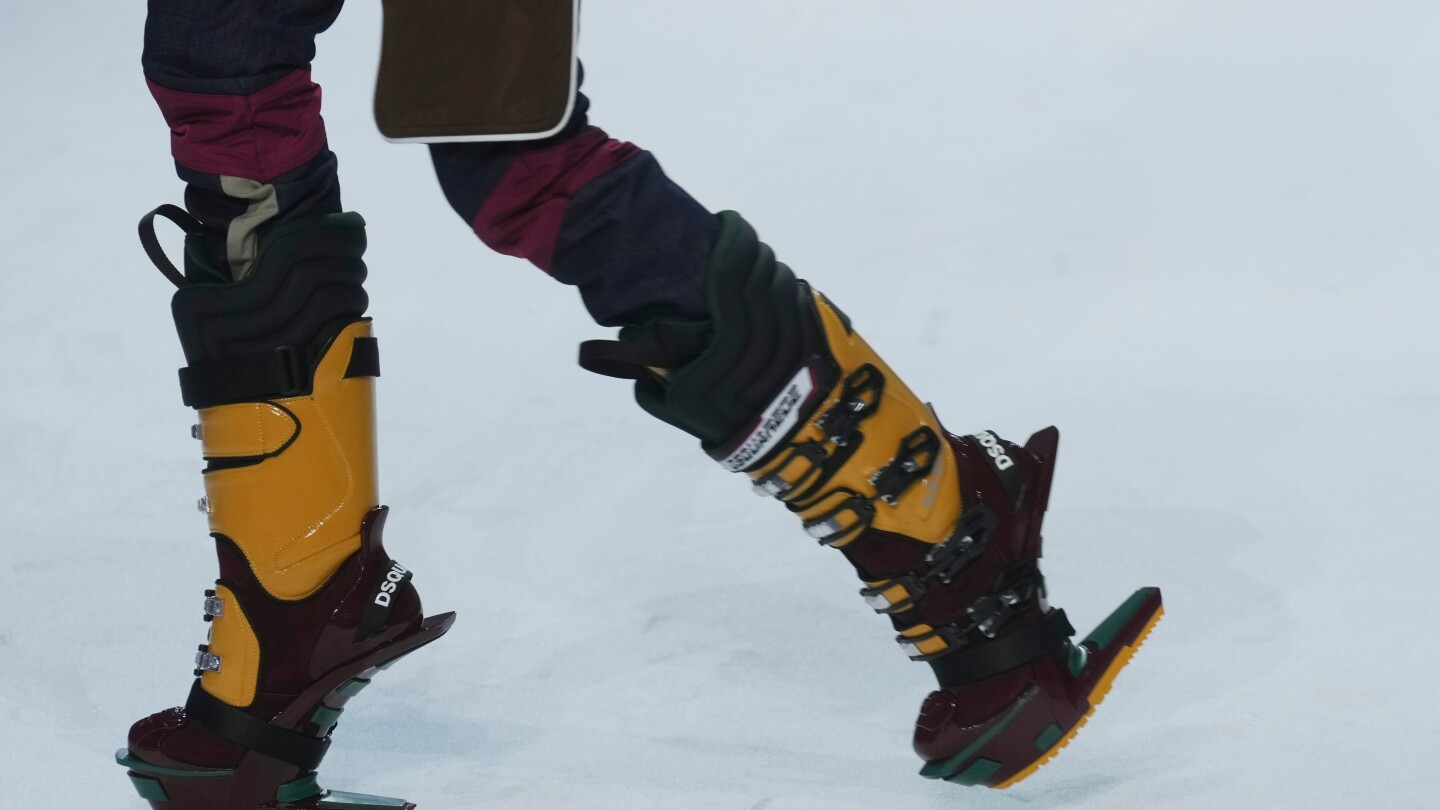
MILAN — The recently concluded Milan Fashion Week became an unexpected canvas for Olympic inspiration, with designers seamlessly blending athletic aesthetics with high fashion. Canadian design duo Dsquared2 delivered a playful homage to the Winter Games, while Ralph Lauren showcased sophisticated ski resort wear in preparation for outfitting Team USA. Emporio Armani contributed to the sporting theme with an in-store presentation of Team Italia’s official uniforms.
The event transcended mere stylistic discussions, with front-row conversations gravitating toward substantive issues of diversity, sustainability, and fashion’s evolving role in contemporary society. Over four days of Fall-Winter 2026-27 previews, predominantly focused on menswear, several key trends emerged that redefine modern luxury.
Dsquared2’s Canadian founders, Dean and Dan Caten, presented a collection that humorously imagined their alternative as Olympic outfitters for Team Canada. The show opened with actor Hudson Williams, star of the acclaimed series ‘Heated Rivalry,’ descending a snow-dusted staircase in distressed double denim and glittering athletic accents. The brand’s innovative footwear solutions stood out, particularly hybrid designs that transformed elegant heels into functional ski boots through clever ankle mechanisms.
Ralph Lauren adopted a more refined approach to mountain aesthetics within their historic Milan palazzo. The collection featured geometric knit patterns, technical fleece layers, and classic flannel that celebrated American heritage. Presented to an exclusive audience including Nick Jonas and Tom Hiddleston, the designs offered both warmth and sophistication for the Olympic season.
Prada’s creative leadership, Miuccia Prada and Raf Simons, revolutionized men’s accessories with origami-inspired foldable headwear that could be conveniently attached to outerwear. Their collection introduced modular capes providing practical protection, while dress shirts featured unconventional T-shirt necklines and rear fastenings. The strikingly slim silhouette of their car coats sparked discussion, which Prada addressed directly: ‘We must balance intellectual honesty with creating beautiful, believable elegance for our audience.’
Sustainability emerged as a critical theme, particularly at Zegna where Creative Director Alessandro Sartori emphasized generational quality over transient trends. The collection featured versatile jackets with innovative button mechanisms allowing multiple styling options. Sartori noted: ‘Our customers are collectors, not just fashionistas.’ Zegna’s commitment to longevity was underscored by displaying a century-old jacket from their archives, while their control over 60% of the supply chain provides unique sustainability credentials amid industry challenges.
Men’s jewelry gained significant prominence, with Dolce & Gabbana incorporating elaborate lapel pins, brooches with integrated timepieces, and heirloom-quality chains into evening wear. Prada complemented their extended sleeves with semi-precious stone cufflinks in lapis lazuli and tiger’s eye, finished with asymmetrical sculptural earrings.
Diversity initiatives received mixed attention, with Ghanaian designer Victor Hart making his Milan debut supported by the Afrofashion Association. His powerful denim creations incorporated industrial elements and streetwear influences. However, Dolce & Gabbana faced criticism for exclusively white model casting, drawing social media commentary describing the selection as ‘a thousand shades of white’ and ‘diabolical for 2026.’ This contrasted with the diversity renaissance Milan fashion experienced following the Black Lives Matter movement, suggesting ongoing challenges in achieving meaningful inclusion.