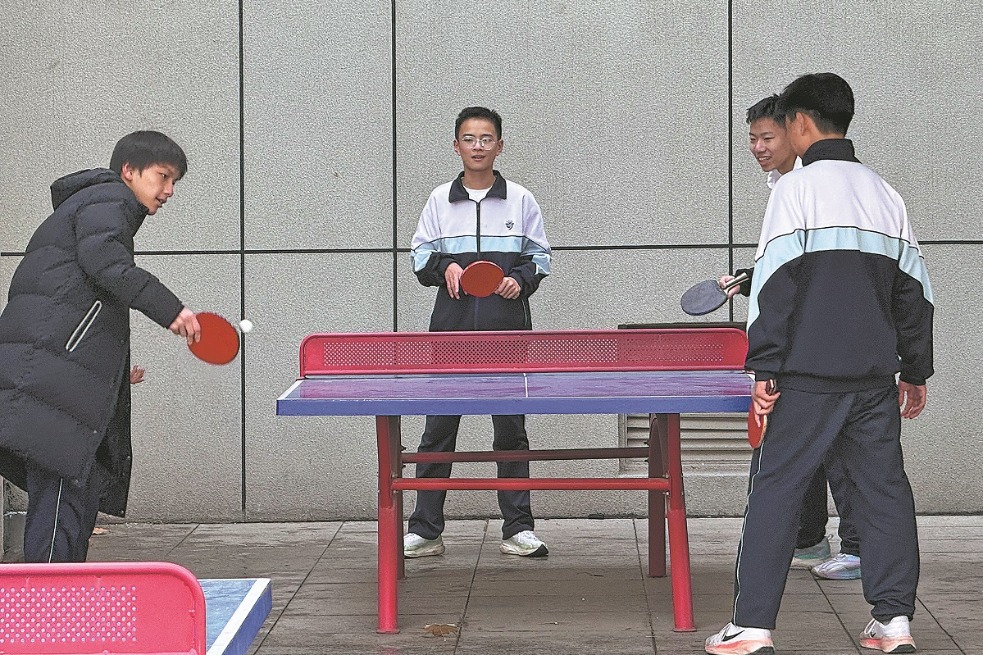
Educational institutions across China are undergoing a transformative approach to student wellness through the innovative creation of micro sports areas. These compact athletic zones, strategically implemented in previously underutilized campus spaces, are revolutionizing physical activity participation among students.
At Jinan No. 9 Middle School in Shandong Province, the class break transformation is particularly noticeable. Where students once remained sedentary during short breaks, they now enthusiastically engage in table tennis matches and badminton games using removable nets. The school has effectively converted scattered, neglected corners into vibrant hubs of physical activity.
Physical education teacher Song Zhijiu observes that previously limited facilities discouraged student exercise participation. ‘By optimizing our campus spatial configuration, we’ve developed easily accessible zones that significantly increase student involvement in diverse physical activities,’ he noted.
The initiative extends beyond mere physical benefits, fostering an organic sports culture where students voluntarily assume roles as referees, scorekeepers, and cheerleaders. Principal Du Haifeng reports noticeable improvements in student motivation and academic performance correlation with increased physical activity.
Zhijinshi Street Primary School exemplifies vertical space innovation, installing overhead bells for jumping activities, calibrated height markers on basketball structures, and compact climbing installations. PE instructor Zhang Shuo emphasizes their philosophy: ‘Physical activities shouldn’t be confined to specific schedules or locations. We’re creating continuous opportunities for children to develop stronger physiques through play.’
The data demonstrates compelling results: Zhijinshi Street Primary has witnessed a 30% increase in physical activity participation coupled with a 5% reduction in overall myopia rates among students.
This educational movement spans nationally, with schools repurposing rooftops, corridors, and stairwells into accessible micro playgrounds. Jiyang Experimental No. 2 Primary School has extended this concept beyond campus boundaries, converting idle adjacent land into a multi-functional fitness area shared with local community members during off-peak hours.
The collective impact is substantiated by provincial metrics: Jinan’s 2024 physical fitness assessment average reached 81.36 points, accompanied by an 8% decrease in obesity rates and a fourth consecutive annual decline in myopia prevalence.
According to Song Yu, Deputy Director of Jinan Municipal Education Bureau, ‘The strategic conversion of underutilized spaces—including vertical dimensions—into micro sports areas has substantially expanded physical activity opportunities across our educational institutions.’