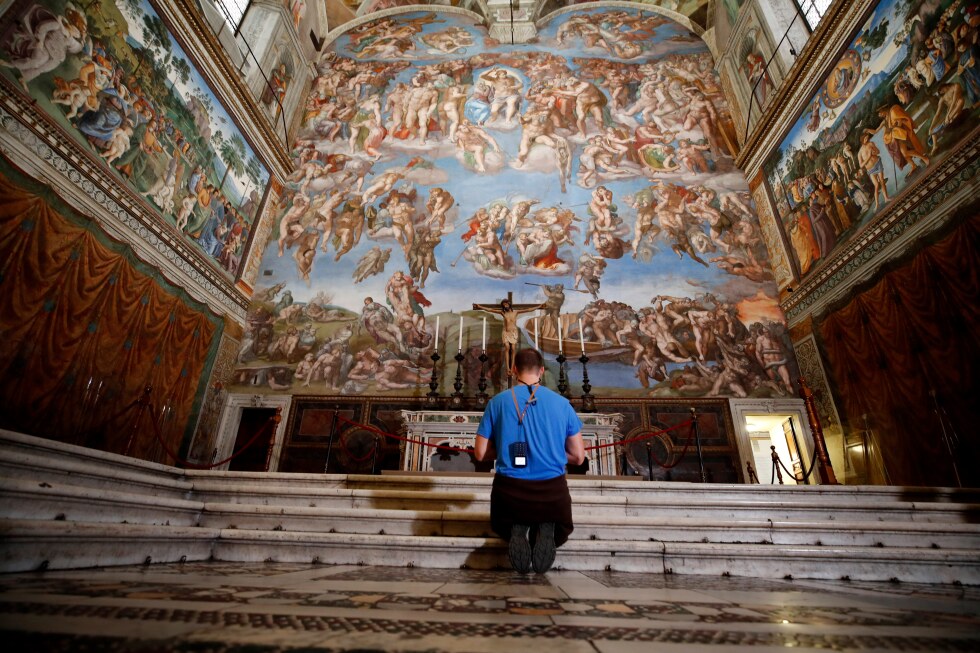
The Vatican Museums have initiated a comprehensive three-month restoration project for Michelangelo’s monumental fresco ‘The Last Judgment’ within the Sistine Chapel, marking the first significant conservation effort for the masterpiece in thirty years. This ambitious preservation undertaking aims to address the accumulated micro-particle deposits that have formed a whitish haze across the Renaissance artwork’s surface.
While the chapel will remain accessible to visitors throughout the restoration period, viewing conditions will be partially affected by the necessary scaffolding apparatus. The conservation team specifically targets the removal of foreign particulate matter carried through air circulation from the chapel’s substantial visitor traffic, which exceeds 6 million annual museum guests.
The Sistine Chapel, originally commissioned by Pope Sixtus IV during the 15th century, achieved its current artistic prominence through Michelangelo’s dual contributions. The Renaissance master first created the celebrated ceiling frescoes, including the iconic ‘Creation of Adam,’ between 1508 and 1512. He returned decades later to complete ‘The Last Judgment’ on the altar wall, solidifying the chapel’s status as a pinnacle of Western art.
The Vatican maintains continuous environmental monitoring within the chapel, implementing proactive measures to regulate humidity and temperature levels given the substantial visitor numbers. This most recent conservation initiative follows previous restoration campaigns, with the last major cleaning occurring in 1994. The chapel continues to serve both as an artistic treasure and functional religious space, having hosted the papal conclave that elected Pope Leo XIV in May.