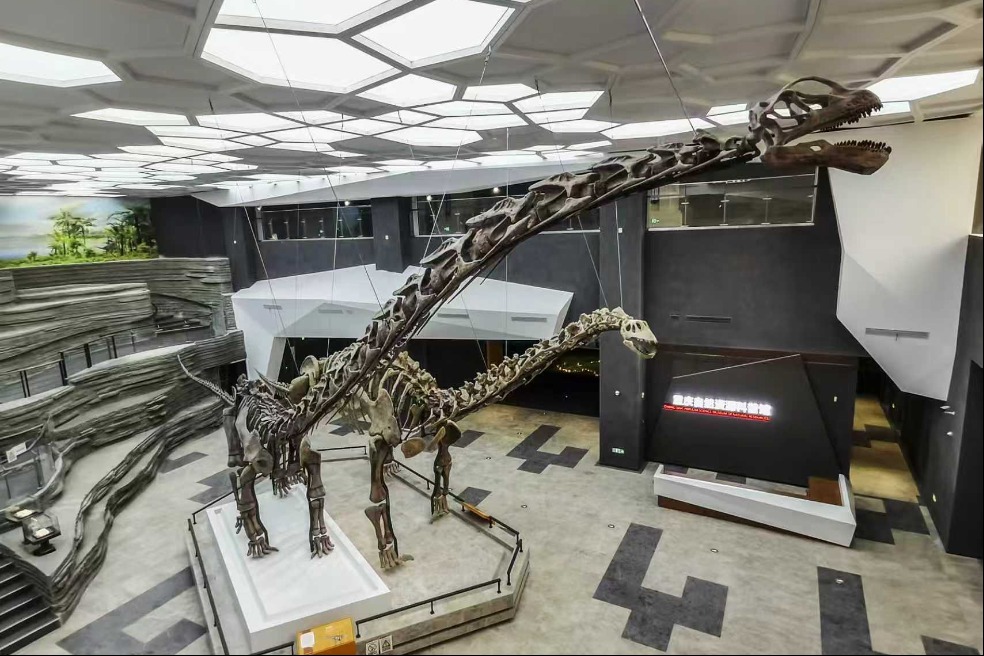
Paleontologists have identified a colossal new dinosaur species that roamed the terrain of present-day Chongqing approximately 160 million years ago during the Late Jurassic period. The monumental discovery, formally classified as Mamenchisaurus sanjiangensis, was detailed in a groundbreaking study published in the prestigious journal Scientific Reports.
The fossilized remains were originally unearthed in 2015 within Chongqing’s Hechuan district, a region situated at the convergence of the Jialing, Fujiang, and Qujiang rivers—a geographic feature that inspired the species’ nomenclature. With an estimated body length reaching 24 meters, comparable to the dimensions of a modern blue whale, this sauropod represents one of the most substantial dinosaur specimens ever recovered from the municipality.
Research led by Dai Hui of the Chongqing Institute of Paleontology revealed that although the newly identified species shares close phylogenetic relationships with Mamenchisaurus hochuanensis, meticulous analysis of skeletal structures confirmed its distinct taxonomic status. The remarkably preserved fossil assemblage includes an extensive series of cervical, dorsal, and caudal vertebrae, alongside pelvic elements and portions of the left limb.
This significant paleontological breakthrough emerged from the Upper Shaximiao Formation, a stratigraphic layer renowned for yielding numerous iconic Chinese dinosaur discoveries. The excavation and subsequent analysis mark a substantial advancement in Chongqing’s paleontological capabilities, providing crucial insights into sauropod diversification across East Asia during the Jurassic era. Mamenchisaurus sanjiangensis constitutes the eleventh novel dinosaur species identified in China throughout 2024, elevating Chongqing’s confirmed dinosaur species tally to fifteen.