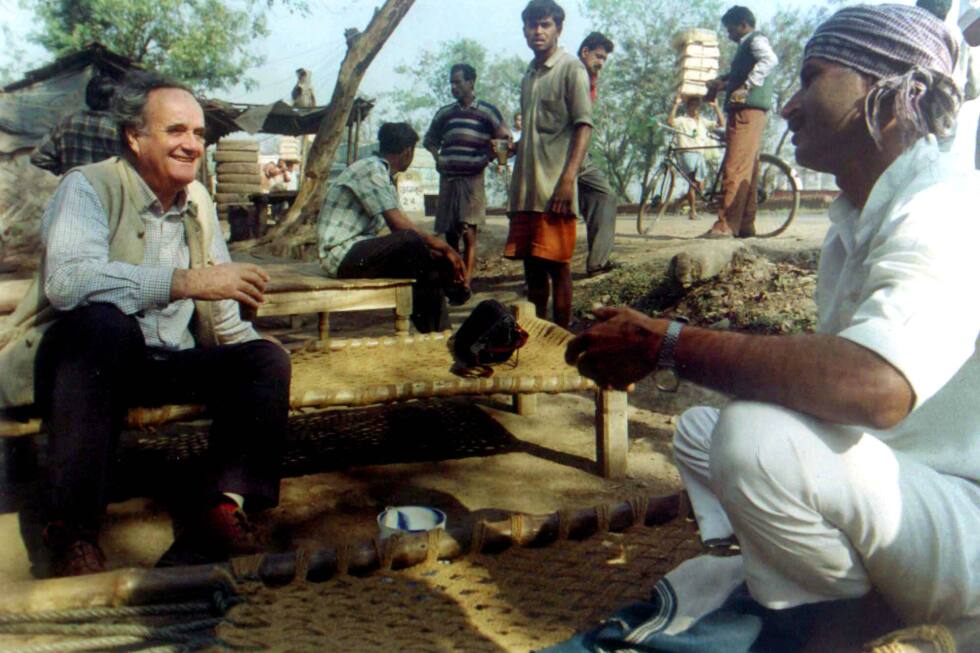
NEW DELHI — The world of journalism mourns the loss of Sir Mark Tully, the legendary BBC correspondent whose profound connection to India earned him the revered title ‘voice of the nation.’ The broadcaster confirmed his passing at the age of 90. Tully died on Sunday in a New Delhi hospital following a short illness, concluding a monumental chapter in international reporting.
Born in Kolkata (then Calcutta) in 1935, Tully’s journalistic journey with the BBC began in 1965. His deep understanding of the subcontinent led to his appointment as the New Delhi correspondent in 1971, a role he masterfully expanded to become the BBC’s Bureau Chief for South Asia for over twenty years.
Tully’s career was defined by his authoritative coverage of the most pivotal events that shaped modern South Asia. He provided the world with front-line reporting on the 1971 Indo-Pakistani War that resulted in the independence of Bangladesh. His incisive analysis guided global audiences through the complex 1984 Golden Temple siege, the tragic 1991 assassination of Prime Minister Rajiv Gandhi, and the deeply divisive 1992 Babri Masjid demolition that sparked extensive civil unrest across India. His reporting extended beyond India’s borders, delivering crucial dispatches from Pakistan, Bangladesh, and Sri Lanka.
Indian Prime Minister Narendra Modi led tributes, recognizing Tully as “a towering voice of journalism” whose profound connection to India and its citizens was vividly reflected in his body of work. “His reporting and insights have left an enduring mark on public discourse,” Modi stated in a social media post.
In recognition of his exceptional contributions to broadcasting and journalism, Britain knighted Tully in 2002. India further honored his dedication by awarding him two of its highest civilian honors—the Padma Shri and the Padma Bhushan—solidifying his unique status as a foreign journalist who became an integral part of the nation’s narrative.