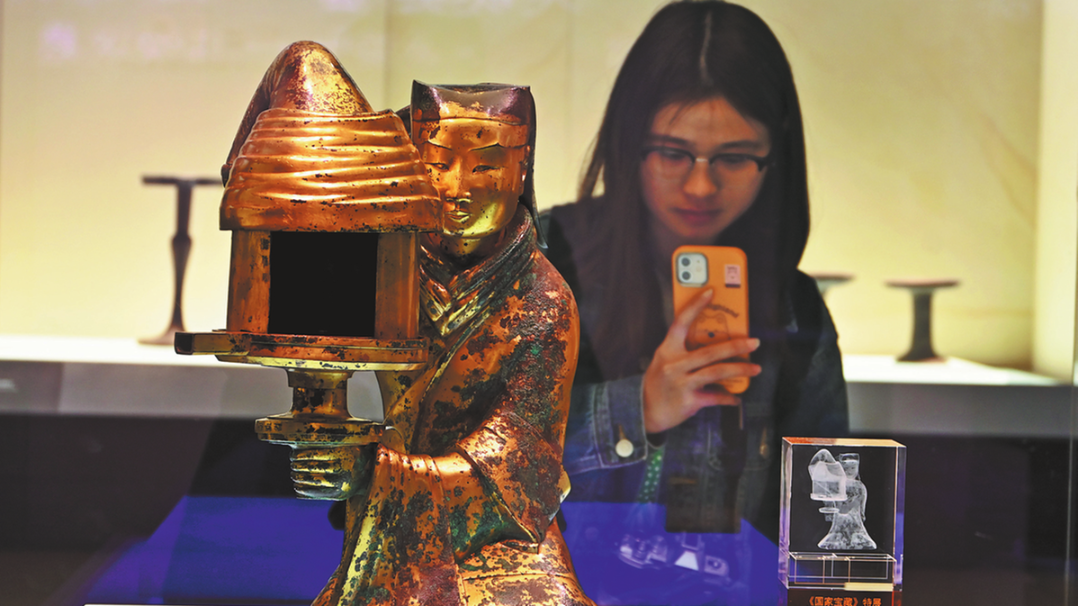
Chinese museums are revolutionizing visitor experiences by transforming ancient artifacts into edible cultural encounters. During the 2026 Spring Festival holiday, institutions nationwide reported unprecedented foot traffic, with visitors flocking not only for historical exhibits but increasingly for museum restaurants offering relic-inspired cuisine.
The Hebei Museum exemplifies this trend with its innovative Changxin Palace Lamp noodles—a regional specialty dish crowned with a steamed egg sculpted to resemble the museum’s 2,000-year-old Western Han Dynasty treasure. ‘It feels like tasting a piece of history,’ remarked Liang, a Beijing traveler who prioritized both national treasures and culinary exploration during her visit.
This gastronomic movement represents a strategic shift from static exhibition to immersive consumption. According to Li Kexin of the Hebei Museum’s art department, these culinary creations address practical needs while making cultural narratives more accessible. ‘Dining at a museum is part of the cultural experience,’ Li explained, emphasizing how flavor enhances storytelling.
The phenomenon extends beyond Hebei Province. At Anyang’s Yinxu Museum, visitors consume noodles imprinted with oracle bone inscriptions—each character printed in squid ink representing ancient blessings that are literally consumed. The restaurant reports selling 500-600 daily portions during peak periods.
Social media amplification has accelerated this trend, with visually striking creations like the Capital Museum’s horse-shaped mousse cake generating viral attention on platforms like Xiaohongshu. The ‘instagrammable’ quality of these dishes has become a significant driver of museum attendance among younger demographics.
Beyond novelty, practical considerations fuel the trend’s sustainability. Affordable pricing—with dishes starting at 3 yuan at the Sichuan Museum—combined with the convenience of on-site dining addresses visitor fatigue while creating additional revenue streams. Professor Xu Jing of Peking University notes that dining’s recurring nature makes it a stronger consumption driver than traditional souvenir sales.
Government policies have encouraged this development, with nine central departments jointly promoting innovative cultural products. However, experts caution that sustained success requires moving beyond novelty toward developing enduring cultural narratives that integrate museums into community life rather than merely attracting tourists.