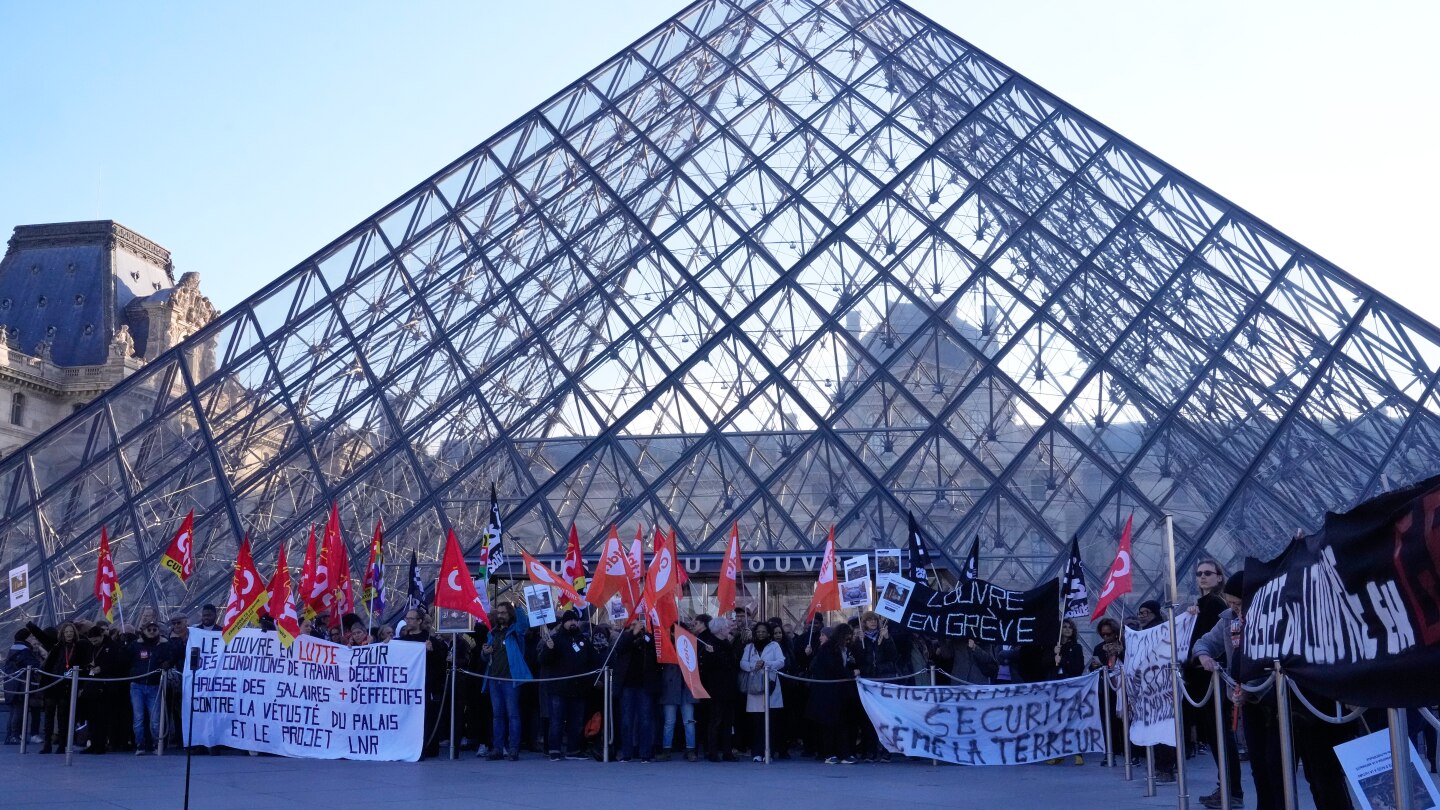
PARIS — Louvre Museum employees have voted to prolong their strike action, intensifying labor disputes at the world’s most frequented cultural institution. The work stoppage, initially implemented earlier this week, reflects deepening tensions between staff and management over systemic operational challenges.
Union representatives cite persistent understaffing, deteriorating infrastructure, and controversial administrative decisions as primary grievances. These concerns gained renewed urgency following October’s audacious crown jewels theft, which revealed critical security vulnerabilities within the historic museum complex.
The Wednesday morning general assembly resulted in unanimous support for continuing the industrial action, creating uncertainty about daily operations. Ticket-holding visitors formed queues outside the museum while administration officials assessed whether sufficient staff would be available to maintain safe gallery access.
In response to the crisis, Culture Ministry officials proposed several mitigation measures during emergency talks with unions on Monday. These included canceling planned €6.2 million funding cuts scheduled for 2026, initiating new recruitment drives for security and visitor service positions, and enhancing staff compensation packages. Union leadership dismissed these proposals as insufficient to address fundamental problems.
Louvre President Laurence des Cars faced additional scrutiny during her scheduled appearance before the Senate’s culture committee Wednesday. Lawmakers continue investigating security failures after des Cars acknowledged only learning about a damning 2019 security audit following the October robbery. Both France’s Court of Auditors and an independent administrative inquiry have criticized delayed implementation of promised security upgrades.
The Culture Ministry recently implemented emergency anti-intrusion protocols and appointed Philippe Jost—who supervised Notre Dame’s restoration—to assist in reorganizing the museum’s security apparatus, signaling growing governmental concern over leadership effectiveness.