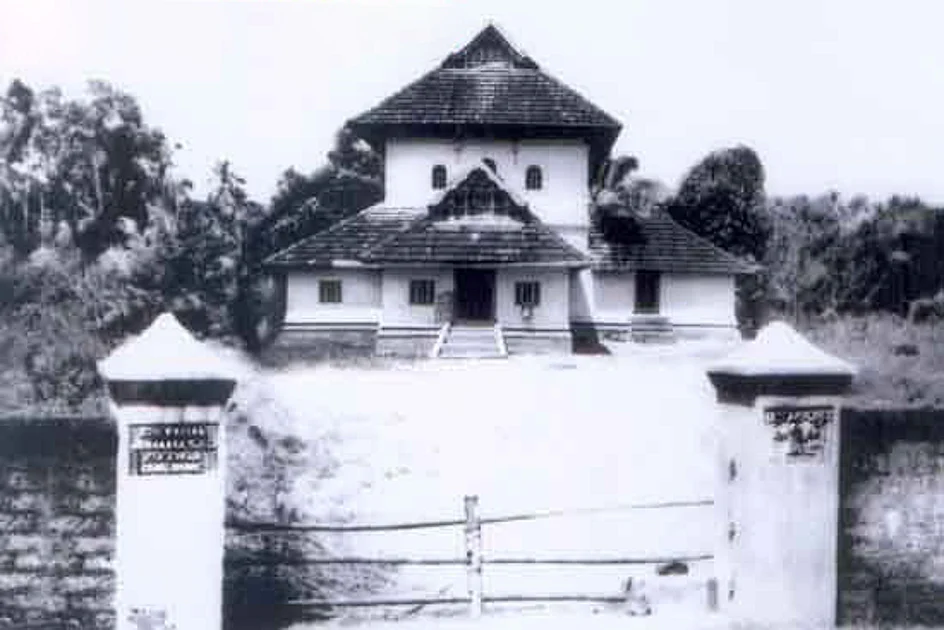
India’s oldest mosque, the Cheraman Juma Masjid in Kerala’s Kodungallur, has reopened following an extensive 30-month conservation project completed in 2022. Originally constructed in 629 AD during the lifetime of Prophet Muhammad, this architectural treasure represents one of the world’s oldest continuously functioning Islamic places of worship.
The mosque’s remarkable history traces back to Cheraman Perumal, the then-King of Kerala, who embraced Islam and commissioned the mosque’s construction before departing for Mecca. Persian scholar and explorer Malik Bin Dinar played a pivotal role in overseeing the initial construction. The mosque has undergone several renovations throughout its 1,400-year history, with significant work occurring in the 11th century, approximately 300 years ago, and most recently in 1974 when an extension was added while preserving the ancient core structure.
The recent conservation initiative was conducted under the Muziris Heritage Project, a governmental program dedicated to safeguarding Kerala’s historical and cultural landmarks. This comprehensive restoration aimed to revive the mosque’s traditional elegance while maintaining its architectural integrity.
Kodungallur’s significance extends beyond religious boundaries, having emerged as a sanctuary during the Malabar rebellion of 1921 when Islamic scholars sought refuge from police atrocities. The region subsequently became the founding place of the Muslim Aikya Sangham in 1923, which rapidly expanded to establish nearly 1,500 educational institutions across Muslim-dominated areas of Cochin and Malabar.
The local Mappila community, descendants of 7th-century Arab traders, have maintained the mosque’s traditions while fostering remarkable interfaith harmony. A mosque spokesperson noted that non-Muslim communities regularly contribute Iftar offerings during Ramadan, demonstrating the region’s distinctive cultural synthesis.
Government officials emphasize that Kerala’s Muslim community has played a substantial role in regional trade, anti-colonial resistance, and cultural development, with their legacy enduring through the state’s language, cuisine, and socio-political evolution.