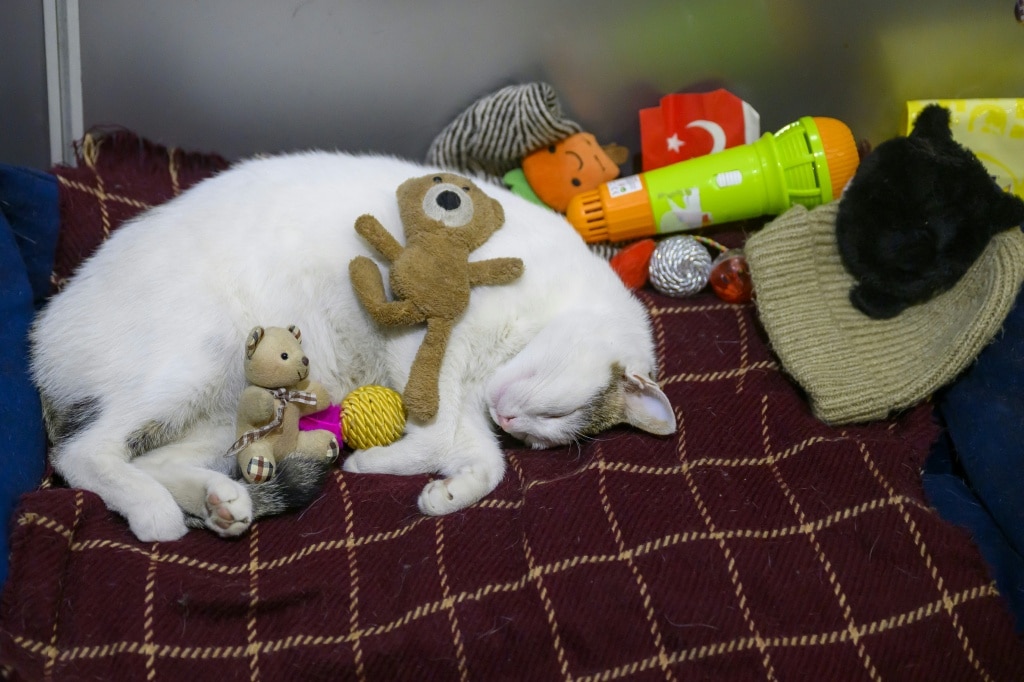
In the bustling metropolis of Istanbul, an extraordinary urban symbiosis flourishes between humans and felines, where approximately 160,000 street cats enjoy near-royal treatment from the city’s 16 million residents. This unique cultural phenomenon transforms the city into what locals proudly call ‘the city of cats,’ where feline residents freely inhabit shopping centers, restaurants, and even historic landmarks with unparalleled acceptance.
The recent case of Kanyon, a white cat with distinctive grey markings, exemplifies this special relationship. After the theft of his sleeping basket from an Istanbul shopping center, concerned citizens mobilized to provide not just replacement comforts but an abundance of snacks, toys, and even a dedicated Instagram page managed by an admirer. His newly created corner now resembles a child’s playroom more than animal shelter.
This cultural tradition traces its roots to pre-Ottoman history. According to Altan Armutak, an expert from Istanbul University’s veterinary history department, the deep affection for cats connects to both religious significance and historical practice. ‘When Ottomans captured Constantinople in 1453, they discovered cats waiting patiently outside fish markets and butcher shops,’ Armutak explains. ‘Feeding these animals became regarded as a spiritual offering in devotion to God.’
Throughout the city, from the European to Asian districts and aboard the connecting ferries, cats enjoy privileged status. They nap undisturbed on restaurant chairs, wander through supermarkets, and curl up in shop windows displaying expensive fabrics. Many have become neighborhood mascots, with some achieving posthumous recognition like Tombili, a portly feline memorialized with a bronze statue in Kadikoy for her iconic lounging pose that became an internet sensation.
Even historic landmarks participate in this tradition. The sixth-century Hagia Sophia had its beloved tabby mascot, Gli, who received presidential attention from Barack Obama during his 2009 visit. Meanwhile, Topkapi Palace, former residence of Ottoman sultans, recently restored a centuries-old cat flap, maintaining architectural features specifically designed for feline access.
Modern municipal authorities now balance this cultural heritage with practical urban management. The city government sterilized over 43,000 cats in the past year alone—a twelve-fold increase since 2015—to humanely manage the population. Officials have expressed concern about overfeeding attracting rodents, with Regional Governor Davut Gul noting the unusual phenomenon of rats eating alongside cats, though many residents report minimal rodent issues.
As 22-year-old German student Fatime Ozarslan observed while placing food in Macka Park, home to至少100 cats: ‘In Germany, we have many rats, but here, with so many cats, they must be afraid.’ This enduring relationship, where humans and cats coexist as equals, remains an integral part of Istanbul’s identity that residents believe defines their city’s character.