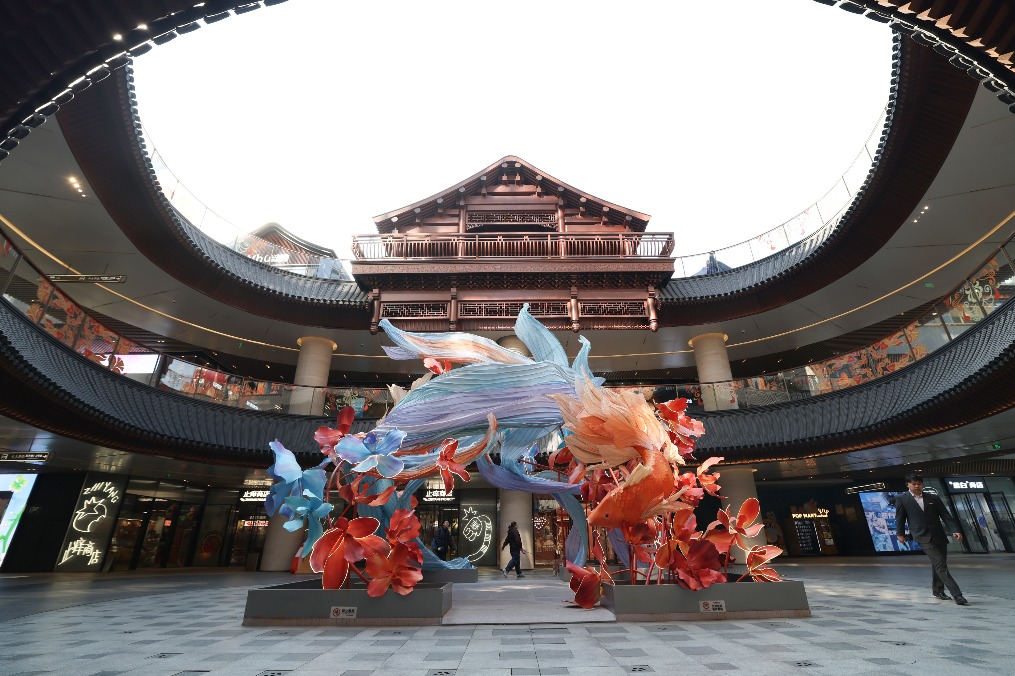
Beneath the soft glow of Beijing’s morning sun, the weathered gray walls of Dajixiang’s traditional courtyards glow with quiet warmth. Tucked into the core of the city’s historic Xuannan district — a neighborhood that has carried the traces of Beijing’s cultural evolution for more than 800 years — this newly revitalized multifunctional complex stands as a living bridge between China’s distant past and its dynamic present.
Wandering through the neighborhood’s winding narrow lanes, visitors encounter snapshots of everyday life that feel both timeless and utterly contemporary. In one shaded quiet corner, an elderly resident hunches over a hand-carved wooden chessboard, his brow furrowed as he plots his next move, while his opponent lets out a low, amused chuckle after a particularly clever gambit. A few steps away, doting grandparents walk slowly beside a wobbly toddler, guiding her as she takes her first unsteady steps into the world. Further along the lane, a local resident strolls at a relaxed pace, his golden retriever pulling eagerly at the leash, nose working overtime to sniff out every interesting scent along the path. Each small, unscripted moment weaves together to form a vibrant, living tapestry, proving that history here is not locked away in glass museum cases — it is part of daily life, where the past and present coexist without friction.
At the heart of the complex, one carefully restored courtyard holds the former residence of Kang Youwei, the prominent reformer from China’s late Qing Dynasty (1644–1912). Kang was one of the masterminds behind the Hundred Days’ Reform of 1898, a landmark movement that sought to modernize China through political and institutional change. Standing surrounded by sleek, contemporary office buildings, the traditional Qing-era residence is a striking visual contrast, and a permanent reminder of Xuannan’s extraordinary layered history. Long before modern development reached central Beijing, Xuannan earned a reputation as a thriving cultural gathering hub, home to leading scholars, radical intellectuals, and revolutionary thinkers who shaped the course of modern Chinese history. Today, that centuries-old legacy endures, giving locals and tourists alike a tangible connection to the profound transformations that built the China we know.