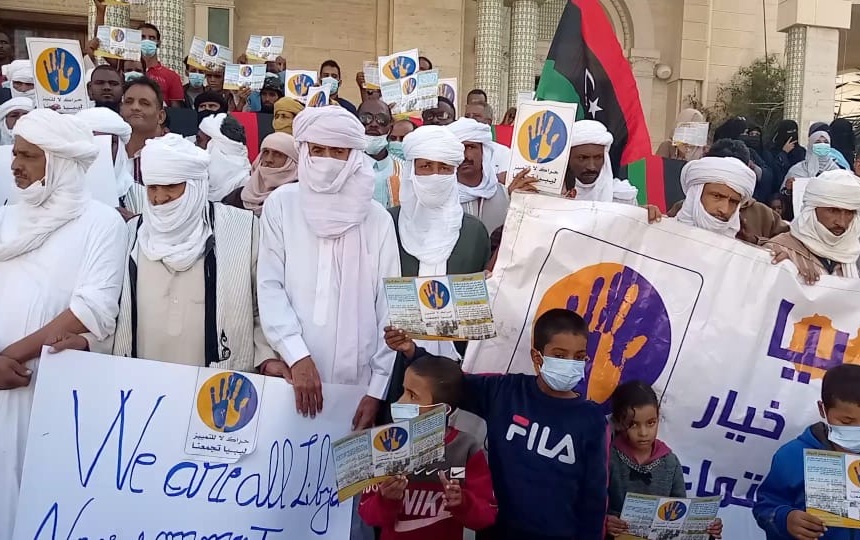
In the vast desert landscapes of southwestern Libya, an entire generation of Tuareg people exists in a paradoxical state of belonging without recognition. Indigenous to North Africa and traditionally nomadic across five nations, these communities face systematic exclusion from citizenship despite deep historical roots in Libyan territory.
The administrative nightmare begins at birth for thousands like Abdulbaqi Hamdi, a Tuareg in his early twenties born and raised in Libya yet denied basic documentation. “We have always been on the margins of the state, but we have never been outside our homeland,” Hamdi reflects, capturing the essence of this institutional limbo.
Historical context reveals this predicament stems from decades of political manipulation rather than accident. During Muammar Gaddafi’s regime, many Tuareg families from Mali and Niger settled in southern Libya, fleeing Sahelian droughts and conflicts. They were recruited into military service with promises of naturalization that never materialized—a deliberate strategy of administrative blackmail to maintain control.
The 2011 uprising that toppled Gaddafi worsened their situation dramatically. Tuareg communities faced immediate suspicion due to some members’ involvement in Gaddafi’s army, resulting in double marginalization: first through exploitation by the state, then through stigmatization after its collapse.
Libya’s current political fragmentation between rival governments in Tripoli and Benghazi has created governance vacuums in the Fezzan region, where most Tuareg inhabit areas under military commander Khalifa Haftar’s control. Entire neighborhoods in cities like Sabha and Ubari lack basic infrastructure—nonexistent roads, sanitation networks, and healthcare facilities—functioning as forgotten enclaves.
The legal framework exacerbates this exclusion. Law No. 8 (2014) made the national identification number mandatory for accessing fundamental rights: obtaining passports, voting, owning property, or receiving social assistance. Without this number, Tuareg individuals cannot register marriages, open bank accounts, obtain SIM cards, or even receive death certificates.
Education and healthcare access remain particularly problematic. While children can attend school, they are denied official diplomas. Medical treatment requires navigating complex administrative hurdles that often prove insurmountable.
Human rights activist Majdi Bouhanna estimates between 16,000-17,000 families remain affected, their cases languishing in “provisional” civil registries despite completed legal processes. Contrary to popular belief, this issue impacts indigenous Tuareg alongside those with cross-border histories, reflecting broader systemic failures in civil registration.
The security implications are profound. Marginalized youth, deprived of education and formal employment, increasingly turn to informal economies or armed groups. This creates vulnerability to recruitment by militias and criminal organizations operating in migration and smuggling routes that crisscross the Fezzan region.
Community responses have emerged despite these challenges. Khadidja Andidi, a humanitarian activist in Ubari, established the volunteer center Noor al-Ilm following deadly inter-tribal conflicts in 2014-2015. Her organization provides healthcare, training, and emergency assistance while operating outside official channels due to her own statelessness.
UN reports from 2018 highlight how denial of nationality fuels chronic marginalization, exacerbating conflicts and instability. As Bouhanna emphasizes, “The Tuareg are an integral part of Libya. They have protected its borders and defended the country at every stage of its history.”
With anger mounting and calls for mobilization increasing on social media, experts warn of potential explosion in an already fragile nation. The bureaucratic nightmare surrounding Tuareg and Tebu communities represents not just a human rights crisis, but a critical security vulnerability that demands immediate political resolution.