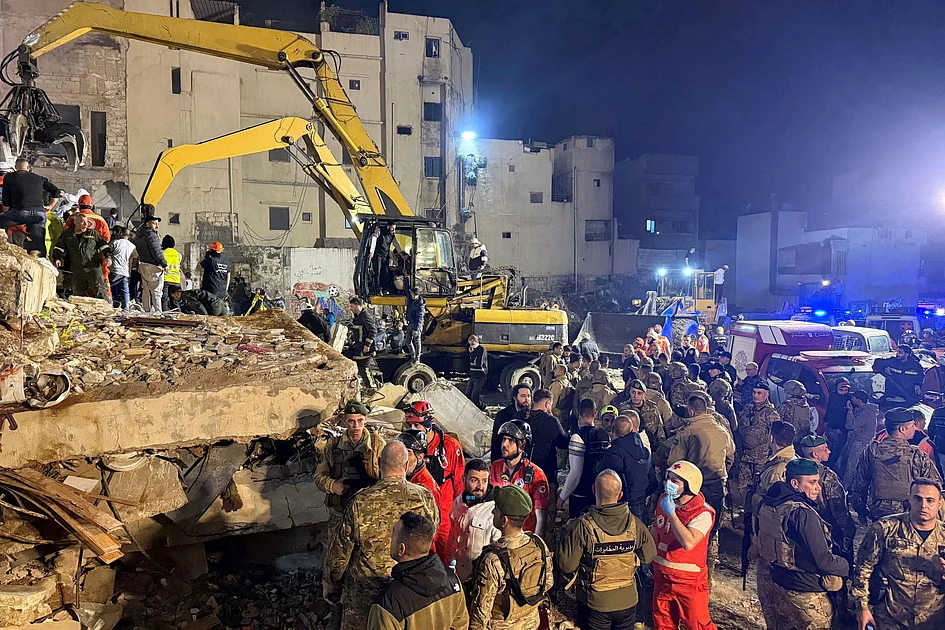
TRIPOLI, LEBANON – The death toll from Sunday’s building collapse in northern Lebanon’s impoverished city of Tripoli has escalated to nine fatalities, according to civil defense officials, marking the second such structural failure within weeks. The tragic incident occurred in the Bab al-Tabbaneh neighborhood, recognized as the city’s most destitute area, where rescue teams continue their desperate search for potential survivors beneath the rubble.
Civil Defence Director General Imad Khreish confirmed to local media that six individuals were successfully extracted from the debris and transported to nearby medical facilities for treatment. The collapsed structure comprised two separate blocks containing six apartments each, with preliminary estimates suggesting approximately 22 residents were present during the catastrophic event.
Mayor Abdel Hamid Karimeh declared Tripoli a disaster-stricken city during a press conference, citing the pervasive threat posed by thousands of unsafe buildings throughout the municipality. “Thousands of our people in Tripoli are threatened due to years of neglect,” Karimeh stated, emphasizing that “the situation is beyond the capabilities of the Tripoli municipality.”
The disaster has triggered civil unrest, with reports of angry demonstrators vandalizing property near political offices. This incident follows another deadly building collapse in late January, highlighting systemic urban safety failures.
According to January statistics from Tripoli’s municipal authorities, 105 buildings required immediate evacuation notices. Notably, Sunday’s collapsed structure was not included on the official list of imminently dangerous buildings, raising questions about assessment protocols.
Prime Minister Nawaf Salam denounced the situation as a “humanitarian catastrophe” resulting from “long years of accumulated neglect” while announcing government readiness to provide housing allowances to displaced residents. Justice Minister Adel Nassar has ordered an immediate investigation into the collapse through the northern public prosecutor’s office.
Urban planning experts attribute the recurring tragedies to unregulated construction practices, particularly during Lebanon’s 1975-1990 civil war, when numerous buildings were erected without proper permits or safety standards. The country’s prolonged economic crisis has further exacerbated the situation, leaving residents unable to afford necessary repairs or alternative housing options.
This tragedy echoes concerns raised by Amnesty International in 2024 regarding thousands of Tripoli residents continuing to inhabit structurally compromised buildings more than a year after the devastating Turkey-Syria earthquake further weakened already precarious structures.