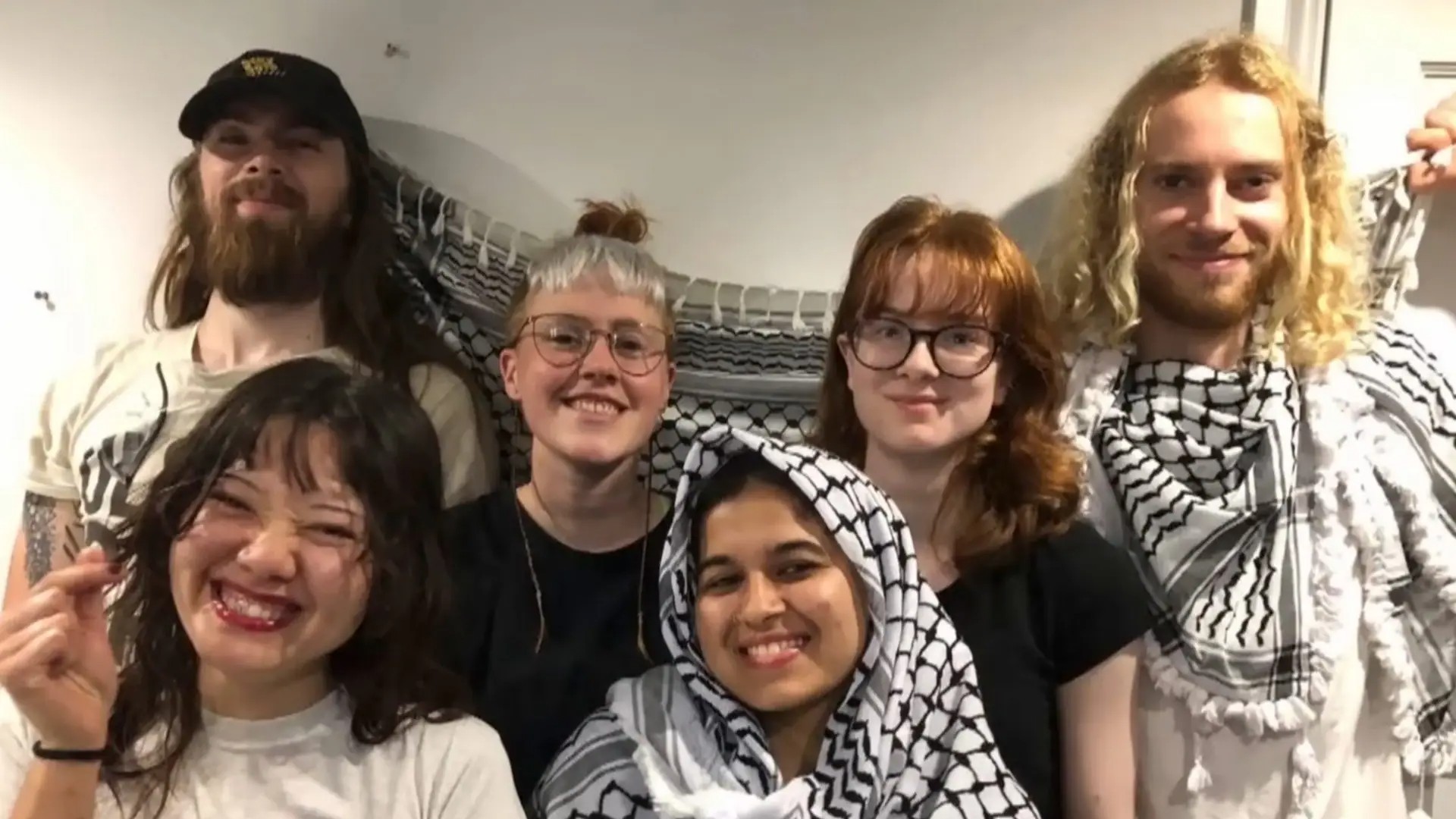
A contentious legal battle surrounding Palestine Action activists has concluded with significant acquittals at Woolwich Crown Court, sparking debates about judicial integrity and jury independence. Six defendants—Leona Kamio (30), Samuel Corner (23), Fatema Rajwani (21), Zoe Rogers (22), Jordan Devlin (31), and Charlotte Head (29)—were cleared of aggravated burglary charges following a raid on an Elbit Systems weapons plant near Bristol in August 2024.
The jury delivered mixed outcomes: full acquittals on violent disorder charges for all defendants, while remaining deadlocked on criminal damage allegations despite five defendants admitting to destroying military equipment. The case further complicated when jurors couldn’t reach a verdict regarding Corner’s alleged grievous bodily harm against a police officer with a sledgehammer.
Post-verdict controversies erupted when Lord Walney, former government adviser on political violence, alleged jury tampering through posters displayed near the courtroom promoting ‘jury equity’—the principle allowing jurors to acquit based on conscience. This prompted calls for retrial and investigation.
Defense lawyer Audrey Cherryl Mogan countered these claims as ‘misleading and dangerous,’ noting similar displays are common in protest trials. She referenced the historic Bushell’s Case plaque at Old Bailey that commemorates the 1670 ruling establishing jury independence.
The trial revealed deeper tensions regarding judicial guidance on moral justification. Justice Johnson initially instructed jurors to disregard Middle East context, but jurors subsequently inquired whether they could acquit based on defendants’ genuine belief in life-saving actions. This intersected with ongoing legal debates about jury independence, recently tested in climate protester Trudi Warner’s contempt case.
Former government lawyer Tim Crosland highlighted potential influence attempts by political figures, including Shadow Home Secretary Chris Philp who publicly characterized unproven allegations as fact. Defend Our Juries campaign group formally requested contempt proceedings against Philp for potentially prejudicial statements.
Evidentiary complexities emerged during trial, including missing security footage from critical areas and contradictory bodycam evidence showing security guards assaulting unarmed defendants. The prosecution’s narrative of ‘meticulously organized’ action was challenged by defense accounts of chaotic circumstances and self-defense motivations.
The acquittals have intensified discussions about protest rights, judicial oversight, and the balance between legal evidence and moral justification in politically charged trials.