At the ongoing 14th National People’s Congress, Deputy Song Bao’an has presented a comprehensive proposal advocating for enhanced plant protection measures and new legislative frameworks. The lawmaker, who also serves as President of Guizhou University, emphasized that robust plant protection systems are fundamental to preventing widespread crop pest outbreaks and safeguarding both staple food crops and commercial agricultural products.
Speaking from a decade of frontline research experience, Song highlighted China’s paradoxical position as an agricultural powerhouse that still grapples with systemic challenges including pesticide overuse and recurrent crop diseases. “Despite numerous efforts in this field, China lacks a high-level legal framework specifically addressing plant protection,” Song noted, referencing the nation’s 2025 food output of 714.88 million metric tons according to National Bureau of Statistics data.
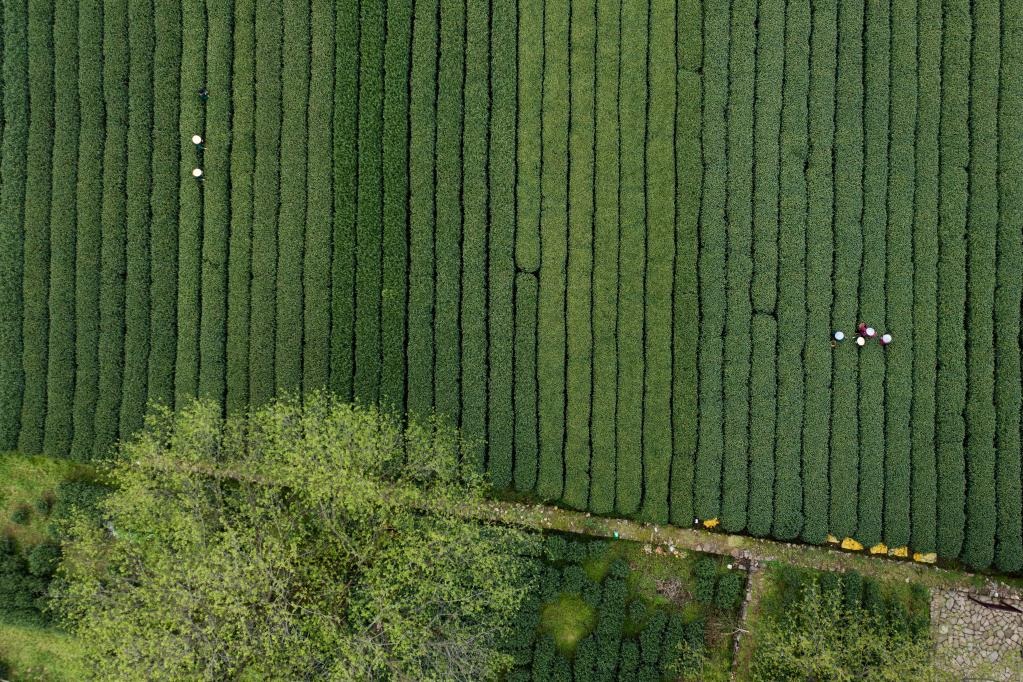
The proposal calls for establishing clearly defined regulatory bodies and specialized enforcement teams to ensure nationwide plant health monitoring. Song’s research team has pioneered innovative green pest control methods, particularly for tea cultivation—a crucial crop covering approximately 466,667 hectares in Guizhou province. Their breakthrough approach involves deploying natural predator insects to combat tea pests, creating a sustainable biological control system.
These integrated pest management techniques have demonstrated remarkable success domestically, with implementation expanding across Guizhou, Hainan, and Hunan provinces. The methods have also gained international recognition through the China-Sri Lanka Joint Laboratory for Green Tea Pest Control Technology, established in 2024. Since January 2025, Professors Jin Linhong and Hao Gefei have led repeated technical missions to Sri Lanka, where small family tea farms struggle with extensive management and severe pest problems.
After one year of trials combining biological control with improved farming practices, demonstration tea gardens reported a 50% reduction in disease incidence and improved soil conditions. Yield increases ranged from 23% to an extraordinary 110%, with the project expanding from initial pilot areas to approximately 333 hectares. The program has also facilitated knowledge exchange, with over 50 Sri Lankan students studying at Guizhou University and implementing these techniques upon returning home.
Song directly links advanced plant protection to broader national priorities: “Crops from the field end up on people’s plates. Strengthening oversight and legislation concerns not just tea or cash crops but personal health and national food security.” The proposal positions green agriculture—incorporating organic fertilizers, biopesticides, and water-saving irrigation—as essential for addressing soil depletion, water pollution, and climate change challenges through drought-resistant varieties and climate-smart farming practices.
“China’s agriculture has reached a turning point,” Song concluded. “Matching laws are essential to ensure practitioners can implement technologies correctly and scientifically, making agriculture greener and food safer.”