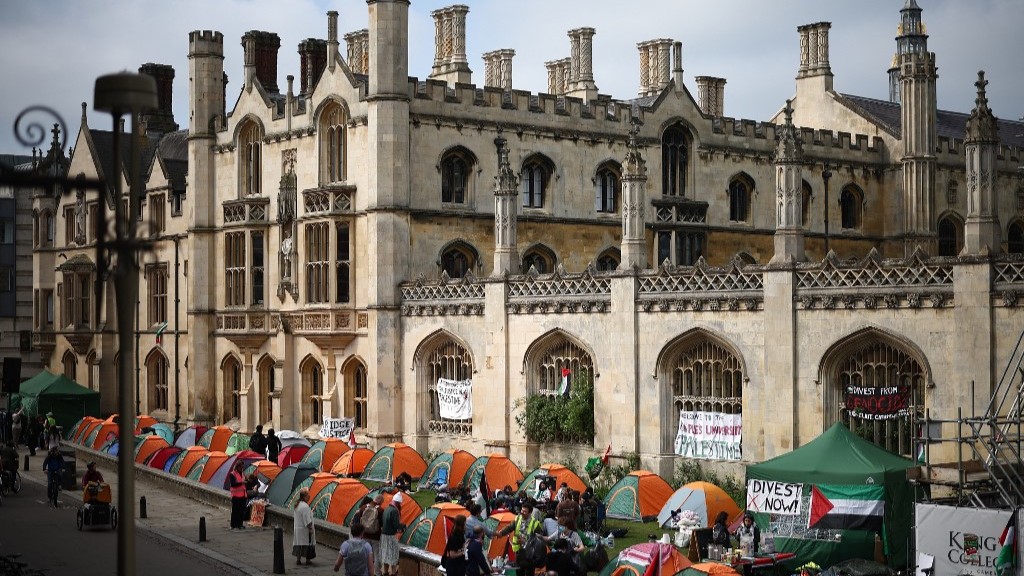
In a landmark decision driven by sustained student activism, King’s College at the University of Cambridge has committed to divesting from the arms industry and companies implicated in occupations. The historic institution, established by Henry VI in 1441, announced this week that its governing body has approved adopting a comprehensive responsible investment policy by year’s end.
The college currently maintains £2.2 million ($2.94 million) in arms manufacturers including Lockheed Martin, Korea Aerospace, and BAE Systems as of March 2023. Under the new ethical framework, King’s will exclude companies engaged in activities ‘generally recognized as illegal or contravening global norms, such as occupation,’ specifically referencing Ukraine and Palestinian territories. The policy further prohibits investments in producers of military and nuclear weapons, internationally restricted weapons, and manufacturers of dedicated components for such weapons.
This decision makes King’s the first Oxford or Cambridge college to implement such measures, culminating months of organized protests by student groups. The college acknowledged the policy emerged from ‘wide-ranging discussions within the college about its investments and its values.’
Student organization King’s Cambridge 4 Palestine welcomed the move while criticizing its timing: ‘KC4P implore the university and other colleges to follow the example set by King’s, although the decision comes far too late for the thousands of Palestinians who have been starved, tortured and killed.’
The development occurs within a broader context of investment-related protests across Cambridge’s 31 autonomous colleges. Last May, student group Cambridge for Palestine established protest encampments demanding transparency and divestment from companies complicit in Israel’s Gaza operations. While the university committed in July to establishing Palestinian academic opportunities and an investment review working group, students resumed protests in November accusing the institution of ‘stalling.’
The controversy escalated in February when the university obtained a High Court order restricting Israel-Palestine protests on key sites until July’s end, prompting hundreds of students and staff to condemn the move as an ‘assault on freedom of expression.’
Separately, Middle East Eye revealed Trinity College, Cambridge’s wealthiest institution, maintained $78,089 in Elbit Systems, Israel’s largest arms company providing most drones and land equipment to the Israeli military. Despite student reports of intended divestment following months of protests, the college’s master insisted in November that Trinity had ‘no interest in divesting from arms companies,’ with recent freedom of information requests confirming continued weapons investments.