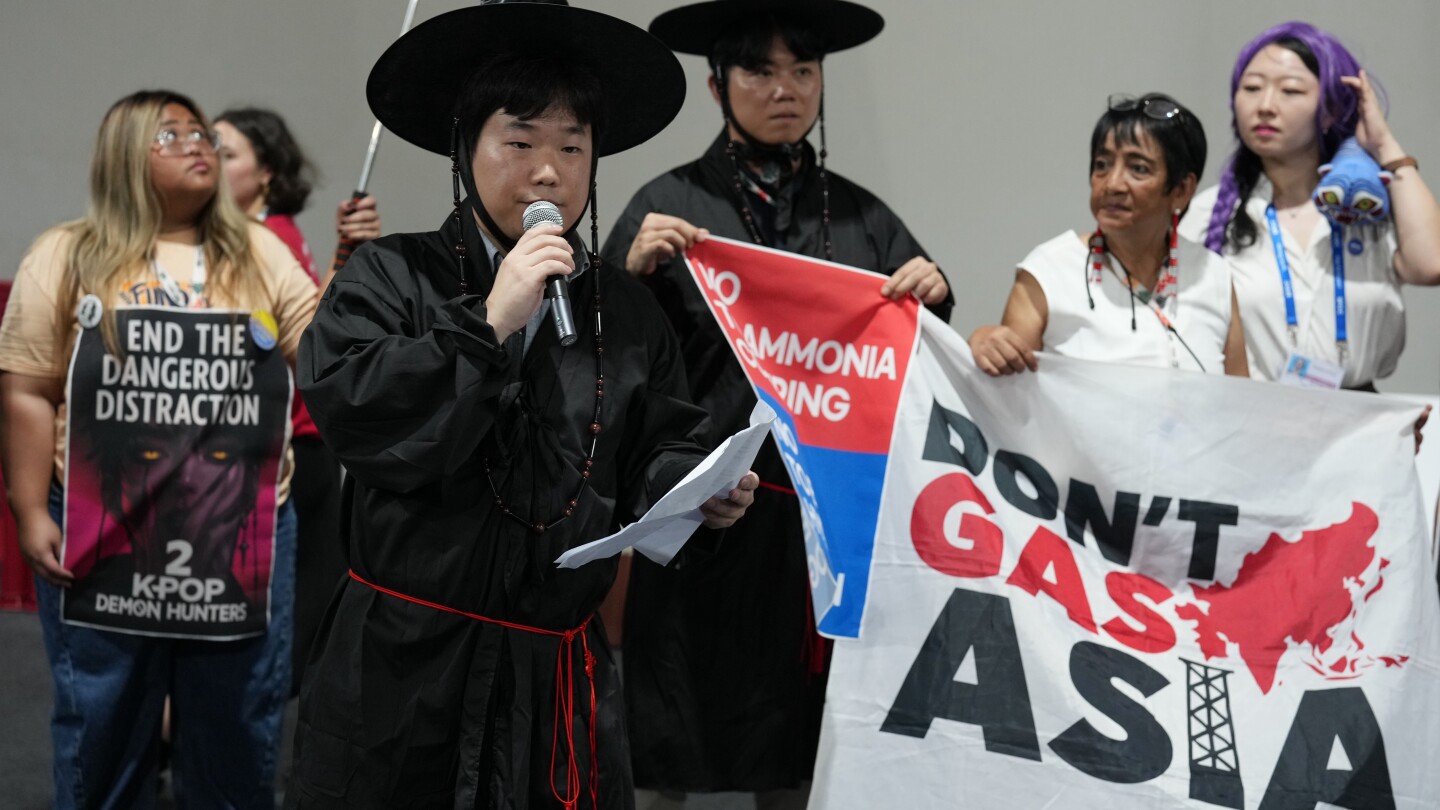
In a groundbreaking move, K-pop fans have emerged as a powerful force in the fight against climate change, showcasing their influence at the United Nations climate talks (COP30) in Belem, Brazil. Known for their passionate dedication, these fans are leveraging their collective energy to address global environmental issues. The event featured creative protests, including costumed demonstrations inspired by the Netflix hit “KPop Demon Hunters,” which has garnered over 325 million views. Activists carried banners reading “Export K-pop, not fossil fuels,” urging South Korea to halt its funding for foreign fossil fuel projects. South Korea’s Minister of Climate, Energy and Environment, Kim Seong-hwan, emphasized the government’s commitment to supporting K-pop fans and artists in their climate advocacy. This marks the first time K-pop fans, rather than the artists themselves, have been spotlighted on a COP stage. Cheulhong Kim, director of the Korean Cultural Center in Brazil, highlighted the unique ability of K-pop fans to shape social and political discourse. K-pop fandoms have previously mobilized for causes such as the U.S. Black Lives Matter movement, opposing coal plant deals, and advocating for political change in South Korea. Experts like Gyu Tag Lee, a professor at George Mason University Korea, noted that the fans’ engagement with social issues is partly driven by the actions of K-pop groups like Blackpink, which has actively supported climate negotiations. Dayeon Lee of KPOP4PLANET emphasized the unifying power of K-pop culture, stating, “We are young people facing the same future, fluent in social media, keen to respond to injustice.” The activism aligns with the Brazilian concept of “mutirão,” a spirit of collective effort championed by the COP30 Presidency. Vinicius Gurtler, general coordinator for international affairs in Brazil’s Ministry of Culture, underscored the role of music and youth in envisioning a sustainable future. Over 80 countries have endorsed the “mutirão” initiative, which environmentalists believe could mark a turning point in global climate action.