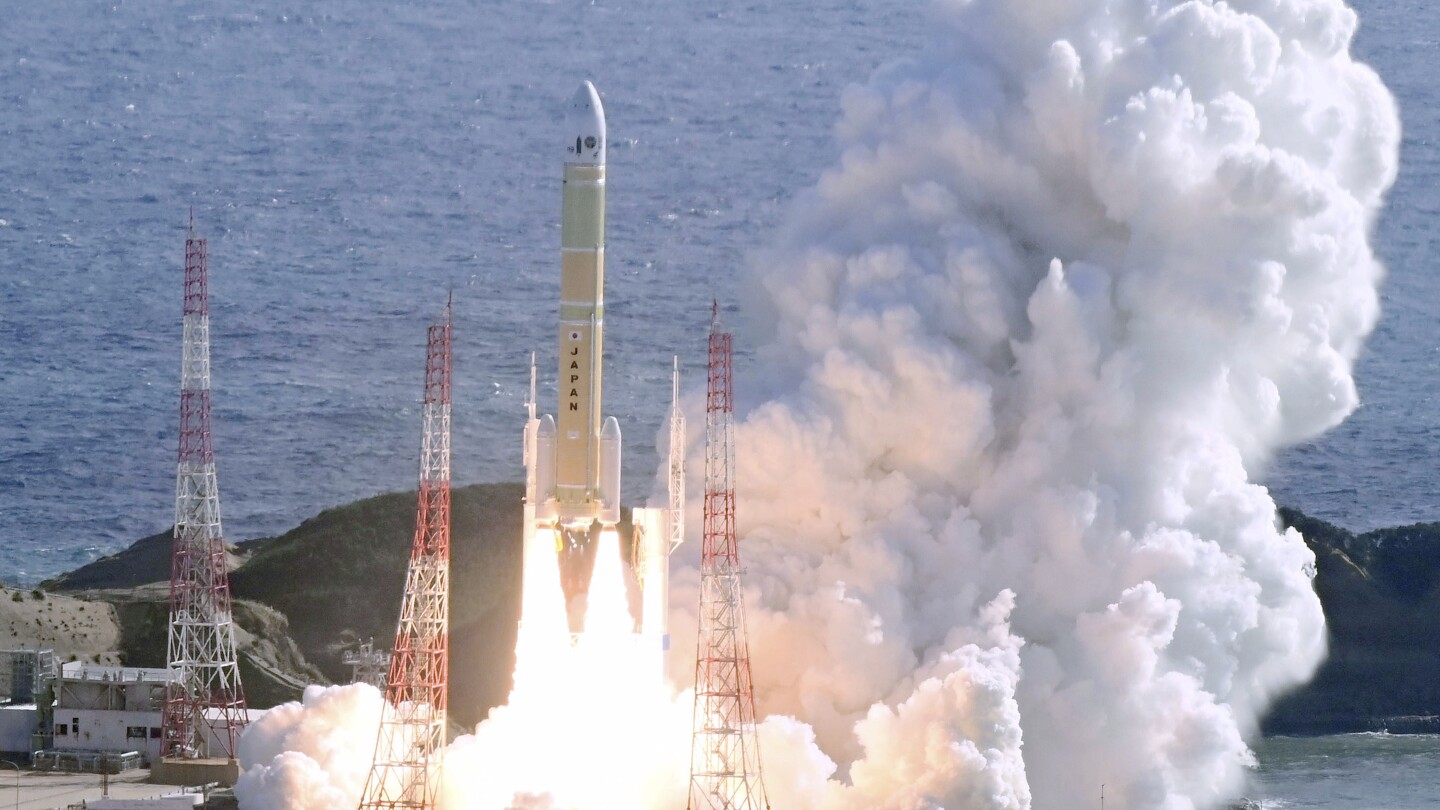
Japan’s ambitious space program suffered a significant setback Monday when its flagship H3 rocket failed to deliver a crucial navigation satellite into orbit. The Japan Aerospace Exploration Agency (JAXA) confirmed the mission failure after the rocket’s second-stage engine experienced an unexpected premature cutoff during its flight from the Tanegashima Space Center.
The H3 rocket, carrying the advanced Michibiki 5 satellite intended to enhance Japan’s independent positioning capabilities, encountered critical technical issues moments after launch. JAXA officials revealed that the satellite separation could not be confirmed, leaving the payload’s whereabouts unknown. This marks the second failure for Japan’s next-generation launch vehicle following its problematic debut flight in March 2023.
Masashi Okada, JAXA’s launch director, stated that investigators are analyzing flight data to determine the exact cause of the engine malfunction. The failure represents more than just a technical setback—it delays Japan’s strategic plans to establish a fully independent satellite positioning system that would reduce reliance on America’s GPS network for critical applications including smartphone navigation, maritime operations, and drone technology.
The Japanese government responded immediately to the incident, with Science Ministry official Jun Kondo calling the failure “extremely regrettable” and establishing a special task force to investigate the cause and implement corrective measures. The H3 rocket, designed to replace Japan’s highly reliable H-2A launcher, represents a cornerstone of the country’s strategy to become more competitive in the global space market while enhancing national security capabilities.
Despite this setback, JAXA’s H3 project manager Makoto Arita emphasized the rocket’s potential for global competitiveness, vowing to thoroughly investigate the failure and return the program to operational status. The incident occurred just five days after JAXA aborted a previous launch attempt due to ground equipment abnormalities, highlighting the challenges facing Japan’s space ambitions.