ROME — As dusk settles over the Italian capital, a profound transformation occurs at the Colosseum. After the daytime crowds dissipate, a different kind of visitor emerges—those who experience one of history’s greatest monuments through touch, sound, and imagination rather than sight.
Michela Marcato, blind since birth, recently traced her fingers across a tactile model of the ancient amphitheater, discovering through her fingertips what her eyes never could. ‘Walking around it, I personally would never have realized its elliptical shape,’ she remarked. ‘But with that little model in your hand, it’s obvious.’
This nighttime tour represents part of Italy’s groundbreaking initiative to reimagine accessibility at its cultural treasures. Driven by requirements for EU pandemic recovery funds in 2021, the nation has accelerated efforts to make artistic heritage available to all visitors regardless of ability.
From Pompeii’s new braille signage and QR-coded audio guides to Florence’s detailed accessibility maps for the Uffizi Gallery, Italy is systematically removing barriers. The economic incentive is clear: nearly half the global population over 60 experiences some disability, and disabled travelers typically bring multiple companions, according to the World Tourism Organization.
Giorgio Guardi of the Radici Association, which has led disability-friendly tours since 2015, emphasizes creating inclusive experiences that engage all senses. His tours often occur at night when reduced crowds and noise enhance sensory perception. When touching original artworks isn’t possible—as with Rome’s elevated Giordano Bruno statue—Guardi creatively has visitors assume the philosopher’s hunched position while others feel the contours of their companion’s posture.
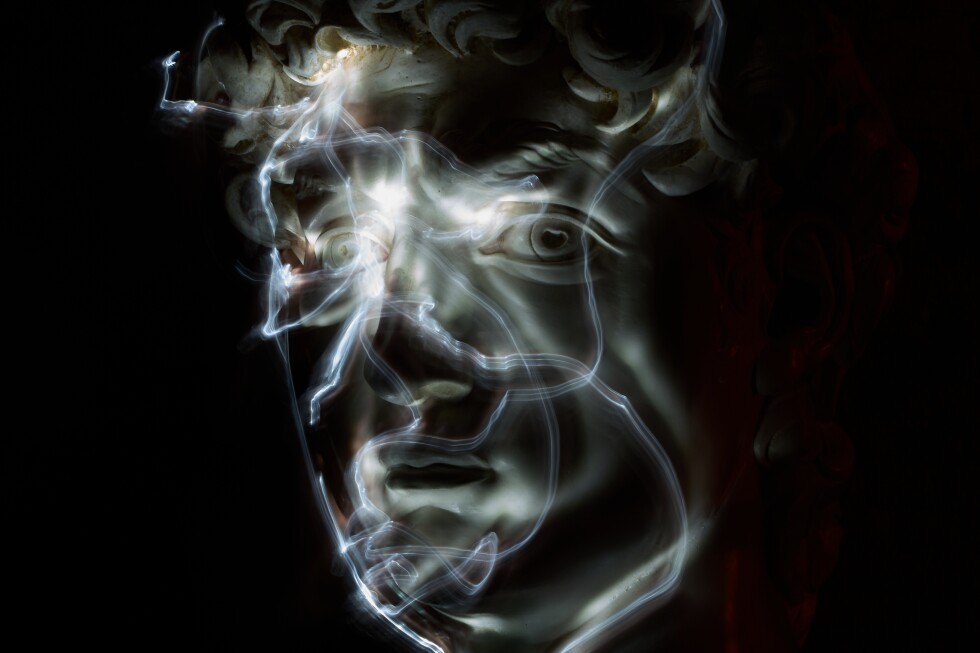
The movement finds its philosophical home at the Museo Omero in Ancona, Italy’s only publicly funded tactile museum. Founded in the 1990s by blind art collectors Aldo and Daniela Grassini, the museum features life-sized replicas of masterpieces from Michelangelo’s David to contemporary works, all meant to be handled.
‘Touching isn’t like looking,’ reflects Aldo Grassini. ‘Sight tends to monopolize reality, whereas touch offers a different dimension of knowledge and emotion.’
Blind sculptor Felice Tagliaferri, whose work appears at Museo Omero, creates marble busts informed by tactile memory. His sculpture of friend Angela emerged from caressing her bald head during her battle with cancer. ‘When she passed away, Angela remained in my hands,’ he shares.
For visitors like Marcato and her partially sighted partner Massimiliano Naccarato, this sensory approach extends to their home where a large seascape painting dominates their living room. While Naccarato uses special lighting to see it, Marcato experiences it through memory—the ocean’s sounds, smells, and seasonal walks. Their dual appreciation demonstrates how Italy’s accessibility revolution isn’t about seeing differently, but about experiencing more completely.