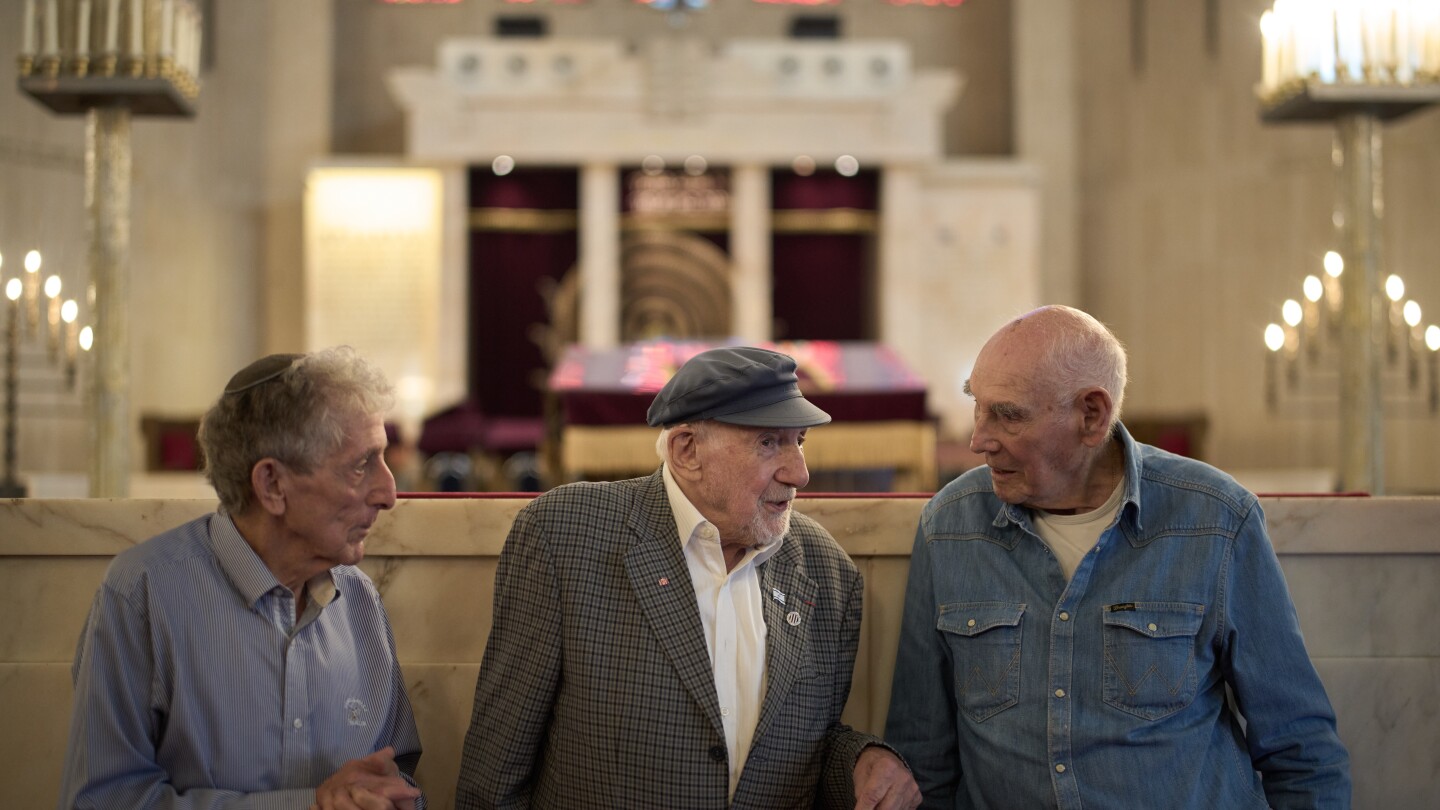
JERUSALEM — Walter Bingham, now 101, vividly recalls the horrors of Kristallnacht, the “Night of Broken Glass,” when he was just 14. On November 9, 1938, Nazis unleashed a wave of violence across Germany and Austria, destroying Jewish businesses, synagogues, and lives. This marked a pivotal moment in the escalating persecution that culminated in the Holocaust, where six million Jews were systematically murdered. Bingham is among the dwindling number of Holocaust survivors commemorating the 87th anniversary of Kristallnacht, a somber reminder of history’s darkest chapter. Today, as antisemitism surges globally, particularly in the aftermath of the Israel-Hamas war, survivors like Bingham are sounding the alarm. Recent attacks on Jewish symbols, from synagogues in Australia to Israeli sports teams in Europe, evoke painful memories of the past. “We live in an era equivalent to 1938,” Bingham warned, emphasizing the urgent need to combat intolerance. Kristallnacht saw the Nazis kill at least 91 people, vandalize 7,500 businesses, and burn over 1,400 synagogues. Up to 30,000 Jewish men were arrested, many sent to concentration camps like Dachau and Buchenwald. Bingham, who escaped to England via the Kindertransport, lost his father in the Warsaw Ghetto and never saw his mother again. Alongside fellow survivors George Shefi and Paul Alexander, Bingham shared his story at Jerusalem’s Great Synagogue, a symbol of Jewish resilience. Shefi, 94, recounted his childhood in Berlin, where he witnessed the chaos of Kristallnacht and later fled to England alone. Alexander, 87, was sent to England as a baby, one of the few children reunited with his parents. Survivors stress the importance of educating younger generations to prevent history from repeating itself. Bingham, a Guinness World Record holder as the oldest working journalist, remains vocal in his fight against antisemitism. “If we see it, we have to hit back,” he declared. With approximately 200,000 Holocaust survivors remaining, their testimonies are more crucial than ever to ensure the lessons of the past are not forgotten.
Israeli survivors of Kristallnacht mark 87th anniversary of Nazi riots amid rising antisemitism