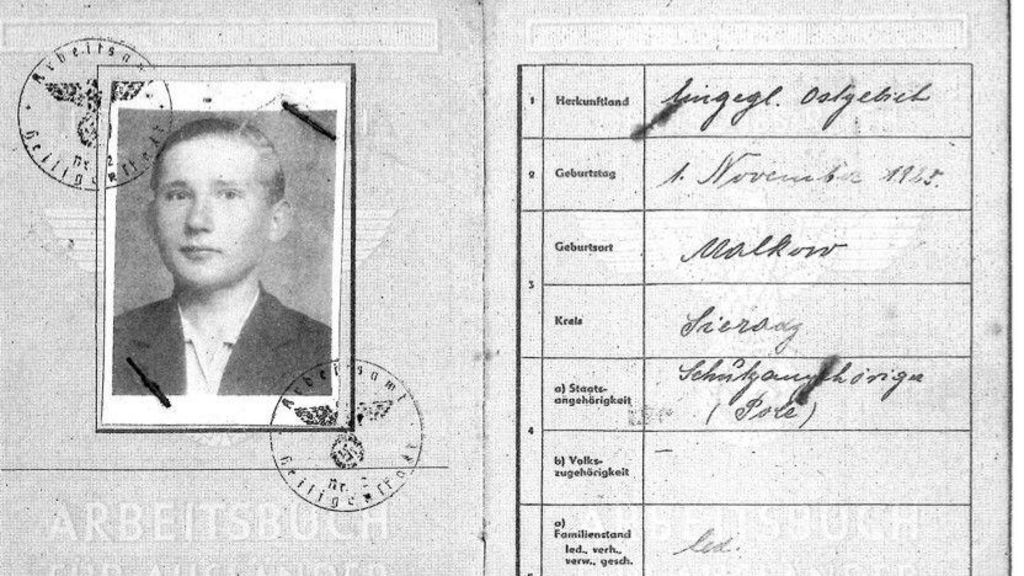
A seven-decade family mystery has been resolved through an extraordinary international investigation that pieced together the life of a Polish teenager kidnapped by Nazi forces during World War II. Jozef Domanski was just 14 years old when forcibly removed from his family in 1941 to work on a German farm under the Nazi occupation regime.
Despite surviving the war, Domanski never returned to his homeland, creating a permanent separation from his mother and sister. For years following the conflict, he maintained sporadic correspondence from his new life in England, where he had settled across various locations including Worcestershire, Wolverhampton, and Essex. Domanski worked diligently for decades in a textiles factory, documenting his experiences through letters that became increasingly melancholic about his distance from family and homeland.
The communication ceased abruptly in the 1980s, leaving relatives to assume his permanent disappearance. The truth remained hidden until 2012, when Domanski’s death in Wolverhampton triggered an investigation by the City Council, which enlisted professional heir hunters from Finders International to trace potential beneficiaries after no will was discovered.
What followed was an unprecedented decade-long genealogical investigation spanning three countries. Benjamin Ratz of GEN SPZOO in Poland led the intricate research as chief probate researcher, working closely with Domanski’s sister before her passing. The breakthrough revealed that Domanski had suffered a workplace accident that left him unable to write, explaining the sudden communication halt. Researchers also discovered that Domanski had consciously remained unmarried and childless throughout his life.
The investigation uncovered that Domanski never attempted to return to Poland due to legitimate fears of endangering his family’s safety—concerned that his wartime experiences might lead to accusations of espionage during the Communist era. The emotional resolution came when researchers successfully delivered Domanski’s estate, valued at over £100,000, to his surviving relatives. His nephew Krzysztof Sadowski emphasized the profound emotional significance of this closure, noting that his grandmother had died heartbroken over her son’s disappearance. The family plans to place Domanski’s photograph on his parents’ graves, finally providing the connection that was lost for generations.