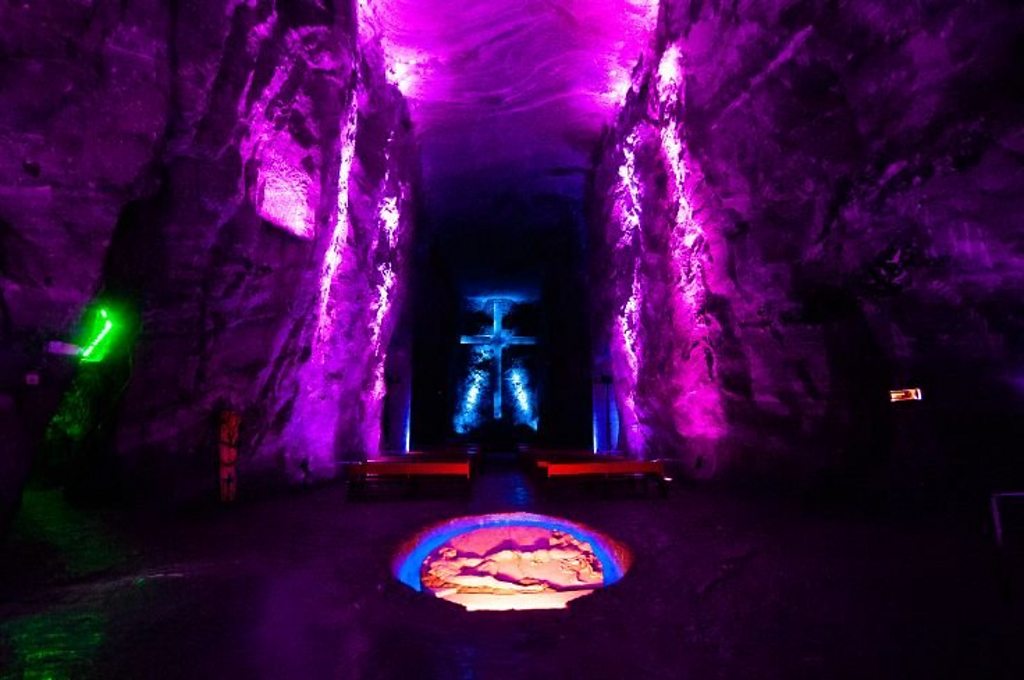
Deep within the Colombian earth, an extraordinary architectural marvel defies conventional religious spaces. Located 180 meters (590 feet) beneath the surface, the Salt Cathedral of Zipaquirá represents one of South America’s most remarkable spiritual sanctuaries, born from the devotion of miners seeking divine protection.
The cathedral’s origins trace back to the 1930s when miners laboring in Colombia’s extensive salt mines began creating makeshift altars within the mountain’s depths. Before commencing their perilous shifts, these workers would gather around these rudimentary shrines to offer prayers for safety and protection during their hazardous work underground.
Over decades, this underground spiritual practice evolved from simple altars into an elaborate network of tunnels and chambers that now form a fully functional cathedral. The current structure features impressive crosses carved directly into the salt rock walls, illuminated pathways that create ethereal lighting effects, and cavernous spaces capable of accommodating thousands of worshippers simultaneously.
This subterranean masterpiece serves dual purposes as both an active place of worship and a major tourist attraction, drawing approximately 600,000 visitors annually. The cathedral’s unique microclimate, maintained by the surrounding salt deposits, creates exceptional preservation conditions for the religious artworks and architectural elements within.
Engineering studies confirm the structural integrity of this underground complex, with the salt rock providing natural reinforcement against seismic activity. The cathedral’s depth creates a naturally soundproof environment, enhancing the spiritual atmosphere for religious ceremonies and contemplation.
The Salt Cathedral stands as testament to human ingenuity transforming industrial spaces into places of profound spiritual significance, demonstrating how faith can flourish even in the most unexpected environments.