Just a two-hour journey from Bali’s postcard-perfect tourist beaches, a starkly different reality unfolds on Indonesia’s remote Sumba Island: chattel slavery, outlawed across the nation for more than 160 years, remains embedded in daily life through a centuries-old rigid caste system. For generations, people on this isolated eastern island have been born into bonded servitude, known locally as ata, trapped in a cycle of exploitation that outlasts colonial rule and constitutional bans.
Sumba’s remote landscape, 2,000 kilometers east of Indonesia’s capital Jakarta, holds a quiet, timeless charm that draws adventurous travelers chasing hidden tropical paradises. Arid hills roll toward the sea, connected only by rutted rocky roads where travelers dodge roaming livestock; mobile phone signals are non-existent, and meals are still cooked over open wood fires. Turquoise waterfalls draw visitors to villages like Tenggedu, where towering traditional thatched homes, shaped to resemble buffalo horns, cluster around the ancestral tombs of local noble families. It is here that 31-year-old noble Umbu Ana Rara shares a home with Kanisius Kanyali Hambarita, an ata three years his senior. Umbu Ana claims he treats his bonded servant “like a member of the family,” allowing Kanisius to earn small side income driving a motorcycle taxi and grow food on a tiny plot of land. For Kanisius, the weight of inherited tradition has led him to resignation: “I don’t object to it, that’s how it is. It’s only the symbol of a tradition inherited from our ancestors.”
But away from the watchful eyes of their masters, many ata tell stories of relentless abuse and intergenerational trauma. A 40-something ata from nearby Napu village told AFP he was beaten and doused with water as a child for failing to meet work quotas, forced to tend fields, feed pigs and cook for his master even after school. “I tell my children: ‘I don’t want you to go through what I went through,’” he said.
The caste system that underpins this modern slavery is rooted in marapu, the island’s indigenous belief system that blends animism and ancestor worship, which remains deeply influential even among the 80% of Sumba’s 685,000 residents who identify as Christian. Marapu divides society into three distinct, hereditary tiers: ruling nobles called maramba, who often control most of the island’s land; commoners known as kabihu; and the lowest caste, ata, who are born into bonded servitude. “Legend says that the marambas acquired atas when they arrived in Sumba,” explained marapu priest Umbu Remi Deta, cementing the caste system as the core of local social order. Sumba’s geographic isolation has allowed these ancestral structures to survive largely unchanged centuries after slavery was banned by Dutch colonial rulers, and later enshrined as illegal in Indonesia’s 1945 post-independence constitution.
Estimates of the current ata population vary widely: a local social worker estimates roughly 1,700 bonded people in East Sumba alone (home to 350,000 residents), while other sources put the total number across the island at several thousand. While other forms of debt bondage exist in other parts of Indonesia, historian Bondan Kanumoyoso of the University of Indonesia notes that Sumba’s system is unique: it passes intact from generation to generation, with masters and servants often living side-by-side under the same roof in similar material conditions, making it nearly invisible to outside observers.
For generations, maramba rule has been enforced through systemic physical and sexual violence, with a long-accepted tradition of droit de seigneur giving masters unchallenged access to female ata servants. “If you are a girl, you belong to the master,” explained Andy Yentriyani, former head of Indonesia’s National Commission on Violence Against Women. “Sexual intercourse is not considered rape. It is only using your authority over your belonging.” One anonymous maramba confirmed the practice to AFP, admitting he would beat the husband of any female slave who rejected his advances. Most violence never reaches authorities, says rights activist Martha Hebi, founder of local NGO Solidarity for the Women and Children of Sumba, because victims are too intimidated to testify.
That reluctance to speak out has left even high-profile cases stalled in the justice system. In 2024, an 18-year-old ata who reported being repeatedly raped by her master and his son starting at age 13 finally came forward to police in East Sumba’s capital Waingapu after giving birth to the child. Two years later, the investigation remains open and unresolved, according to Dian Sasmita of the Indonesian Child Protection Commission, who has called on authorities to prioritize these cases. Local faith groups like the East Sumba Protestant synod offer support to victims who come forward, but activists agree deep cultural change will take generations.
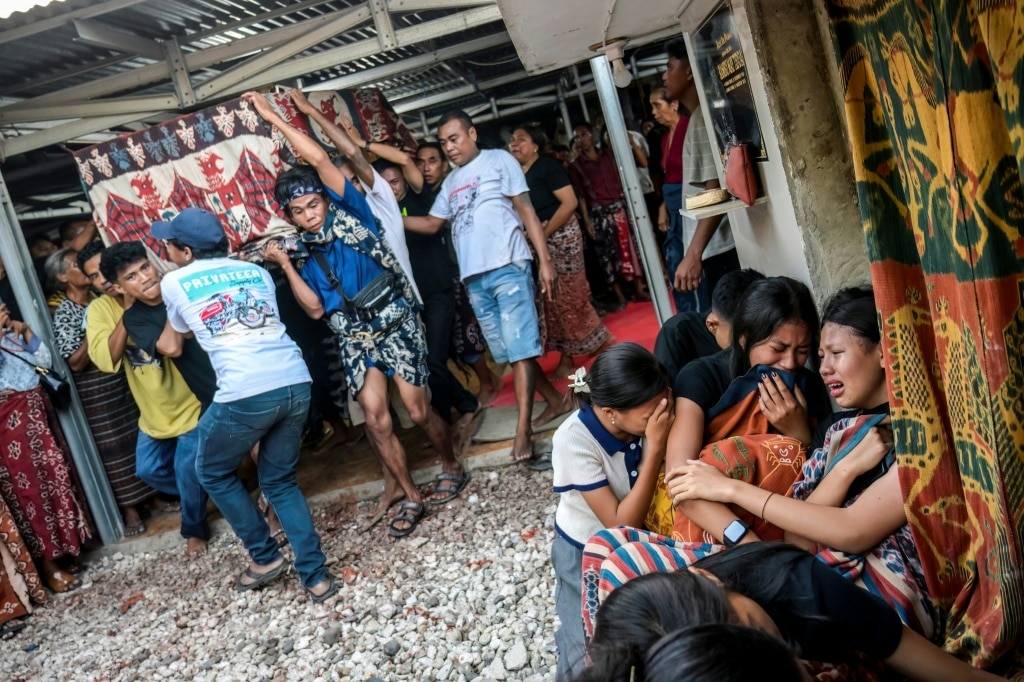
Gidion Mbilijora, who led East Sumba district as its top official for 13 years and himself owns two ata, acknowledged the system’s deep roots. “We need a long process of changing the mindset” of the noble class, he said, speaking at a massive noble’s funeral attended by 4,000 guests that included ritual horse sacrifice — a practice that until the 1990s was feared to sometimes include human slave sacrifice to accompany a deceased noble into the afterlife, according to American anthropologist Janet Hoskins.
International and local human rights groups have long pressured the Indonesian national government to enforce its constitutional ban on slavery and implement anti-discrimination conventions the country has signed. “The government is aware of the situation in Sumba but has so far taken no measures to eliminate slavery,” says Haeril Halim of Amnesty International Indonesia. Human Rights Watch Indonesia’s Andreas Harsono argues the government should “declare the freedom of all ata people from their maramba masters.”
But Indonesian Human Rights Minister Yusril Ihza Mahendra says the government’s approach prioritizes incremental change to respect Indonesia’s extreme ethnic and cultural pluralism. “The government does not wish to impose change suddenly — rather it follows the social development of each community step by step,” he told AFP. “We are convinced that education will change everything.” That view is echoed by many local leaders, including Gidion, who argues that growing access to knowledge will eventually lead lower-caste communities to reject the bonded system.
A small number of progressive nobles have already begun pushing for change from within. Norlina Rambu Jola Kalunga, a 54-year-old noblewoman and Christian pastor who inherited five ata when she married into a royal family, supports full emancipation but says she cannot free her own servants without violating deeply held local custom — even though her own grandfather freed all his ata when he led the local Protestant community in neighboring Central Sumba. Another noblewoman, Tamu Rambu Margaretha — known locally as Mama Margaretha — has traveled to Jakarta to advocate for ata emancipation, sending all her bonded servants’ children to school alongside her own and helping ata women sell their handwoven ikat textiles to tourists for fair income. “if someone is illiterate, there are many things they won’t understand,” she explained. Though she says she would not oppose any of her ata leaving to build independent lives, none have the financial means to do so.
Even for ata who manage to build independent lives outside their master’s home, the hereditary caste system continues to bind them to the old order. The Napu village man who endured childhood abuse now lives with his family in an abandoned home once owned by his former master, and has even sent two of his four children to university on government scholarships after building his own livestock business. But the land he farms still belongs to his maramba, so when the noble family calls, he must comply. “It’s so easy for them to order us around. But I did not directly fight back. I made my own path. I could see what freedom looked like,” he said. “Now there are rules… laws that protect us. Maybe the maramba understands that, so they do not bother us too much anymore.” Still, he remains legally and socially categorized as an ata — and his greatest hope is that the next generation will escape the bond entirely. “I want my children to be free from the maramba,” he said. “If we have knowledge, then we are free.”