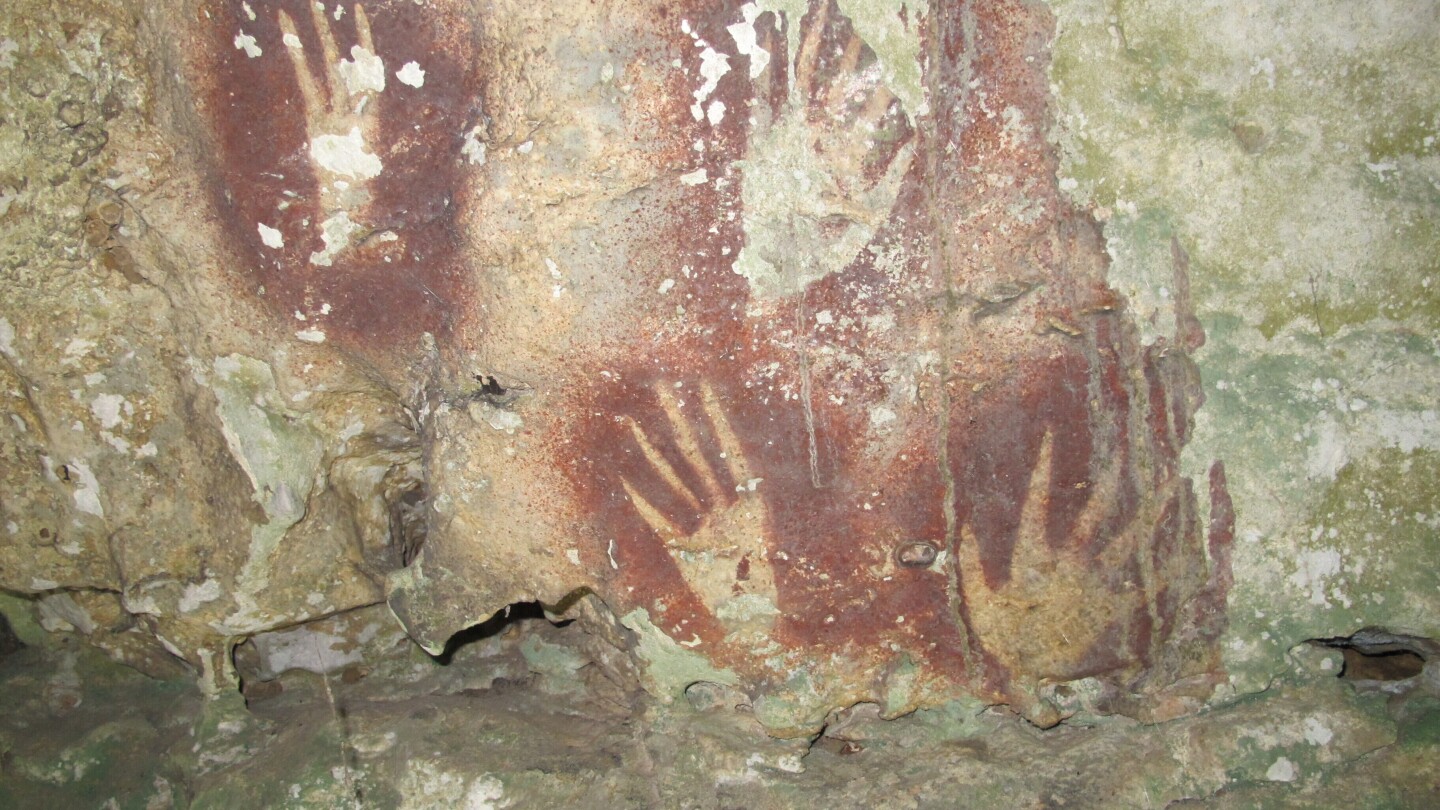
A groundbreaking archaeological discovery in the caves of Sulawesi, Indonesia, has unveiled what researchers now identify as the world’s oldest known cave art. Meticulous analysis by a joint Indonesian-Australian research team has determined that distinctive hand stencils adorning the cave walls date back an astonishing 67,800 years, predating all previously studied rock art.
The tan-colored artifacts were created through an sophisticated technique whereby prehistoric artists blew pigment over hands pressed against the cave surface, leaving behind precise negative outlines. Intriguingly, some stencils feature intentionally modified fingertips crafted to appear more pointed, suggesting symbolic or artistic intention beyond mere representation.
This extraordinary find, detailed in Wednesday’s edition of Nature, positions Sulawesi as a cradle of ancient artistic culture. To establish the precise chronology, researchers employed advanced dating methods on mineral crusts that had formed over the artwork through millennia.
Study author Maxime Aubert of Griffith University emphasized the significance of these stencils as evidence of a complex artistic tradition that potentially represented shared cultural practices among early human populations. While simpler markings on bones and stones exist from earlier periods, these Sulawesi creations represent the earliest emergence of figurative cave art.
The discovery fuels ongoing scientific debate regarding which human species created these artworks. Potential creators include Denisovans—an ancient human group inhabiting the region—or early Homo sapiens migrants from Africa. The distinctive anatomical details preserved in the stencils strongly suggest human authorship.
Separate figurative drawings found in the same cave system, depicting human forms, birds, and equine animals, were determined to be significantly younger at approximately 4,000 years old, indicating a long-standing artistic tradition.
Researchers believe additional, potentially older artworks may await discovery throughout Indonesia’s island network. This finding not only pushes back the timeline of human artistic expression but opens new avenues for understanding how creative traditions spread across ancient human populations.
As Aubert stated: ‘This discovery represents not an endpoint, but an invitation to continue our exploration of humanity’s artistic origins.’