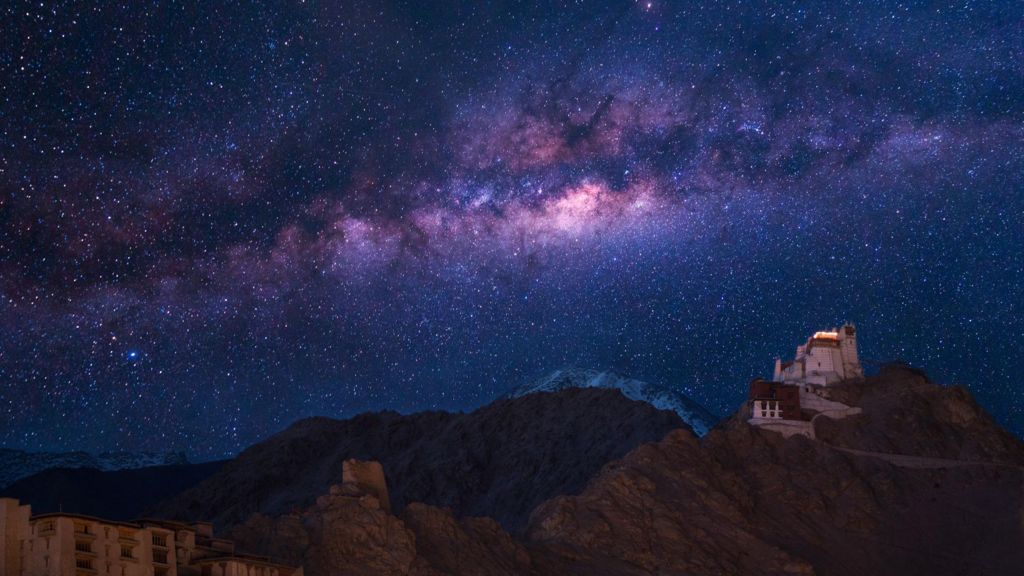
On frigid winter evenings, hundreds of kilometers from India’s urban centers, a new phenomenon is unfolding as urban residents gather around telescopes in remote locations. This growing movement toward ‘astrotourism’ represents a fundamental shift in travel preferences, with dark skies becoming as compelling a attraction as traditional monuments or wildlife sanctuaries.
While stargazing was once primarily the domain of amateur astronomers and scientific clubs, it has now entered the mainstream consciousness. The catalyst for this transformation stems from severe light pollution and deteriorating air quality in metropolitan areas like Delhi, where the night sky has become virtually invisible to the naked eye.
The scale of this emerging trend is demonstrated by dramatic visitor increases at designated dark-sky locations. Hanle, a remote village in Ladakh’s cold desert designated as India’s first dark-sky reserve in 2022, witnessed visitor numbers surge from approximately 5,000 to over 30,000 annually according to Dorje Angchuk, engineer-in-charge at the Indian Astronomical Observatory.
Private enterprises are reporting similar growth patterns. Astroport Global, which offers specialized stargazing experiences and astronomy workshops across five resort locations, has seen participation explode from mere hundreds to approximately 20,000 visitors annually.
The scientific explanation for this migration to high-altitude regions lies in atmospheric conditions. Astronomers utilize the Bortle dark-sky scale (ranging from 1 to 9) to measure sky clarity. Urban centers like Delhi typically register between 8-9, where only the brightest celestial bodies remain visible. Professor Jasjeet Singh Bagla of the Indian Institute of Science Education and Research explains that when PM2.5 particulate levels exceed 100, most constellations and deep-space objects disappear entirely from view.
In contrast, high-altitude regions including parts of Rajasthan, Himachal Pradesh, Uttarakhand, and Ladakh offer significantly darker skies ranked around 4 on the Bortle scale. Colder nighttime temperatures in these areas push pollutants closer to ground level, creating ideal conditions for celestial observation where the Milky Way becomes visible without optical assistance.
The economic model for astrotourism involves basic stargazing workshops priced around 1,200 rupees ($13) per person, excluding accommodation and travel. Extended stays at specialized resorts typically range from 8,000 to 12,000 rupees, with premium facilities commanding higher rates. Winter months attract peak interest due to optimal visibility conditions created by low humidity and exceptionally clear skies.
Beyond recreational value, the experience carries profound personal significance for many urban participants. For numerous city dwellers, these journeys represent not merely scientific education but an emotional reconnection with night skies reminiscent of childhood memories before urban expansion obscured celestial views.
The movement has generated substantial economic benefits for remote communities. Hanle has experienced a sharp increase in small hotel establishments over the past three years, creating new employment opportunities for local youth trained as guides and astronomical ambassadors.
According to Dr. Sachin Bahmba, founder of the Space Group of Companies, the experiential aspect transforms abstract scientific concepts into tangible reality: ‘When people look through a telescope or watch a meteor shower, space science stops being theoretical. The experience sparks genuine curiosity, questions, and organic learning.’
State authorities in Himalayan regions including Uttarakhand and Himachal Pradesh are now formally supporting this trend through training programs in telescope operation and celestial observation techniques.
Significant challenges remain for sector development. Remote locations like Ladakh involve substantial travel expenses that limit accessibility. India currently maintains only one officially recognized dark-sky reserve at Hanle, with another emerging at Pench Tiger Reserve in Madhya Pradesh. Unlike Western nations, India lacks organized dark-sky advocacy groups, though awareness is gradually increasing.
Urban expansion and unregulated lighting continue to diminish natural dark skies near metropolitan areas, complicating efforts to develop accessible alternatives. Despite government initiatives, observatory-community collaborations, and resort adoption of low-light practices, experts acknowledge the sector requires considerable development.
For urban residents, these astronomical excursions represent more than leisure activities—they provide rare opportunities to reconnect with a natural spectacle that has quietly vanished from daily urban life.