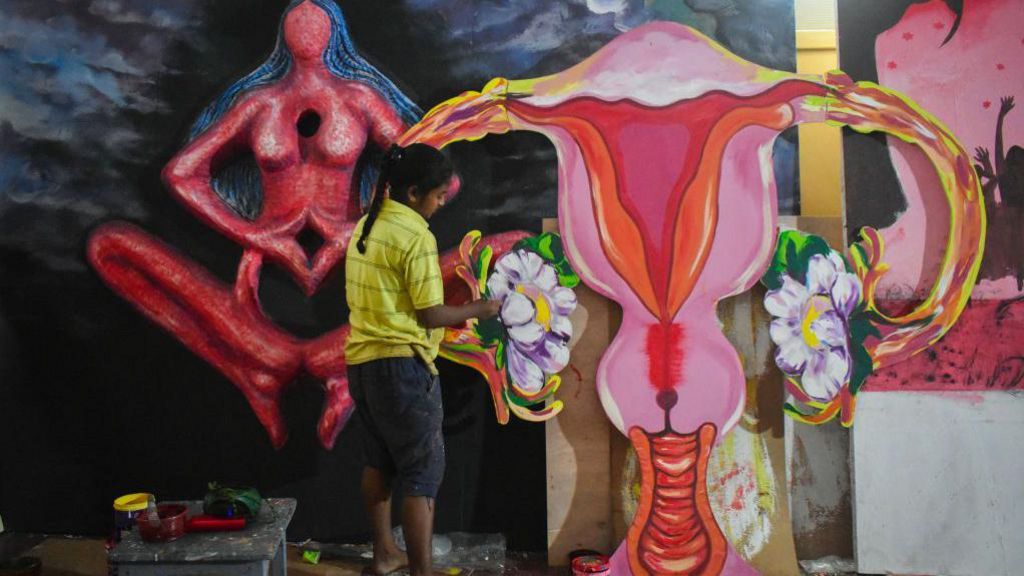
In a groundbreaking move, the southern Indian state of Karnataka has become the first in the country to introduce paid menstrual leave for all working women in formal employment. The policy, which applies to women aged 18 to 52 in both government and private sectors, allows for one day of leave per month, non-transferable and without the need for a medical certificate. This initiative is expected to benefit between 350,000 to 400,000 women in the formal sector, though it excludes the vast majority of women working in informal roles such as domestic help, daily-wage laborers, and gig workers—estimated at six million.
While the policy has been lauded as progressive by some, it has also ignited debates over potential gender bias and workplace equality. Critics argue that such measures could reinforce stereotypes, while proponents see it as a necessary step to address the physical and emotional challenges women face during menstruation.
Menstrual leave is not a novel concept globally, with countries like Spain, Japan, South Korea, and Indonesia already offering similar provisions. In India, states like Bihar and Odisha provide limited menstrual leave for government employees, while Kerala extends it to university and industrial training institute staff. However, Karnataka’s policy stands out for its inclusion of the private sector, regardless of job type or contract.
Despite the policy’s progressive intent, its implementation faces challenges rooted in cultural taboos surrounding menstruation. In many parts of India, menstruation remains a stigmatized topic, with women often excluded from religious spaces or isolated at home during their periods. Social scientists argue that while policies like menstrual leave facilitate women, they do not necessarily empower them unless accompanied by broader societal change.
Efforts to destigmatize menstruation have included empathy exercises for men in Kerala, yet deep-seated biases persist. For instance, in 2018, protests erupted in Kerala against a Supreme Court ruling allowing menstruating women to enter the Sabarimala temple, one of India’s holiest shrines.
In Karnataka, some women view the policy as a step toward normalizing conversations about menstruation. “Calling it menstrual leave helps in fighting the stigma,” said Shreya Shree, a teacher in Bengaluru. Sapna S, an associate dean at Christ University and head of Karnataka’s menstrual leave committee, urged women to embrace the policy without hesitation, emphasizing the need to challenge societal conditioning.
As Karnataka leads the way, the policy’s success will depend on its acceptance and implementation across diverse workplaces, as well as broader efforts to dismantle the cultural taboos surrounding menstruation in India.