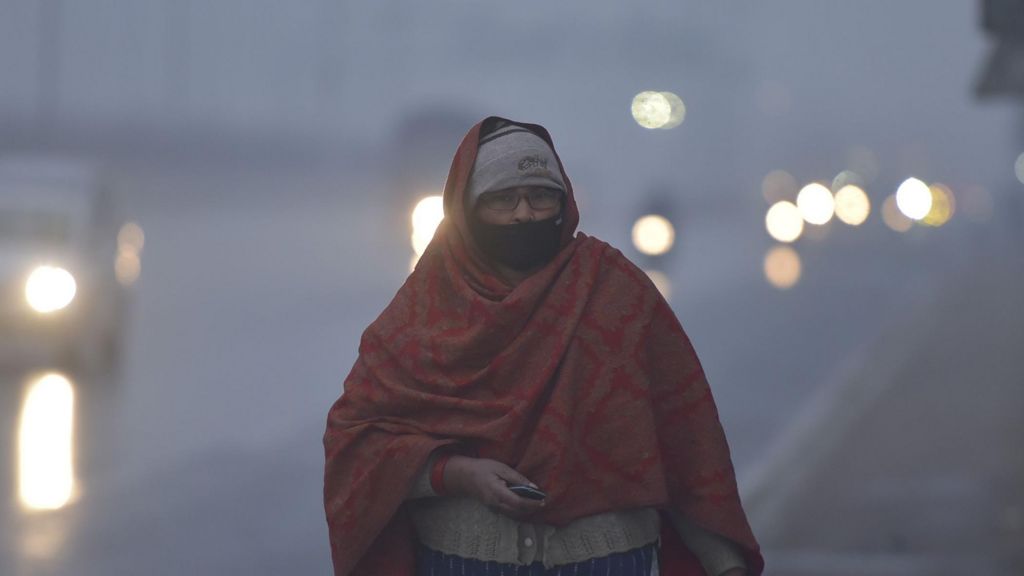
A severe cold wave continues to paralyze vast regions of northern India, bringing life to a near standstill as temperatures plummet to near-freezing levels. The intense chill, characterized by dense fog and icy winds, has persisted for four consecutive days, with meteorological departments forecasting its continuation until Friday.
Delhi experienced its coldest morning of the season on Thursday, with temperatures dropping to a brisk 2.9°C (37.2°F). The cold proved even more extreme in neighboring Haryana state, where readings fell below 1°C (33.8°F) in several areas. Social media platforms have been flooded with striking images of frost-encrusted vehicles and frozen landscapes, illustrating the unusual severity of this winter event.
The extreme conditions have significantly disrupted transportation networks. Delhi Airport issued advisories warning passengers of substantial flight delays due to severely limited visibility caused by thick fog. Multiple train services across the region have been canceled or are operating with significant delays, compounding travel chaos.
This weather event exposes critical infrastructure vulnerabilities. Most residential buildings in India’s plains lack central heating systems, leaving millions unprepared for such harsh winter conditions. The crisis disproportionately affects homeless populations, who have been forced to light makeshift fires on city streets for warmth during frigid nights.
Compounding the situation, the cold wave has exacerbated already dangerous air quality levels across northern Indian cities. Meteorological experts note that low winter temperatures create atmospheric conditions that trap pollutants close to ground level, significantly worsening air pollution and creating serious respiratory hazards, particularly for children, the elderly, and those with pre-existing health conditions.
In Indian-administered Kashmir, the cold has reached even more extreme levels, with reports of completely frozen water pipes and partially frozen bodies of water, including sections of the famous Dal Lake in Srinagar. Several waterfalls in the region have transformed into icy formations as temperatures dropped below zero.