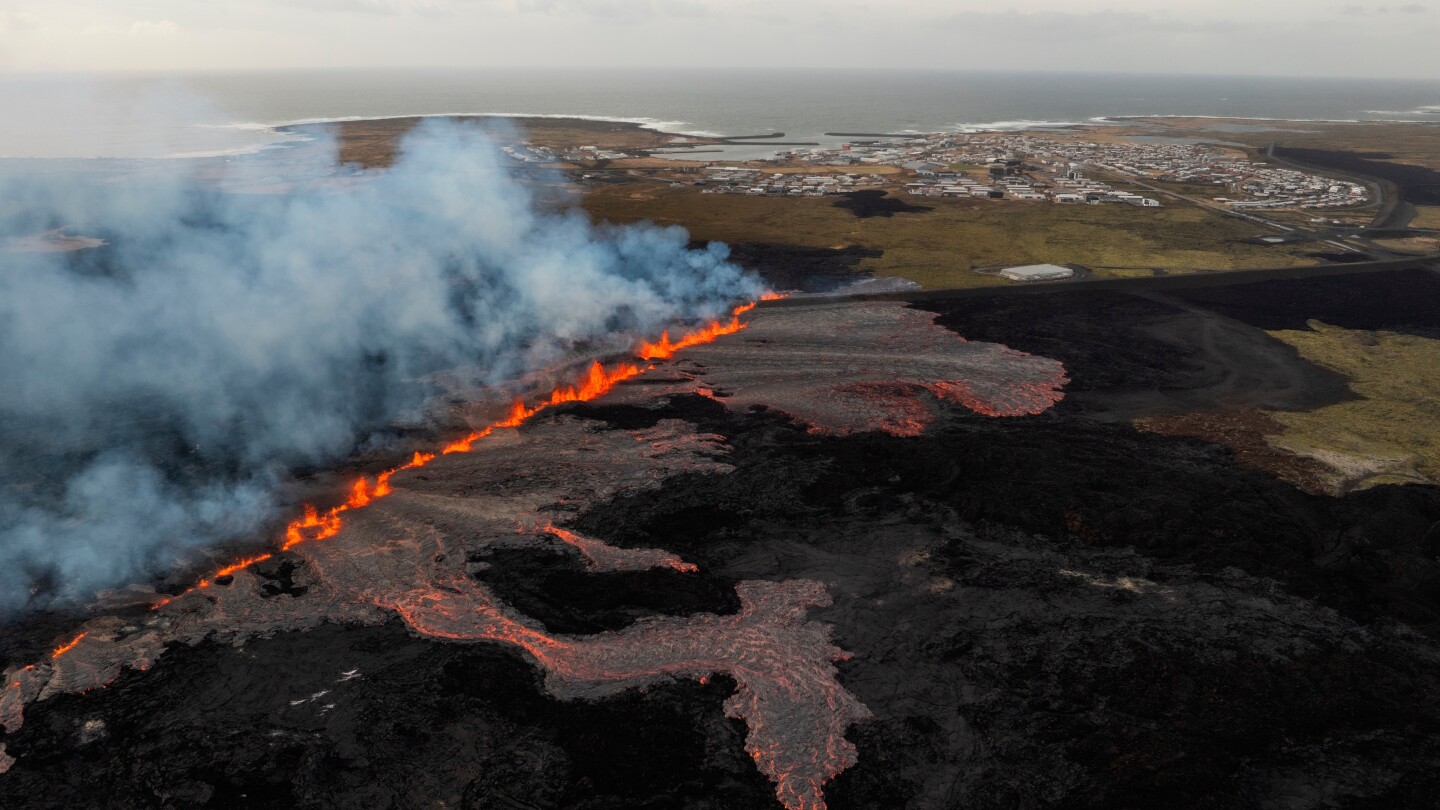
In the coastal town of Grindavik, Iceland, Vignir Kristinsson’s gift shop, once bustling with customers, now sees only occasional visitors. The 64-year-old craftsman, who turned his passion for woodworking into a business five years ago, faces an uncertain future as volcanic eruptions have repeatedly forced evacuations since December 2023. The town, home to 3,800 residents, has been closed intermittently, leaving businesses like Kristinsson’s struggling to survive. ‘I’m supposed to run a business when people are told they should not come,’ he lamented. ‘How is that possible?’
Grindavik’s plight is emblematic of Iceland’s volatile relationship with its volcanic landscape. The eruptions, originating from the Sundhnuksgígar crater row, part of the Svartsengi volcanic system, have disrupted life in the Reykjanes Peninsula. Before the first eruption nearly two years ago, the system had been dormant for 783 years. Scientists predict that the volcanic activity is far from over, with the Icelandic Meteorological Office warning of a potential 10th eruption in the coming months.
Residents like Kristólína Ósk Guðjónsdóttir, an 18-year-old high school student, have grown accustomed to the constant stress. ‘When we had to leave, we had five minutes to get our stuff,’ she recalled, describing the first evacuation in November 2023. Since then, she has been attending school in Keflavik, 23 kilometers north of Grindavik, where maintaining a sense of community has been challenging.
Despite the devastation, there are glimmers of hope. The local professional basketball team has resumed games, and authorities are considering reopening schools next year. Some residents are returning, though the town remains largely empty. Tourists, drawn by the dramatic landscape, have become a rare source of activity, flying drones over vast lava fields and exploring the damaged town.
For many former residents, the decision to return is fraught with uncertainty. The government has offered to buy their homes, giving them three years to decide whether to repurchase them. Kristinsson, who now lives in Hafnarfjordur, 42 kilometers northeast of Grindavik, continues to operate his shop sporadically, relying on income from renting an apartment above the store. ‘People who live here now want to see things come back faster,’ he said.
Meanwhile, businesses like Herastubbur Bakari, a 30-year-old bakery, are fighting to stay afloat. Owner Sigurður Enoksson, 60, has no plans to return to his damaged home but remains committed to the town through his bakery. ‘There are not always customers each day,’ he admitted. ‘We are trying our best.’
As Grindavik grapples with the aftermath of the eruptions, its residents’ resilience shines through. While the road to recovery is long, their determination to rebuild offers a testament to the enduring spirit of this Icelandic town.