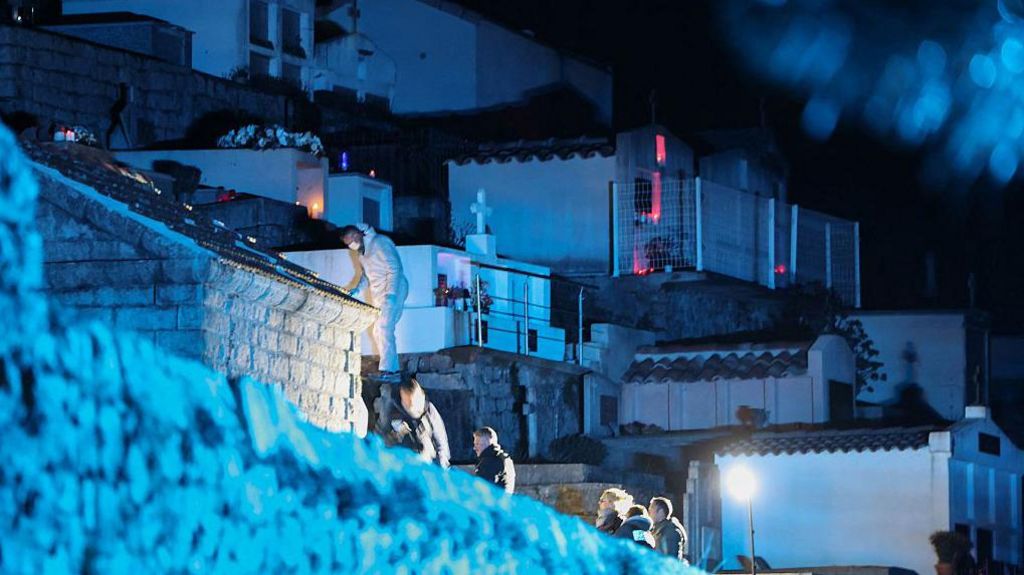
In a brazen act of violence that has shocked the French island of Corsica, former separatist leader Alain Orsoni was assassinated by a single gunshot while attending his mother’s funeral on Monday afternoon. The 71-year-old, who had spent years living in exile in Nicaragua, was struck in the chest by a long-range shot as the cemetery service concluded in his native village of Vero.
Corsican prosecutor Nicolas Septe confirmed the tactical precision of the killing, noting that the fatal bullet was fired from a distance and resulted in rapid death. The shooting occurred moments after the burial ceremony had concluded, creating a scene of profound trauma for mourners already grieving the loss of Orsoni’s mother.
Father Roger-Dominique Polge, who officiated the service, expressed horror at the violation of the sacred moment: ‘We’d just finished burying Alain’s mother—it was a moment of pain and grief. Suddenly we hear a gunshot and Alain falls down dead. In the middle of a cemetery, after a religious ceremony, I ask where are we, what kind of home are we living in?’
The investigation has been assigned to France’s specialized anti-organized crime units, including the Marseille-based regional crime office. Early evidence suggests connections to recent gangland killings targeting associates of Orsoni’s son, Guy, who is currently serving a 13-year prison sentence for the attempted murder of a Petit Bar gang member in 2018.
Orsoni’s life was marked by both political activism and criminal notoriety. A charismatic figure known for his singing voice and nationalist fervor, he rose to prominence in the 1970s Corsican independence movement. He founded the separatist Movement for Self-Determination (MPA), which achieved electoral success in 1992, though Orsoni was barred from taking office due to campaign violations.
His complex history included participation in a 1980 gun attack near the Iranian embassy, the kidnapping and presumed murder of his brother in 1983, and multiple prison sentences. After fleeing to Central America in 1996 amid violent splits within nationalist circles, he later returned to Corsica to serve as president of football club AC Ajaccio, surviving an assassination attempt weeks after his 2008 appointment.
Despite being aware of persistent threats to his life—four of his associates were killed within a two-year period—Orsoni maintained a defiant stance toward his safety, telling Le Figaro in 2012: ‘I’m not afraid of dying. I don’t wake up every morning thinking I’m going to be killed. I live a normal life, without a squad of bodyguards.’
The assassination has highlighted the enduring power of criminal clans in Corsican society and raised urgent questions about organized crime’s influence on the island.