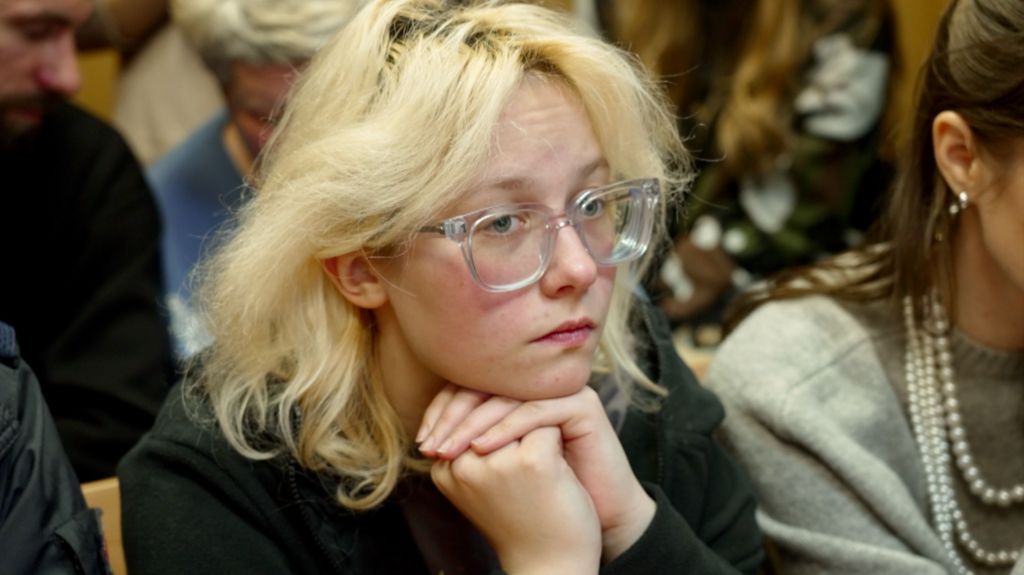
In the quiet woods on the outskirts of St. Petersburg, a solemn ceremony unfolds as names of victims from Joseph Stalin’s Great Terror are read aloud. The Levashovo Wasteland, believed to hold the remains of 20,000 to 45,000 individuals, serves as a grim reminder of the dictator’s brutal purges in the 1930s. Portraits of the executed are nailed to pine trees, evoking the haunting ghosts of Russia’s past. Yet, the present tells a story of continued repression under the current regime. While Russian authorities downplay Stalin’s crimes, they enforce stringent laws to suppress dissent and silence criticism, particularly regarding the war in Ukraine. Critics are increasingly labeled as ‘foreign agents,’ a modern twist on Stalin’s ‘enemies of the people.’ This narrative of control extends to the arts, where young musicians like Diana Loginova face severe consequences for their public performances. Diana, an 18-year-old music student and lead singer of the band Stoptime, has been detained multiple times for organizing street concerts that authorities claim disrupted public order. Her performances, which include songs by exiled Russian artists critical of the Kremlin, have drawn significant crowds but also the ire of the state. Despite the crackdown, supporters of Diana and other dissidents continue to voice their solidarity, albeit at great personal risk. The story of Ludmila Vasilyeva, an 84-year-old survivor of the Nazi siege of Leningrad, further underscores the ongoing struggle. Ludmila, who has publicly protested against the war in Ukraine, was fined for ‘discrediting the Russian armed forces.’ Her defiance, however, remains unshaken, as she continues to speak out against the growing authoritarianism in Russia. The parallels between Stalin’s era and the present day are stark, highlighting a nation grappling with its past while navigating the challenges of modern repression.
How teenager gave a street concert and was caught up in Russia’s repressive past