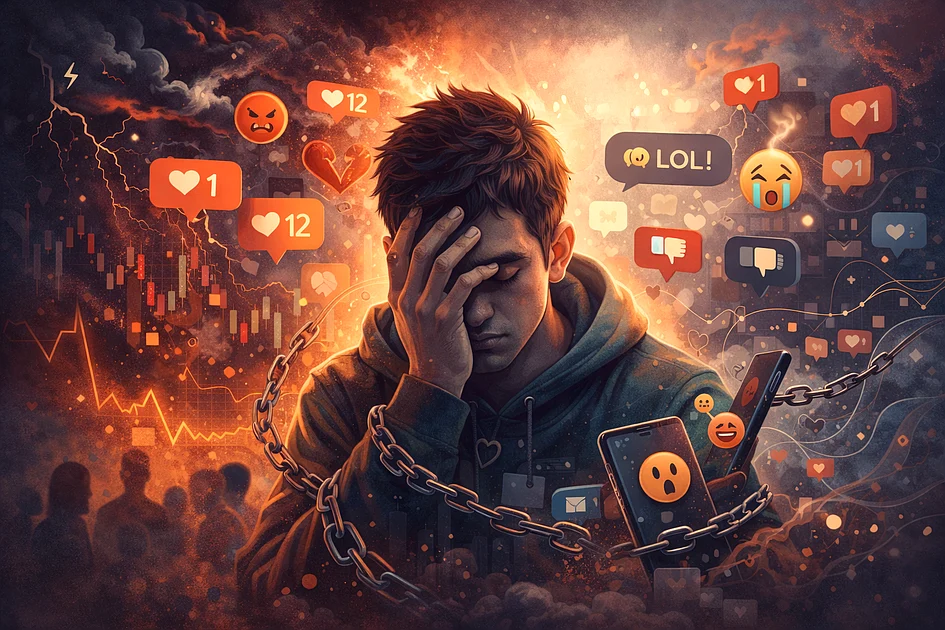
In an era dominated by digital connectivity, the fundamental human capacity to tolerate boredom faces unprecedented erosion. This phenomenon, explored through personal transformation at an Ayurvedic retreat in Kerala, India, reveals alarming consequences for mental health and cognitive function.
The contemporary relationship with social media creates a paradoxical cycle: while these platforms generate boredom through fragmented attention and dopamine-driven stimulation, they simultaneously render this natural state intolerable. This dynamic mirrors addiction patterns, where the very source of discomfort becomes the prescribed solution, establishing a self-perpetuating cycle of digital dependence.
Historical perspective demonstrates boredom’s critical role in human advancement. Throughout centuries, privileged classes leveraged unstructured time to foster artistic innovation, philosophical breakthroughs, and technological advancements. Modern neuroscience confirms that during periods of reduced stimulation, the brain activates default mode networks responsible for creative problem-solving, memory consolidation, and self-reflection.
Contemporary environments testify to this radical shift. Spaces once conducive to contemplation—airplane cabins, waiting rooms, public transit—have transformed into digital consumption zones. This constant engagement prevents the mental wandering essential for psychological restoration and innovative thinking.
The disappearance of tolerable boredom represents a facet of the broader ‘comfort crisis.’ Throughout human evolution, encountering manageable discomfort built resilience and emotional regulation capabilities. The systematic elimination of all minor irritations through digital entertainment may ultimately diminish our psychological fortitude.
Practical interventions offer middle-ground solutions. Implementing grayscale display settings reduces visual stimulation, decreasing compulsive scrolling behaviors. Gradually increasing periods of intentional disconnection—during commutes or queues—allows mental faculties to rediscover their natural rhythms. Most fundamentally, recognizing boredom’s discomfort as potentially productive rather than problematic represents a crucial mindset shift.
In conclusion, preserving opportunities for unstructured mental activity emerges not as nostalgic regression but as necessary adaptation. As artificial stimulation intensifies, the deliberate cultivation of boredom-resistant practices may become essential for maintaining cognitive vitality and psychological wellbeing in the digital age.