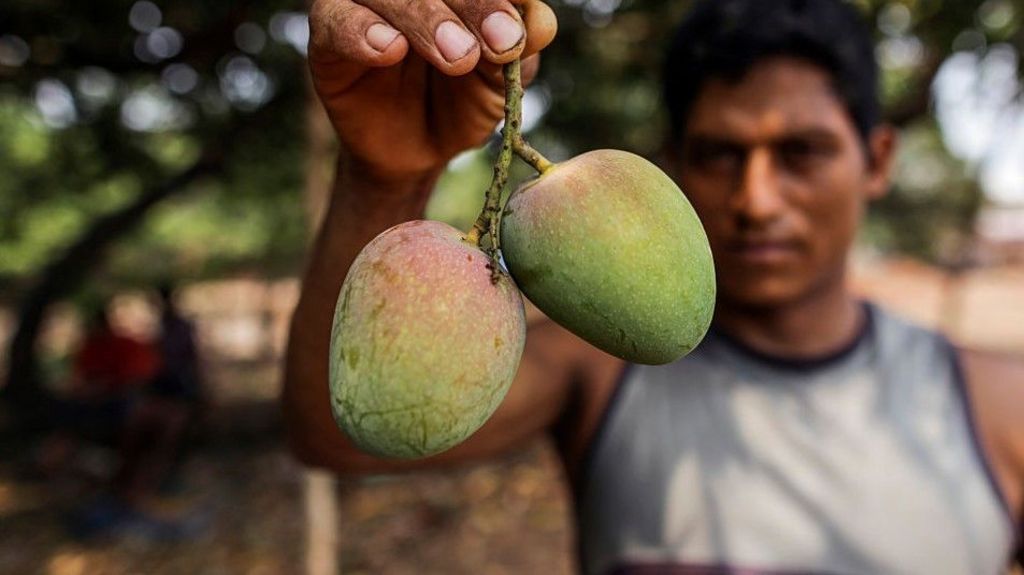
As the world’s leading mango producer, India faces unprecedented challenges in sustaining its 23-million-ton annual harvest—approximately one-fifth of the nation’s total fruit output. The delicate cultivation process, dependent on precise climatic conditions, tree physiology, and agricultural techniques, has become increasingly precarious due to climate volatility.
Fourth-generation mango cultivator Upendra Singh from Malihabad, Uttar Pradesh, embodies the sector’s struggles. Having worked on family orchards since age 12, the 62-year-old farmer observes: ‘Seasons no longer follow patterns. Flowering, fruiting, and harvesting shift annually due to climate change.’ Despite rising input costs for pesticides, labor, and irrigation, yields continue declining across India’s 700 regional varieties—from northern Dasheri to Maharashtra’s Alphonso and Bihar’s Langra.
Dr. Hari Shankar Singh of the Central Institute for Subtropical Horticulture (ICAR) confirms these observations: ‘Erratic weather patterns have become the norm. Last year, premature flowering followed by strong winds damaged fruit development. This year, prolonged cold delayed flowering entirely.’
Scientific interventions offer hope through two parallel approaches:
Genetic research accelerated dramatically after ICAR scientists sequenced the Alphonso mango genome in 2016. ‘Genome mapping identifies genes governing fruit color, aroma, sweetness, and climate resilience,’ explains Dr. Singh. This breakthrough potentially reduces traditional breeding timelines from 10-20 years, though challenges remain due to mango trees’ heterozygous nature and 5-10 year maturation period.
On-ground innovations include:
– Protective ‘bagging’ techniques creating micro-environments around developing fruits
– ‘Girdling’ methods involving controlled branch cuts to redirect tree energy
– Canopy management and scientific pruning for size control
– Orchard rejuvenation through strategic tree height reduction
Progressive farmers like Neeti Goel (1,100 trees across 27 acres) employ soil and leaf analysis for precise micronutrient application. Exporters like Berrydale Foods’ Saravanan Achari experiment with greenhouse cultivation to meet international phytosanitary standards. ‘Climate change is the single biggest export risk,’ notes Achari, citing Japan and Israel’s protected cultivation models as precedents.
While genetic science addresses long-term resilience, immediate adaptations through controlled environments and precision agriculture may determine whether India’s $2.1 billion mango industry can sustain its global dominance amid escalating climate challenges.