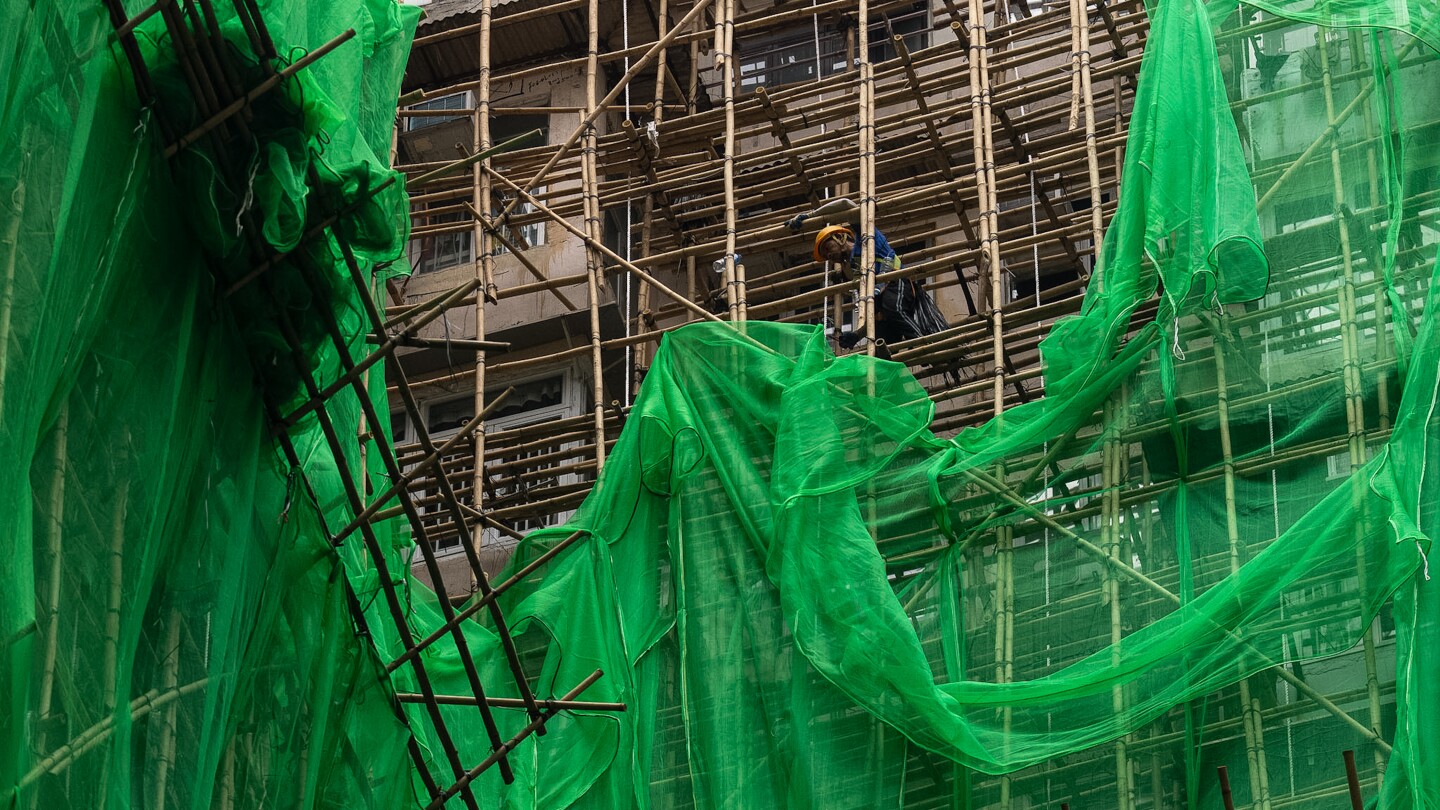
A contentious debate has emerged in Hong Kong regarding the role of traditional bamboo scaffolding in the city’s deadliest fire in decades, which claimed 159 lives at the Wang Fuk Court complex on November 26. While authorities quickly identified the bamboo structures and their green netting as primary factors in the rapid spread of flames, construction experts, residents, and former officials are challenging this assessment, arguing that systemic regulatory failures rather than the material itself deserve scrutiny.
The tragic incident occurred during ongoing building renovations, where preliminary investigations revealed the use of substandard fire netting and flammable foam boards for window sealing. Despite officials including Chief Secretary Eric Chan characterizing bamboo’s fire resistance as ‘inferior’ to metal alternatives, architectural specialists caution against simplistic conclusions.
Professor Kristof Crolla from the University of Hong Kong emphasized that ‘when properly used with certified fire-retardant netting, bamboo is comparatively hard to ignite.’ His colleague Raffaella Endrizzi from Chinese University of Hong Kong noted that focusing solely on bamboo risks obscuring broader safety issues, adding that the material isn’t easily ignited under proper conditions.
The defense of bamboo scaffolding highlights its unique advantages in Hong Kong’s dense urban environment. Generations of skilled workers have mastered this centuries-old technique, which offers unparalleled flexibility, light weight, and adaptability to irregular building facades. Hong Kong and Kowloon Bamboo Scaffolding Workers Union chairman Ho Ping-tak noted that bamboo costs half or less than metal alternatives, raising questions about affordability for aging buildings requiring renovations.
Former government officials have joined the critique, with security chief Regina Ip describing the bamboo focus as ‘lazy scapegoating’ and ex-financial secretary John Tsang warning against hasty bans of the flexible material. Public sentiment echoes these concerns, with memorial notes at the disaster site calling for systemic review rather than material replacement.
Meanwhile, authorities have arrested 15 individuals for suspected corruption and negligence in the renovation project, revealing deeper issues of bid-rigging and substandard materials. The government has ordered removal of scaffolding nets at hundreds of buildings for testing, while Chief Executive John Lee pledged systemic industry reforms and an independent investigation to ‘uncover the truth and ensure justice.’