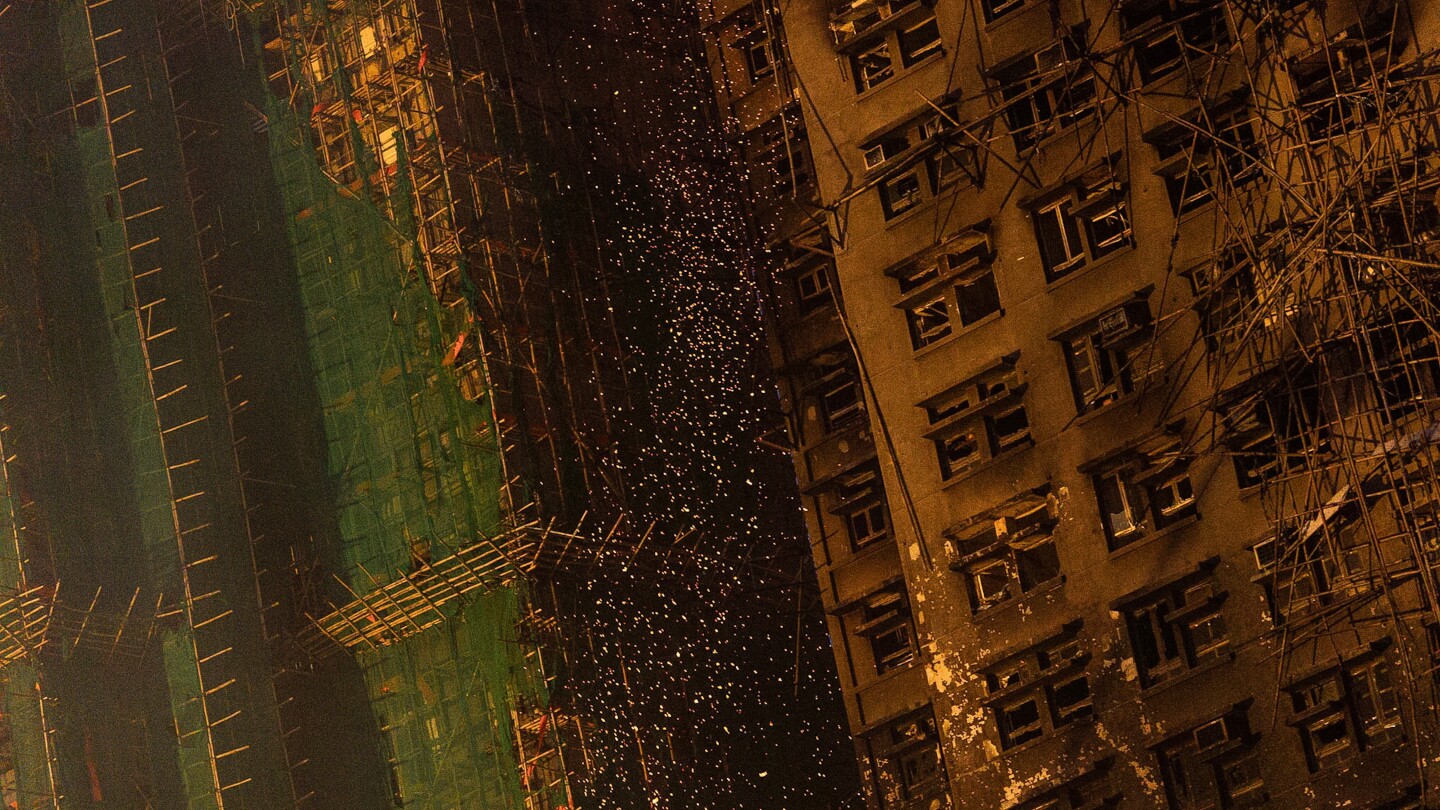
A devastating fire that engulfed a high-rise residential complex in Hong Kong’s Tai Po district has left at least 55 people dead, raising critical questions about the safety of bamboo scaffolding, a centuries-old construction technique still prevalent in the city. While the exact cause of the inferno remains under investigation, flammable materials such as plastic netting and Styrofoam panels used in renovations have been identified as key contributors to the fire’s rapid spread. The blaze, which began in one of Wang Fuk Court’s eight 32-story towers, quickly consumed seven buildings, incinerating much of the bamboo scaffolding enveloping the structures. Authorities have arrested three individuals—directors and an engineering consultant of a construction company—on suspicion of manslaughter, citing potential non-compliance with fire resistance standards. Bamboo scaffolding, a lightweight and cost-effective method imported primarily from Guangdong, Guangxi, and Guilin provinces, has long been favored in Hong Kong’s densely packed urban environment. However, the city is gradually shifting toward metal scaffolding, as highlighted in a March memo from Hong Kong’s secretary for development. Despite its historical significance, bamboo scaffolding has been linked to 23 fatalities since 2018, prompting calls for its phase-out. This tragic incident underscores the urgent need for stricter safety regulations and modernization in construction practices.