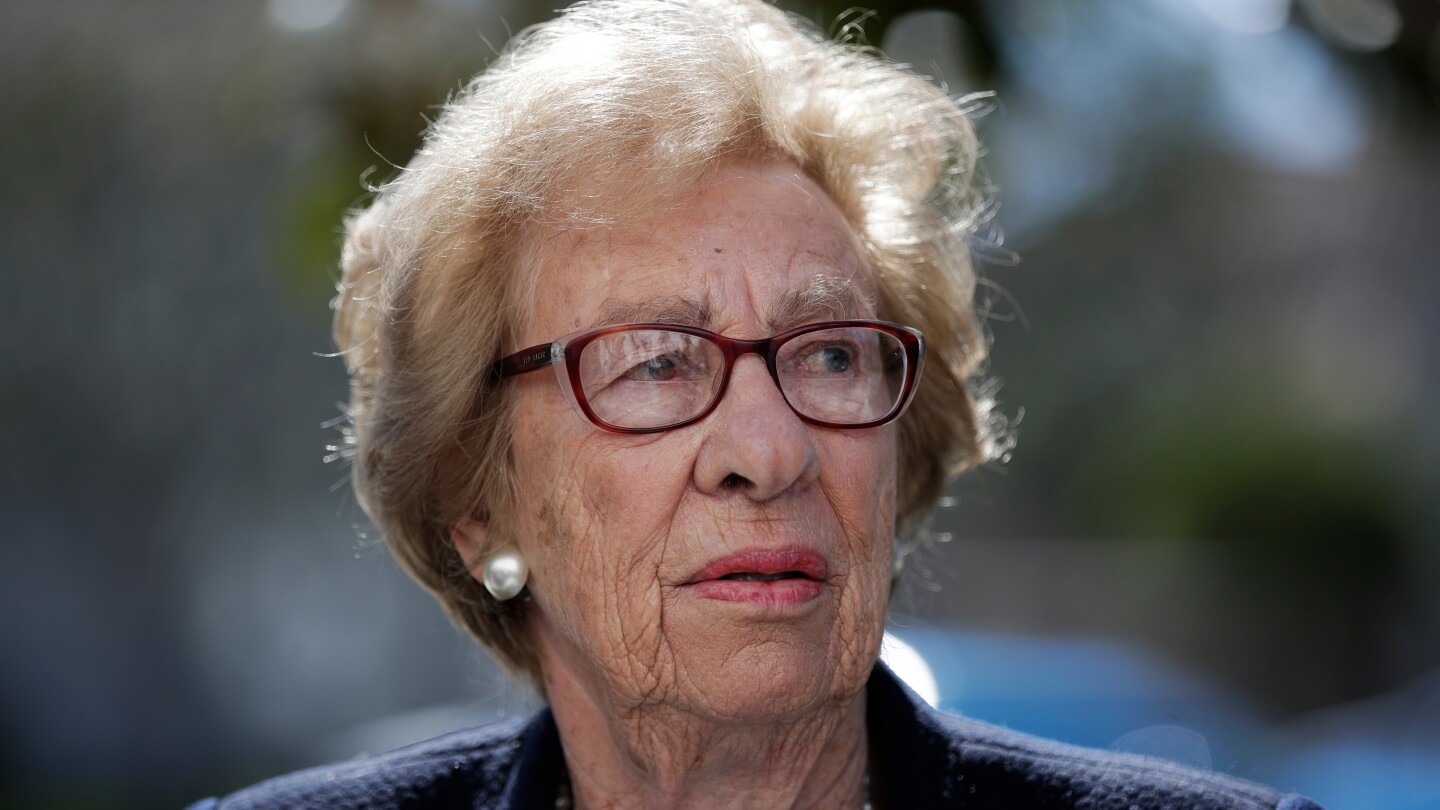
Eva Schloss, a prominent Auschwitz survivor who became the stepsister of diarist Anne Frank and dedicated her life to Holocaust education, has passed away at age 96. The Anne Frank Trust UK, where she served as honorary president, confirmed her death in London on Saturday.
Born Eva Geiringer in Vienna in 1929, Schloss fled with her family to Amsterdam following Nazi Germany’s annexation of Austria. There she formed a friendship with Anne Frank, another Jewish girl whose diary would later become one of history’s most significant Holocaust documents.
Like the Frank family, Schloss’s family spent two years in hiding after the Nazi occupation of the Netherlands before being betrayed, arrested, and transported to Auschwitz. While Schloss and her mother Fritzi survived until the camp’s liberation by Soviet forces in 1945, her father Erich and brother Heinz perished in the death camp.
Following the war, Schloss relocated to Britain, marrying German Jewish refugee Zvi Schloss and establishing her life in London. In a poignant post-war connection, her mother married Otto Frank in 1953, making Eva the stepsister of the legendary diarist Anne Frank, who had died of typhus in Bergen-Belsen at age 15.
For decades, Schloss remained silent about her traumatic experiences, describing herself as withdrawn and emotionally disconnected due to wartime trauma. Her transformation began in 1986 when she addressed an Anne Frank exhibition opening in London, sparking a lifelong mission to educate generations about Nazi atrocities.
Schloss became an indefatigable advocate, speaking in schools, prisons, and international conferences while authoring several books including ‘Eva’s Story: A Survivor’s Tale by the Stepsister of Anne Frank.’ Her advocacy continued well into her nineties, including a 2019 meeting with California teenagers photographed making Nazi salutes and a 2020 campaign urging Facebook to remove Holocaust-denial content.
King Charles III expressed profound admiration, stating he felt ‘privileged and proud’ to have known Schloss and praising her dedication to ‘overcoming hatred and prejudice through courage, understanding and resilience.’
In her final public message earlier this year, Schloss emphasized: ‘We must never forget the terrible consequences of treating people as ‘other.’ We need to respect everybody’s races and religions and live together with our differences. The only way to achieve this is through education.’
Her family remembered her as ‘a remarkable woman: an Auschwitz survivor, a devoted Holocaust educator, tireless in her work for remembrance, understanding and peace.’ Schloss is survived by three daughters, grandchildren, and great-grandchildren.