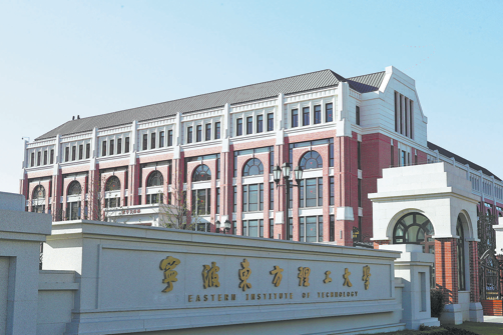
China’s emerging class of specialized research universities has demonstrated extraordinary appeal among top-performing students, with several institutions matching or surpassing admission scores of established elite universities in their inaugural undergraduate enrollment cycles.
The Eastern Institute of Technology in Ningbo (EIT) exemplifies this trend, achieving the second-highest minimum admission score in Zhejiang province during fall 2025 enrollment—trailing only the prestigious Zhejiang University by a mere two points. This accomplishment appears particularly remarkable given the institution’s extremely compressed timeline: provincial authorities granted official approval for EIT’s establishment as a private undergraduate institution just ten days before students finalized their college applications on June 30, 2025.
University President Chen Shiyi described the achievement as an “opening-at-the-peak enrollment miracle” accomplished within merely eleven days. At EIT’s founding ceremony on November 28, Chen expressed gratitude to the 74 pioneering undergraduate students who demonstrated “foresight and courage” in selecting the nascent institution.
The university’s rapid success stems from multiple strategic factors. EIT has assembled an exceptional academic team comprising 16 academicians, 68 nationally recognized high-level talents, and 111 founding professors. According to President Chen, this concentration of intellectual capital, combined with a shared sense of national service and institutional commitment to educational excellence, has proven instrumental in attracting top-tier students.
EIT’s establishment originated from semiconductor industry leader Yu Renrong, chairman of OmniVision Integrated Circuits Group, who proposed creating a high-level university in his hometown in June 2020. Yu described university establishment as a long-held dream, inspired by Ningbo’s tradition of educational philanthropy. His approach distinguishes between business operations, which require respect for market principles, and university management, which demands adherence to educational laws.
Academic programming strategically aligns with regional industrial strengths, focusing on integrated circuits, artificial intelligence, intelligent manufacturing, unmanned technology, new energy, and advanced materials. The institution emphasizes applied research, technology transformation, and entrepreneurial cultivation through industry partnerships and jointly established research institutes.
President Chen articulated ambitious aspirations for the institution to nurture both groundbreaking scientists like Nobel laureate Tu Youyou and transformative entrepreneurs like Yu Renrong. The university aims to accelerate laboratory-to-production transitions, address critical technological bottlenecks, and become a significant force in global industrial transformation.
The educational model has garnered recognition from established academic leaders. Chang Jin, President of the University of Science and Technology of China and Chinese Academy of Sciences member, noted EIT’s forward-looking vision and reform momentum, particularly praising its modern governance system and internationally aligned talent structures that foster an open, inclusive academic environment.