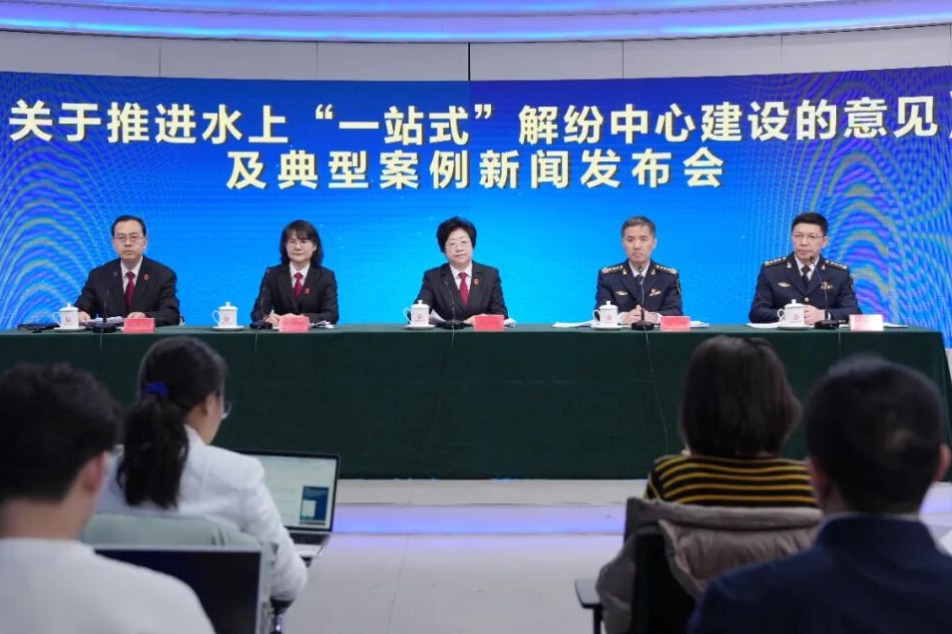
China has launched a comprehensive national guideline to revolutionize maritime dispute resolution, creating an integrated network of mediation centers designed to handle conflicts involving sailors, shipping companies, and maritime enterprises with unprecedented efficiency. The landmark framework, jointly unveiled by the Supreme People’s Court and the Ministry of Transport on January 6, 2026, establishes standardized protocols for maritime mediation centers that have been proliferating across China’s coastal regions and inland waterways.
By December 2025, China had already established over 60 specialized maritime mediation centers strategically located at major ports, maritime bureaus, and critical transportation hubs. These facilities operate under a collaborative model led by maritime courts working in concert with regulatory departments, forming a cohesive system that blends administrative mediation, judicial support, and social assistance mechanisms.
The new guideline emphasizes a ‘mediation-first’ approach, recognizing the unique characteristics of maritime disputes that often involve time-sensitive matters, complex technical determinations, and frequent cross-border elements. Justice Wang Shumei of the Supreme People’s Court explained that this prioritization addresses the specialized expertise required for liability assessment in cases ranging from maritime traffic incidents to seafarer employment conflicts, personal injury compensation, vessel pollution, and administrative disagreements.
To ensure high-quality dispute resolution, the framework mandates regular professional training for mediators, comprehensive legal interpretation services, and publication of landmark cases to establish precedents. Additionally, it requires courts and maritime authorities to share publicly accessible regulatory and judicial data, creating transparency and efficiency in dispute processing.
Xu Wei, head of the Ministry of Transport’s Maritime Safety Administration, highlighted the transformative nature of the new system: ‘Previously, disputing parties had to navigate multiple departments seeking assistance. Now, they can access integrated administrative and judicial services through a single platform, enabling mediation, legal consultation, and judicial confirmation in one streamlined process.’
The initiative represents a significant advancement in judicial-administrative collaboration, with Justice Shen Hongyu of the Supreme People’s Court noting that it ‘marks a new phase of cooperation between judicial and administrative authorities in resolving maritime disputes.’ The system will be further enhanced through regular interdepartmental meetings, professional exchanges, and joint training programs for maritime judges, law enforcement officers, and industry experts, with plans to expand online maritime judicial services to improve public accessibility.