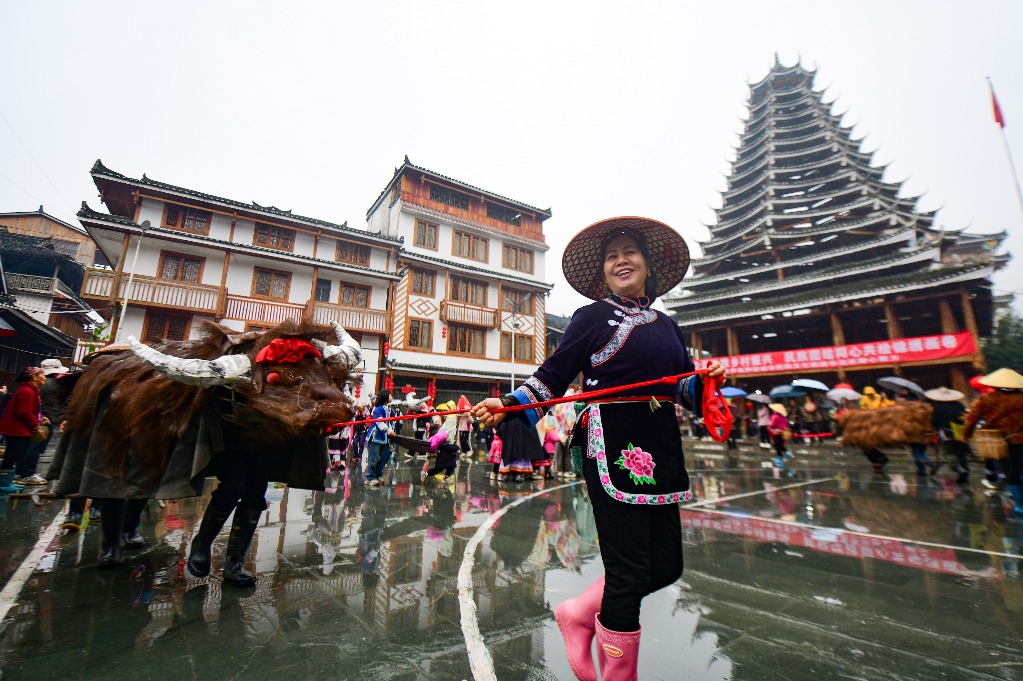
In the mountainous Longsheng county of Guangxi Zhuang Autonomous Region, villagers from the Dong ethnic community celebrated the solar term marking spring’s arrival through the vibrant Nao Chunniu ritual, commonly known as Spring Ox Dance. This traditional performance, held on Wednesday, represents both cultural preservation and agricultural invocation, seeking divine favor for optimal growing conditions and abundant harvests in the coming year.
The ceremonial procession featured an intricately crafted ox puppet constructed from bamboo frames, woven straw, and vibrantly colored fabrics. Two skilled puppeteers maneuvered the bovine figure at the forefront of the parade, followed by community members carrying authentic farming implements including plows, harrows, and whips. The synchronized movements simulated agricultural activities, creating a living tableau that connected participants to their ancestral farming heritage.
This centuries-old custom, recognized as intangible cultural heritage, transcends mere performance. It embodies the Dong people’s deep reverence for nature’s cycles and their dependence on agricultural prosperity. The timing coincides with Lichun, the first solar term in the traditional Chinese calendar that signifies spring’s commencement and the appropriate period for preparing fields for planting.
The Spring Ox Dance ceremony serves multiple social functions: it strengthens intergenerational bonds, reinforces community identity, and transmits indigenous knowledge to younger generations. As modernization impacts rural traditions, such cultural practices gain renewed significance in maintaining ethnic distinctiveness and preserving folk customs that might otherwise face extinction. Local cultural preservation societies have intensified efforts to document and promote these rituals, ensuring their continuity beyond immediate agricultural symbolism.