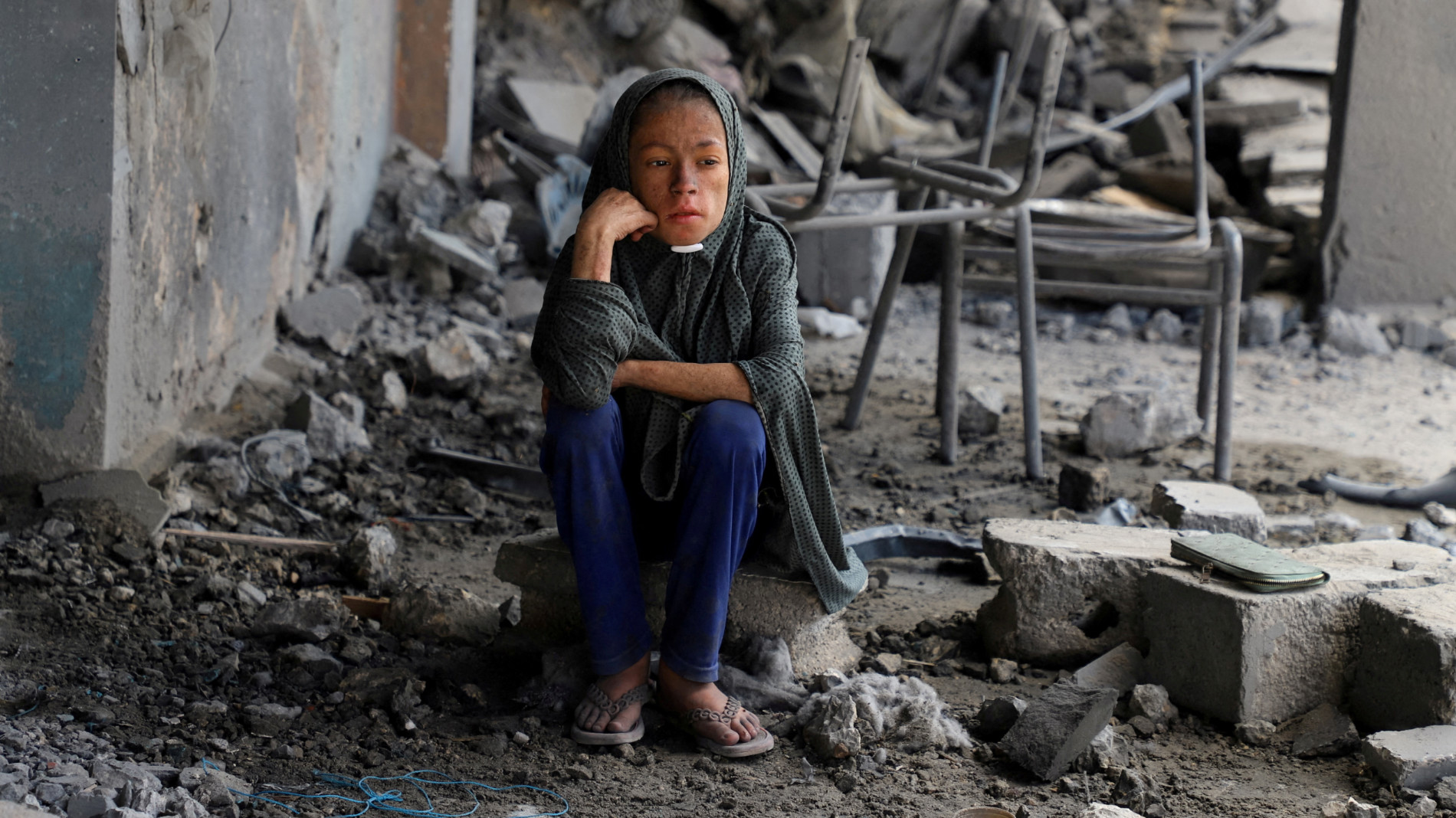
In the midst of relentless Israeli air strikes, young girls in Gaza are enduring not only the horrors of war but also the profound challenges of puberty. This pivotal stage of life, marked by significant physical and emotional changes, is exacerbated by the dire conditions of the besieged enclave. With families struggling to survive, essential resources like menstrual products, clean water, and private spaces are scarce, leaving girls to navigate this transition in isolation and distress. Dima Mohammed, a 12-year-old displaced in Gaza City, shared her shock and unpreparedness for the onset of puberty, highlighting the scarcity of hygiene supplies and the overwhelming focus on survival. Her mother lamented the lack of medical care and the compounded physical and psychological suffering caused by the war. Similarly, Maryam Ahmed, another 12-year-old, expressed her unpreparedness for puberty, both mentally and physically, as her mother recounted the impossibility of providing the usual support and celebration due to the war’s devastation. The United Nations Population Fund (UNFPA) estimates that around 691,300 women and girls of menstruating age are living in Gaza, with a monthly need for approximately 10,369,500 menstrual pads. However, the Israeli blockade has severely restricted the entry of hygiene supplies, making these products either unavailable or unaffordable. Many women and girls have resorted to makeshift alternatives, such as torn pieces of cloth, further stripping them of dignity. Palestinian psychologist Anhar Farajallah emphasized the heightened physical and emotional risks faced by girls entering puberty under such conditions, noting the lack of privacy, clean water, and essential hygiene products. Umm Ibrahim, a displaced mother in Gaza City, spoke of her daughter’s severe abdominal pain during menstruation and the unaffordable cost of sanitary pads. Eleven-year-old Maria Sharif, despite being prepared by her mother, expressed her feelings of adding a burden to her family due to the high cost of sanitary pads, resorting to improvised alternatives. The war has not only disrupted the lives of these young girls but has also robbed them of the support and resources needed to navigate this crucial stage of life.