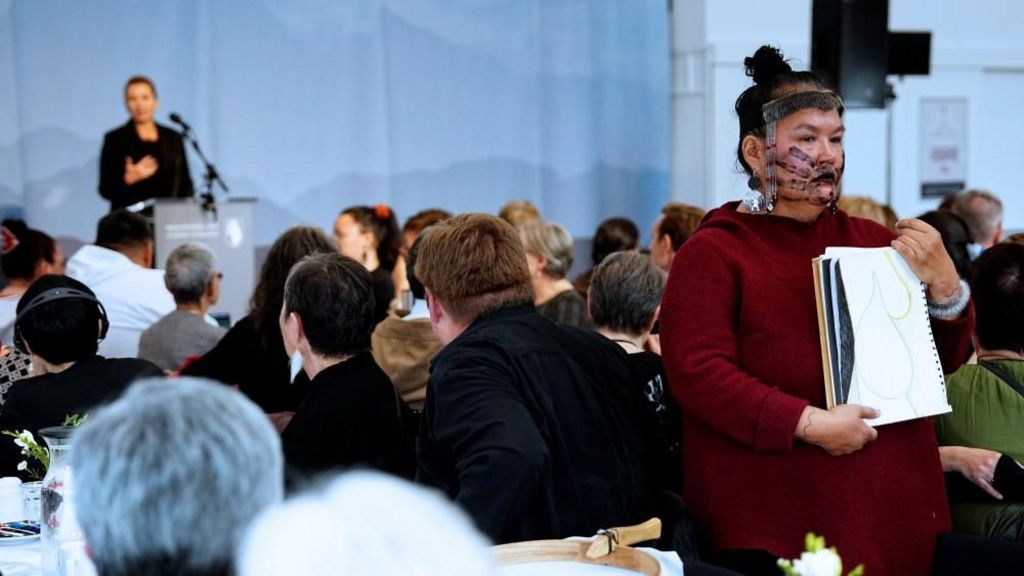
In a historic and emotionally charged address, Denmark’s Prime Minister Mette Frederiksen formally apologized to the women of Greenland for a controversial birth control program that forcibly implanted contraceptive coils in thousands of Inuit women during the 1960s and 1970s. Speaking to a packed audience in Nuuk, Greenland’s capital, Frederiksen expressed deep remorse for the injustices committed. ‘Dear women. Dear families. Dear Greenland. Today there is only one right thing to say to you. Sorry,’ she stated. The apology was met with mixed reactions, including a silent protest by one woman who stood with her back to the prime minister, her mouth marked with a black handprint. The program, which targeted nearly half of Greenland’s childbearing-age women, involved the insertion of intrauterine devices (IUDs) without consent, including in girls as young as 12. Many victims have suffered lifelong physical and emotional trauma, including infertility. Naja Lyberth, a prominent advocate for the affected women, emphasized the importance of the apology but criticized the lack of exploration into potential human rights violations. Frederiksen also announced plans for a ‘reconciliation fund,’ though details remain unclear. A lawsuit demanding compensation has been filed by 143 women, including Aviaq Petersen, who discovered she had an IUD inserted without her knowledge during an abortion at age 24. The apology comes amid growing scrutiny of Denmark’s historical and current policies in Greenland, including forced adoptions and the separation of Inuit children from their families. Greenland’s Prime Minister Jens-Frederik Nielsen described the birth control program as one of the darkest chapters in the country’s history. While the apology has been welcomed by many, some victims, like Elisa Christensen, expressed disappointment over the lack of compensation and tangible support. ‘The little girl inside me felt a hug from society,’ Christensen said, ‘but the grown-up Elisa doesn’t know how to use that apology.’ The case highlights ongoing tensions between Denmark and Greenland, as well as the broader implications of colonial-era policies on indigenous communities.