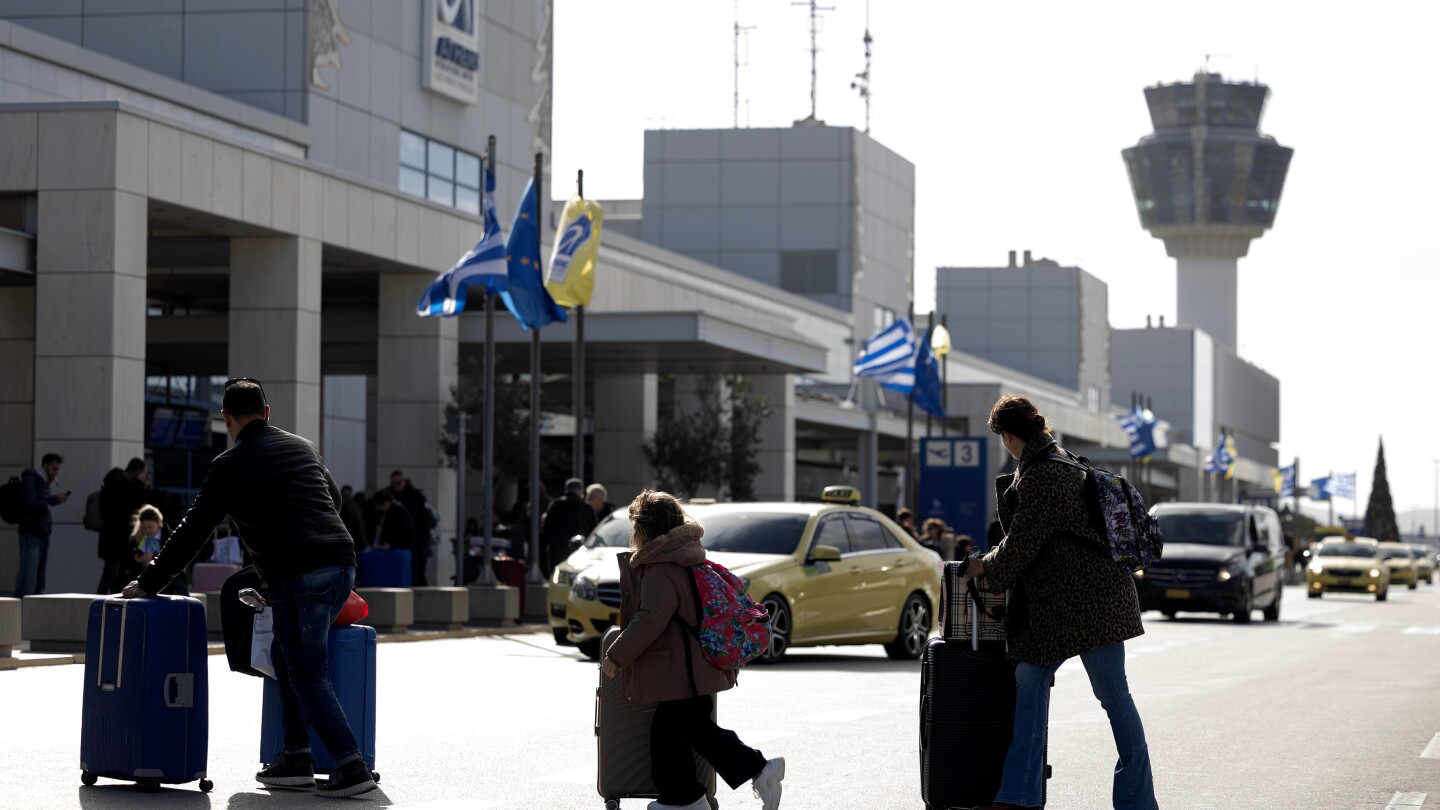
Greek authorities have determined that a catastrophic radio communications failure, which forced the complete shutdown of the nation’s airspace for several hours on Sunday, was unlikely to be the result of a cyberattack. The incident, described by Transport and Infrastructure Minister Christos Dimas as “a very serious incident,” grounded all flights, caused massive diversions, and left thousands of passengers stranded across the region.
The crisis began when severe, disruptive noise was detected across all primary and backup communication channels used by air traffic control. This critical safety failure necessitated an immediate halt to all air traffic within Greek airspace to prevent any potential risk to aircraft. Minister Dimas, speaking to public broadcaster ERT, provided initial reassurance by stating, “It does not appear to be a cyberattack,” while also emphasizing that passenger safety was never compromised during the outage.
The operational impact was severe. Incoming international flights were diverted to airports in neighboring countries, creating a significant backlog that took hours to clear even after communications were gradually restored. The disruption highlighted systemic vulnerabilities within the nation’s aviation infrastructure.
The Air Traffic Controllers’ Association seized on the event to amplify its long-standing demands for a comprehensive modernization program, citing the incident as a direct consequence of relying on outdated and obsolete equipment. In response to the severity of the failure, a formal judicial inquiry alongside an internal investigation was launched on Monday to definitively ascertain the technical root cause of the widespread communications breakdown.