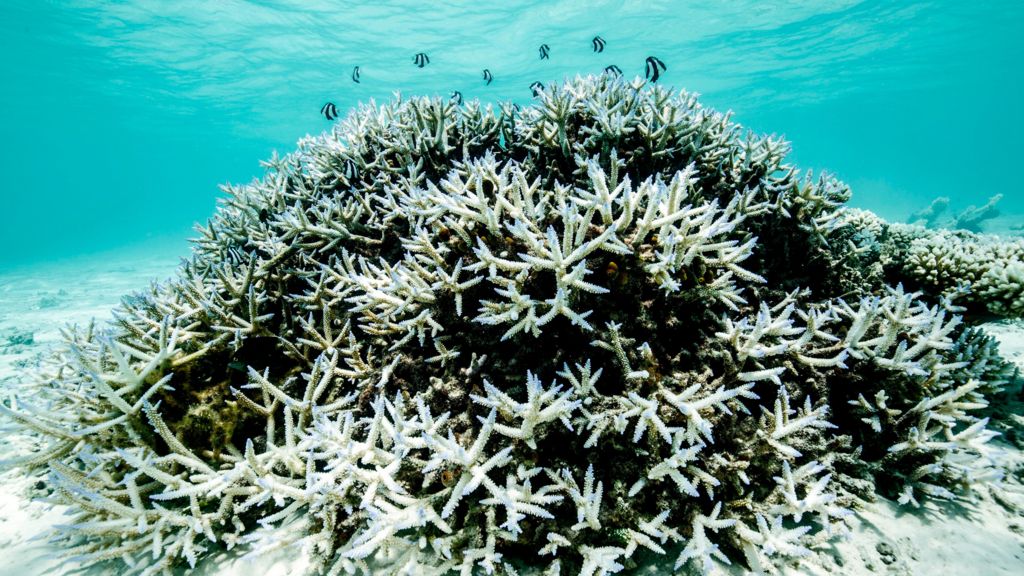
The Great Barrier Reef, one of the world’s most biodiverse ecosystems, is on track for a ‘grim future’ with a ‘rapid coral decline’ projected by 2050, according to a new study by researchers at the University of Queensland (UQ). However, the research offers a glimmer of hope, suggesting that parts of the reef may recover if global warming is kept below 2°C. The study utilized advanced modeling to simulate the lifecycles of various coral species, revealing that some corals are better equipped to adapt to warmer ocean temperatures, potentially aiding in the growth of new coral. Reefs situated near cooler-water currents were also found to be more resilient. The research underscores the critical importance of reducing carbon emissions to prevent a ‘near collapse’ of the reef. Dr. Yves-Marie Bozec, the lead researcher, emphasized that the study examined the ‘eco-evolutionary dynamics’ of over 3,800 individual reefs, including how corals interact and respond to warmer waters. ‘We forecast a rapid coral decline before the middle of this century regardless of the emissions scenario,’ he stated. The Great Barrier Reef, spanning over 2,300 km off Australia’s northeast coast, has endured four significant marine heatwaves between 2016 and 2022, leading to widespread coral bleaching—a process where corals expel the algae that provide them with life and color, often resulting in death. A recent report highlighted that parts of the reef experienced the largest annual decline in coral cover in nearly 40 years. Dr. Bozec noted that some reef areas ‘may partially recover after 2050, but only if ocean warming is sufficiently slow to allow natural adaptation to keep pace with temperature changes.’ He stressed that global action to reduce carbon emissions is essential to limit warming to below 2°C by 2100. Professor Peter Mumby, a co-author of the study, added that many reefs could persist under the Paris Agreement target of 2°C warming, but higher emissions would likely drive most reefs to near collapse. The study also identified more resilient areas of the reef network, suggesting that conservation efforts should focus on these strategic parts of the ecosystem.
Great Barrier Reef may partially recover from ‘grim future’ if global warming stays below 2C