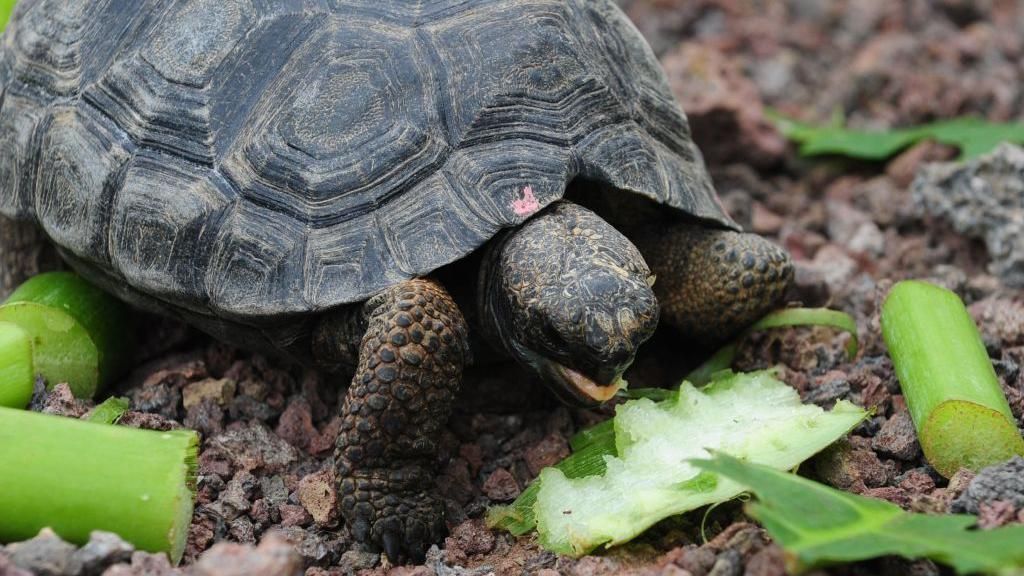
In a landmark conservation achievement, giant tortoises have returned to roam the volcanic landscapes of Floreana Island in the Galápagos archipelago for the first time since their extinction 184 years ago. This ecological renaissance marks a pivotal moment in one of the world’s most ambitious restoration initiatives.
The Floreana Ecological Restoration Project, spearheaded by the Galápagos National Park Directorate, successfully released 158 captive-bred juvenile tortoises onto the island this week. This event represents the culmination of a sophisticated genetic rescue operation that began with a remarkable scientific discovery.
In 2008, researchers identified tortoises on Isabela Island’s Wolf Volcano carrying genetic ancestry of Floreana’s native species (Chelonoidis niger niger), which was hunted to extinction by 19th-century sailors seeking sustenance during long Pacific voyages. This finding triggered an innovative ‘back-breeding’ program launched in 2017, where scientists selected 23 hybrid tortoises with the closest genetic links to the extinct subspecies for captive breeding on Santa Cruz Island.
The breeding program has yielded extraordinary results, with over 600 hatchlings produced by 2025. Several hundred juveniles have now reached sufficient size to survive predation and environmental challenges in their natural habitat.
The Galápagos Conservation Trust (GCT) hailed the release as a “hugely significant milestone” in global conservation efforts. Dr. Jen Jones, GCT chief executive, described the moment as “truly spine-tingling,” noting that it validates two decades of collaborative work between scientists, conservation charities, and local communities.
These tortoises are recognized as “ecosystem engineers” whose foraging behaviors, seed dispersal, and landscape modification play an disproportionately large role in restoring degraded environments. Their return is expected to catalyze broader ecological recovery on Floreana, reestablishing evolutionary processes that have been absent for nearly two centuries.
The successful reintroduction offers a powerful template for island restoration projects worldwide, demonstrating how advanced genetic techniques combined with sustained conservation commitment can reverse even centuries-old ecological damage.