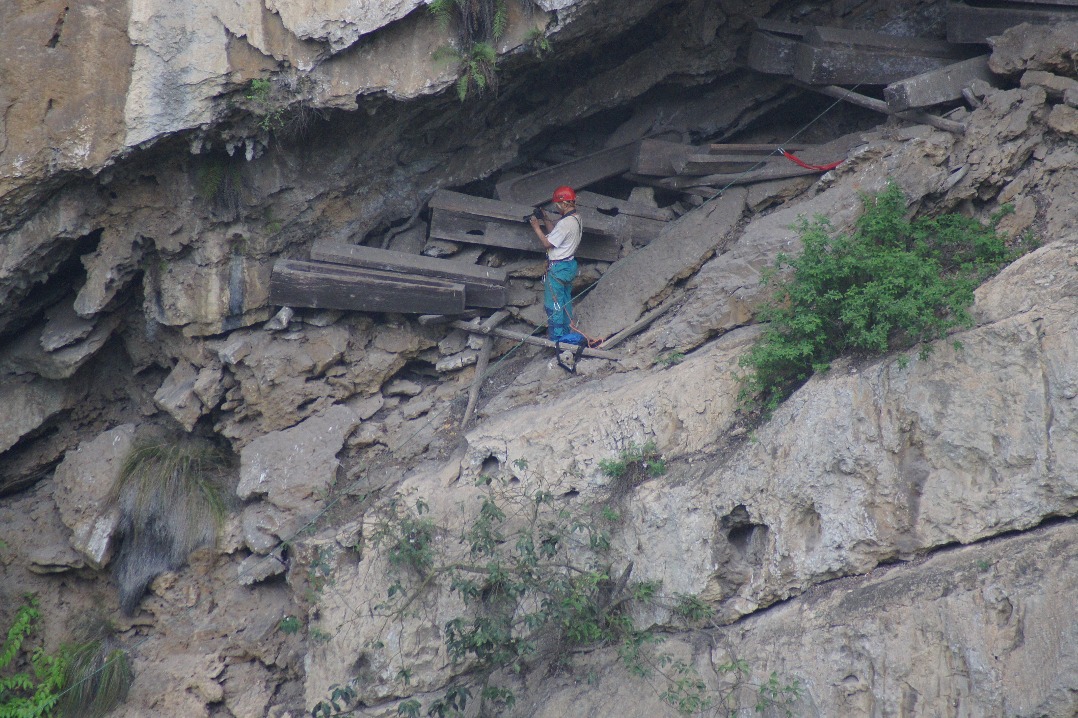
A groundbreaking study led by Chinese researchers has established a genetic connection between the ancient practitioners of the hanging coffin tradition and a modern community in Southwest China. Published in the prestigious journal Nature Communications, the research marks the first time a direct genetic link has been confirmed at the nuclear genome level between these ancient individuals and their contemporary descendants. The study was conducted by the Kunming Institute of Zoology (KIZ) under the Chinese Academy of Sciences, based in Yunnan province. The hanging coffin custom, practiced for approximately 3,000 years across southern China, Southeast Asia, and the Pacific, involves placing coffins on cliffs, in caves, or rock crevices along rivers and steep mountainsides. This tradition has long been associated with the ancient Bo people, who inhabited southwest China but largely disappeared from historical records by the end of the Ming Dynasty (1368-1644). The research team identified a modern Bo community in Yunnan with similar cultural traits and conducted whole-genome sequencing on 30 of its members. They also analyzed nuclear DNA from human remains of 15 hanging-coffin individuals found in Yunnan, Guangxi Zhuang Autonomous Region, and northern Thailand. The findings revealed that 43 to 79 percent of the genomic components of modern Bo individuals can be traced directly to the hanging-coffin population from the Zhaotong site in Yunnan. Further analyses indicated a shared ancestry among hanging coffin remains in China and Thailand, suggesting a diffusion route for the culture that originated in Fujian province, East China, and spread to the Yunnan-Guizhou Plateau and Southeast Asia through human migration. The study also highlighted cultural inclusivity during the Tang Dynasty (618-907), with two genetically distinct individuals buried 1,200 years ago in Zhaotong sharing the same hanging-coffin custom. These individuals were linked to ancient farmers from the Yellow River Basin and Northeast Asia, respectively. The research team plans to expand their systematic sampling across South China and Southeast Asia to build a comprehensive database integrating burial practices, population genetics, and cultural transmission.