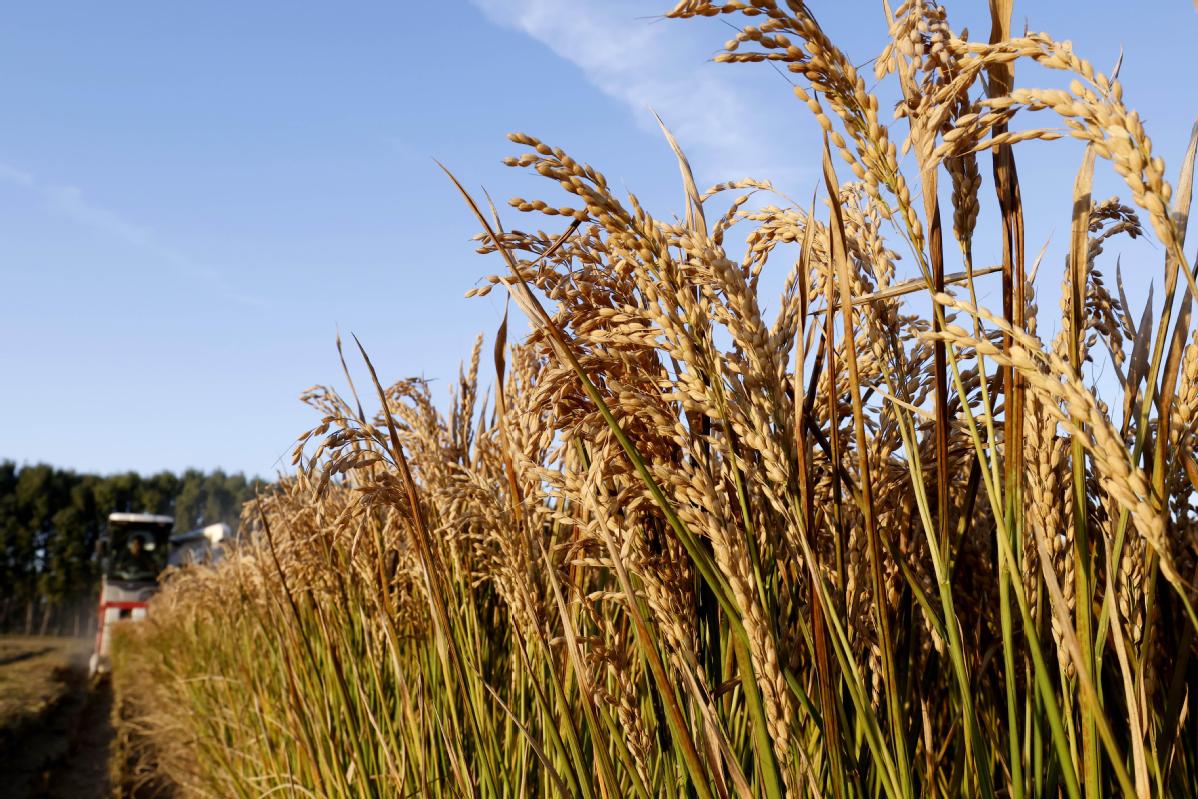
In a groundbreaking development addressing global food security challenges, Chinese researchers have decoded the molecular mechanisms behind heat tolerance in rice crops. The study, published in the prestigious journal Cell on December 4, 2025, reveals two critical genetic regulators that enable plants to withstand extreme temperature conditions.
The research team from Chinese Academy of Sciences Center for Excellence in Molecular Plant Sciences, Shanghai Jiao Tong University, and Guangzhou Laboratory conducted extensive field simulations replicating future climate scenarios. Their investigation identified DGK7 (a kinase) and MdPDE1 (a lipase) as essential components in rice’s thermal response system. These function as a sophisticated biological alarm mechanism, converting external heat signals into cellular instructions that trigger protective responses.
Experimental results demonstrated remarkable yield improvements: single-gene modifications increased production by 50-60%, while dual-gene modifications nearly doubled output compared to control groups. The research maintained crop quality under simulated heat waves reaching 46°C (115°F) during peak daylight hours, without compromising yield under normal growing conditions.
Dr. Lin Hongxuan, corresponding author of the study, emphasized the precision engineering capabilities now possible: ‘Scientists can not only enhance heat tolerance but design gradient heat-resistant varieties tailored to specific climate conditions.’
The findings offer transformative potential for securing global food supplies as climate change intensifies. The identified genetic markers provide a blueprint for developing resilient strains of major cereal crops including wheat and corn, potentially mitigating projected yield declines from rising global temperatures.
This research represents a significant advancement in climate-adaptive agriculture, combining fundamental biological discovery with immediate practical applications for sustainable food production.