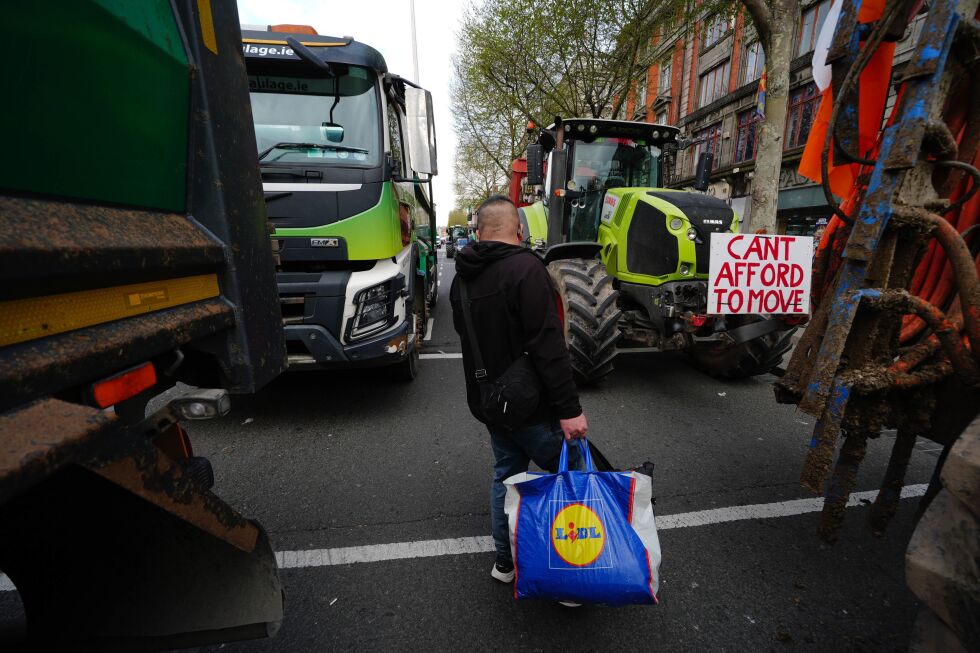
DUBLIN, Ireland — Growing public anger over skyrocketing fuel costs has spilled into widespread disruption across Ireland, as coordinated blockades led by truck drivers, farmers, and transport operators entered their fifth consecutive day Saturday. What began as small, grassroots demonstrations on Tuesday has expanded rapidly, fueled by viral organizing on social media, bringing key transport routes and fuel distribution networks to a standstill.
Protesters have concentrated their action at Ireland’s only commercial fuel refinery and multiple key fuel depots, blocking access with vehicles and forcing widespread distribution shutdowns. The blockades have spread to major road networks, closing the capital Dublin’s primary ring highway and six additional high-volume arterial routes across the country. Kevin McPartlan, chief executive of industry group Fuels for Ireland, confirmed that more than one-third of the republic’s 1,500 active service stations have already run out of fuel, with that figure projected to climb sharply if blockades remain in place.
In response to the escalating crisis, Irish national police have activated all on-leave and off-duty personnel, placing every officer on standby for deployment over the weekend. The Irish military has also been placed on alert to assist with clearing blockaded infrastructure if civil order operations require additional support. The Irish government scheduled a new round of emergency talks with stakeholders Saturday in a push to find a resolution to the standoff.
Protesters are calling for binding caps on domestic fuel prices, alongside deeper cuts to national excise duties and carbon taxes applied to motor fuels. The demands come even after the Irish government approved a sweeping package of relief measures two weeks prior to offset rising energy costs. That package included a temporary cut to excise taxes on all motor fuels, an expanded rebate program for commercial diesel users including truckers and bus operators, and an extension of support for low-income households covering heating costs. However, those government offsets were quickly erased by continued sharp increases in global crude oil prices, amplifying public frustration.
Irish leaders have pushed back against the protests, noting that the current global price spike is driven by international factors tied to the Middle East conflict that have restricted global oil exports, rather than domestic policy choices. Prime Minister Micheál Martin warned Friday that the ongoing blockades are pushing the country to the brink of a critical national supply crisis, noting that during a period of global oil shortage, Ireland could see incoming oil tankers diverted away from its ports, worsening existing shortages long-term. Calling the protests “unconscionable” and “illogical,” Martin told national broadcaster RTE that the actions threaten the country’s overall energy security.
The demonstrations began as slow-moving convoys clogging Dublin’s busiest central streets, before shifting to targeted blockades of fuel depots that together supply half of the nation’s fuel. Many protesters have stayed overnight at blockade sites, sleeping in their vehicles to maintain the action and demanding direct negotiations with government leaders. Justice Minister Jim O’Callaghan alleged Thursday that external actors have been manipulating the legitimate frustrations of participating demonstrators to advance unrelated political agendas, with some actors seeking to “damage the country” through the unrest.