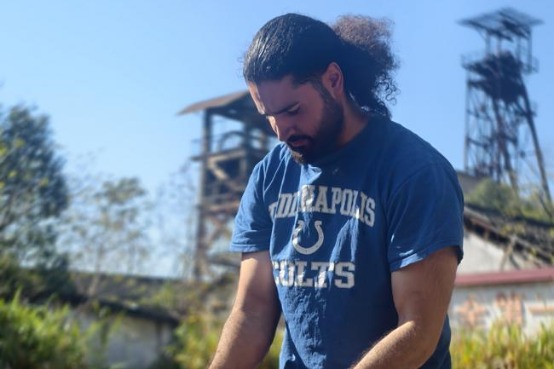
In an extraordinary cross-cultural initiative, French and Chinese artists are jointly transforming the industrial legacy of Ningxiang’s former coal mining hub into a vibrant cultural destination. The collaborative effort between Avignon Higher School of Art and Chinese partners focuses on the Wumuchong International Art Zone, located in Meitanba—a town once dominated by coal extraction until the last mine closed in 2014.
The project, launched in 2016, represents a conscious shift from industrial decline to cultural rejuvenation. Since cooperation began earlier this year, teams have been working to restore nine historical structures while maintaining their authentic materials and character. According to Hervé Giocanti, a conservation professor at ESAA, the approach goes beyond physical restoration: “First, we need to understand the history of this mine and its people.”
This philosophical commitment led artists to conduct interviews with retired miners, weaving personal narratives and emotional connections into the restoration process. The French team also introduced innovative ecological solutions, including biochar technology that processes abandoned materials through anaerobic combustion, reducing pollution while creating outputs useful for both agriculture and art.
French artist Sarah Venturi exemplified this sustainable approach by developing a unique pigment called “Meitanba Black” from recycled coal dust found on site. Professor Liu Ke of the Guangzhou Academy of Fine Arts, one of the project’s initiators, revealed that restoration will focus on two to three buildings annually. The vision includes integrating new constructions with preserved heritage, all utilizing advanced ecological technologies.
Concurrently, efforts are underway to attract international artists for residencies lasting one to two months, fostering deeper cultural exchanges and collaborative relationships with local artists. This extended engagement aims to create genuine bonds between visiting artists and the Chinese community, transforming Meitanba into an internationally recognized eco-art zone.