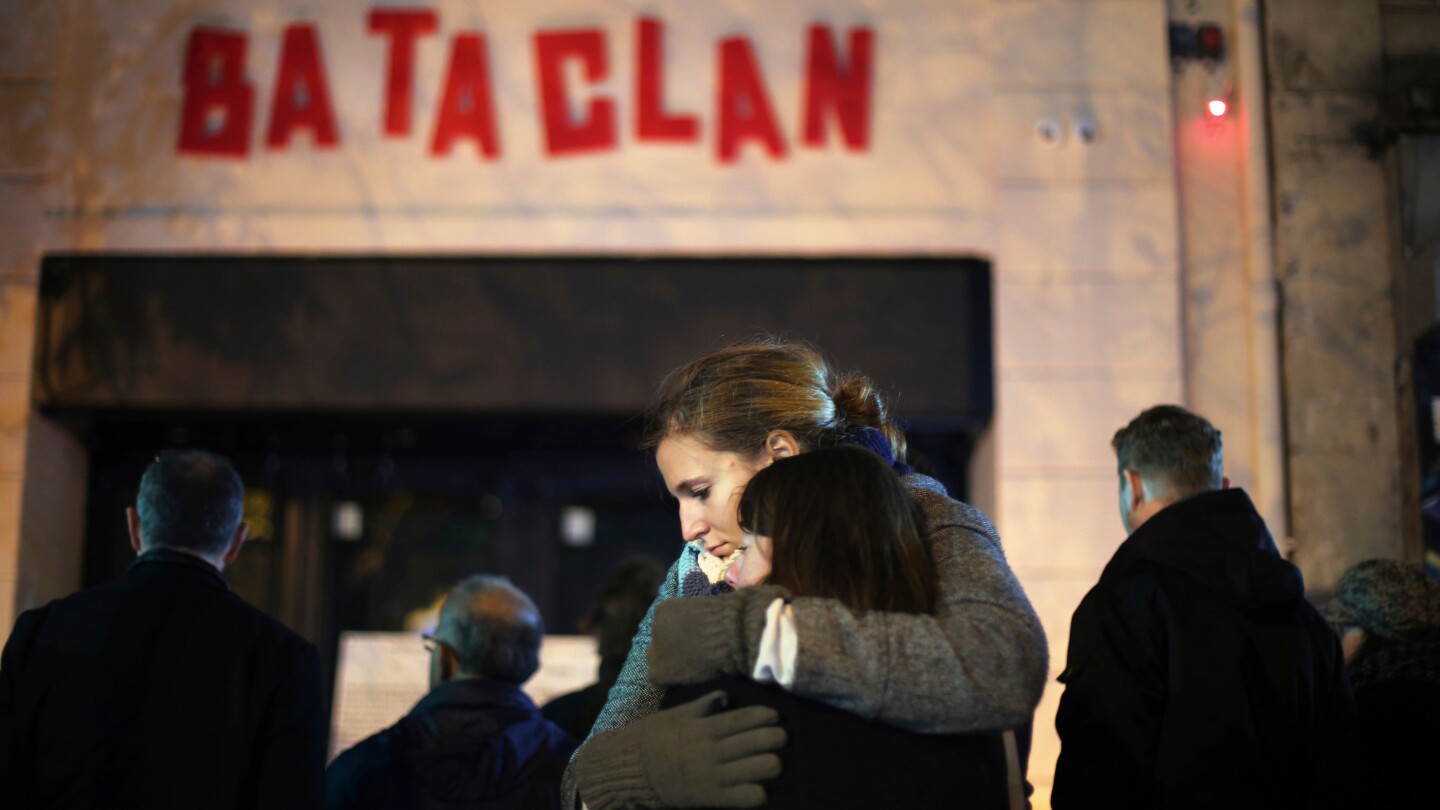
A decade has passed since the harrowing Paris attacks of November 13, 2015, yet the scars remain deeply etched in the lives of survivors. As France prepares to commemorate the 10th anniversary of the tragedy, which claimed over 130 lives and left more than 400 injured, survivors continue to wrestle with the enduring trauma. Arthur Denouveaux, a 39-year-old survivor and president of the victims’ association Life for Paris, reflects on the emotional toll of the anniversary. ‘The 10th anniversary is here, and emotions and tension are everywhere for us survivors,’ he shared. ‘It shields us from the world in a way, because we’re so focused on the grief and on remembering those who lost their lives.’ The coordinated attacks, carried out by nine Islamic State gunmen and suicide bombers, targeted multiple locations across Paris, including the Stade de France, cafes, and the Bataclan concert hall, marking the deadliest violence in France since World War II. Denouveaux, who was at the Bataclan during the Eagles of Death Metal concert, vividly recalls the chaos and horror of that night. ‘I remember crawling on top of bodies,’ he recounted. ‘I believe most of the people were pretending to be dead, but still, I remember a few faces or at least a few facial expressions of people who were necessarily dead.’ The aftermath of the attacks left survivors grappling with post-traumatic stress disorder (PTSD). Denouveaux, a father of three, spent a year in intensive therapy and medication to overcome the most critical phases of PTSD. ‘But since 2017, I’ve had no panic attacks,’ he said. ‘Yet, I’m very cautious because I’m not sure you heal from PTSD.’ To honor the victims, France will hold a solemn ceremony at a newly created memorial garden near Paris City Hall, attended by President Emmanuel Macron, Paris Mayor Anne Hidalgo, survivors, and families of the victims. The garden, designed with input from survivors and relatives, features steles engraved with the names of the victims. ‘The project aims to create a place that remembers the dead but also a place of life, a place that is beautiful and serene,’ Denouveaux explained. The French soccer federation will also pay tribute to the victims during a World Cup qualifier match between France and Ukraine at the Parc des Princes, preceded by a minute of silence. The attacks not only traumatized individuals but also shook the nation’s sense of security. Survivors like Denouveaux have had to navigate a new path in life, mourning not only the lives lost but also the person they once were. ‘When you survive a terrorist attack, you become disconnected from the rest of the world,’ he said. ‘There are three mourning phases: the mourning for those who died, the mourning for the person you were, and the mourning of the image people have of you.’ The 2021-2022 trial of Salah Abdeslam, the lone surviving attacker, and 19 other accomplices brought some closure, with Abdeslam sentenced to life without parole. Yet, for survivors, the journey toward healing remains ongoing. ‘Ten years later, when I tell someone who doesn’t know: ‘Well, I was at the Bataclan,’ the person’s perception of me changes immediately,’ Denouveaux noted. ‘There’s the emotion they felt that day, but also the fear of wondering, ‘Is he OK? Can I talk to him about it? How do we do that?’ And that, of course, puts you out of phase.’
France honors victims 10 years after attacks at Bataclan concert hall, cafes and national stadium